China's emphasis on self-sufficiency in staple grains and modern farming is conducive to global goals against hunger
It will never be too late for the world to appreciate the Chinese government's recent change to its food policy, from its previously stated "95 percent self-sufficiency" for food across the board to specific commodity-based self-sufficiency targets, with emphasis on the three staple grains: rice, wheat and maize.
This represents more a paradigm shift in Chinese food security strategy than a tacit recognition of fait accompli. Further reading of the policy change reveals that the government has done a thorough analysis of the most efficient and effective use of its limited land and water resources by giving priority to staple food production to ensure baseline food security while importing mostly feed grains. There is also a strategic consideration to this as the three major staple foods would more likely be subjected to "export restrictions" than feed grains in a future event similar to the 2007/08 global food crisis.
This two-pronged approach to food security in China, relying on domestic production for basic supply and the international market for adjustments, also reflects the government's efforts to alleviate the pressures on the domestic environment posed by ever-increasing agricultural production targets.
The world should welcome the new food security policy pursued by the Chinese government, which serves both its own national interests and enhances world food security by improving availability and stability.
As defined by the UN Food and Agriculture Organization, food security "exists when all people, at all times, have physical and economic access to sufficient, safe and nutritious food to meet their dietary needs and food preferences for an active and healthy life". The FAO identifies the four pillars of food security as availability, access, utilization and stability. China stands in a good position to make better use of "economic access".
Food insecurity has been a nightmare for Chinese people with generations suffering from hunger and malnutrition before the founding of the People's Republic in 1949. Even people born in 1950s and 1960s still have living memories of the specter of hunger. Given the size of its land and population, and Cold War geopolitical complications such as food embargoes, it was fully justifiable that China adopted self-sufficiency as its fundamental food policy.
China's phenomenal economic growth of the past three decades has eclipsed its tremendous expansion of food production. This achievement, which, on a per capita basis, has made China's food secure in terms of calorie intake, is even more remarkable considering the concurrent population growth.
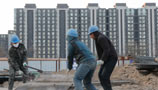
However, this growth has come with, and its maintenance will be challenged by, costs and constraints. The productivity increases over the coming decades are severely constrained by limited availability on a per capita basis and the shortages in land and water resources, which also make the marginal production costs very high. This explains why the Chinese leadership repeatedly encourage the contribution of technical innovations and a sustainable path of modernized farming.
|
 |
 |
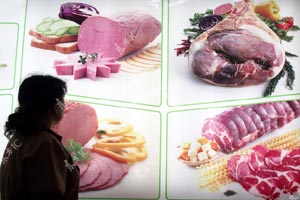
| Food safety |
Copyright 1995 - . All rights reserved. The content (including but not limited to text, photo, multimedia information, etc) published in this site belongs to China Daily Information Co (CDIC). Without written authorization from CDIC, such content shall not be republished or used in any form. Note: Browsers with 1024*768 or higher resolution are suggested for this site.
License for publishing multimedia online 0108263 Registration Number: 20100000002731