How do people compare China's housing market with the bubble in Japan in the 1980s, or that in the US in the 2000s? It is an important question because it determines the answer to an even larger question: What is a safe bet for investors in China?
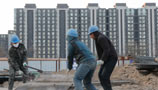
The business media has run features about China's "ghost towns" built with huge investment and row after row of empty houses showing little trace of human activity.
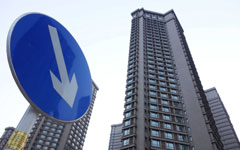
In the last couple of weeks, more alarms were sounded - such as local real estate companies going under after failure to pay back their debt, and development funds defaulting when their bonds matured. The government has not stepped in to bail out the companies, and is unlikely to do so.
 |
|
 |
Even an economically-strong central government would balk at intervening, given the potential scale of the problem. It can address the issue only in a select number of cities and industries.
Economists say at least 60 percent of all companies listed on the A-share market have invested in real estate development during the last decade of unprecedented rise in asset prices. And, needless to say, all banks have housing mortgages as a main source of revenue.
Wouldn't it be a nightmare if real estate prices tumble in city after city, and even in Beijing and Shanghai, and if the real estate industry proves poisonous to banks' credit standing, and to the bond and stock markets?
No, no, no, say officials. We'll manage to do just fine, they pledge. But investors need to know how.
On the national level, officials may be right because, unlike the US or Japan, China is still a developing country in a number of ways such as in per capita income. Large numbers of people are still moving to big cities from rural and frontier regions to seek off-farm jobs, and from small cities to seek jobs with better rewards.
In response, the central government has come up with a plan to, from 2014 through 2020, help 100 million workers from rural areas who already work in cities to enjoy all social benefits, help a second 100 million poor urban residents improve their housing, and help a third 100 million move into the cities in central and western China.
Overall, China's urbanization ratio (people living in cities versus the entire population) is just above 50 percent. The figure is still lower if only those certified as urban residents are counted. A general tumbling of real estate prices is only possible when a nation's urbanization ratio exceeds 60 percent, said an official from the Ministry of Housing and Urban-Rural Development, citing examples that the same index is about 70 percent in the US, 67 percent in Japan and 65 percent in Europe.
However, all this applies only at the macroeconomic level. There could still be a world of difference between one city and another. While the country may still be some distance from a housing market collapse, dangerous over-supply (evidenced by all the ghost towns) will cripple the economies of second-, third- and fourth-tier cities that fail to attract new workers.
This is already happening. It is bringing down smaller real estate developers and is a threat to banks with high exposure to housing and other development projects in smaller cities.
The author is editor-at-large of China Daily. Contact the writer at edzhang@chinadaily.com.cn

Copyright 1995 - . All rights reserved. The content (including but not limited to text, photo, multimedia information, etc) published in this site belongs to China Daily Information Co (CDIC). Without written authorization from CDIC, such content shall not be republished or used in any form. Note: Browsers with 1024*768 or higher resolution are suggested for this site.
License for publishing multimedia online 0108263 Registration Number: 20100000002731