|
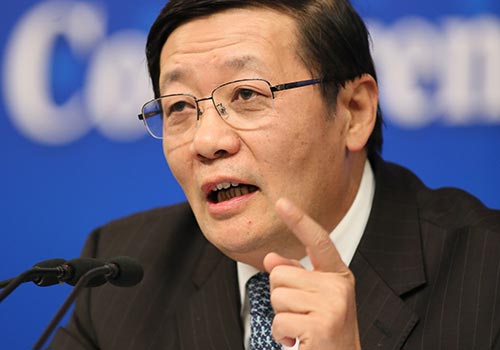 Lou Jiwei, minister of finance [Photo/China Daily] |
Every year after the "two sessions", CEOs of multinational corporations and academics from international organizations gather at
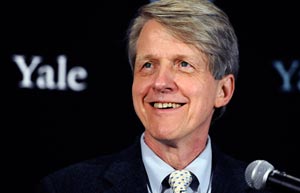
Among the Chinese officials, Finance Minister Lou Jiwei perhaps is one of the best communicators. Intellectual, outspoken and relaxed, the reform-minded minister has a style that contrasts starkly with that of his peers. One aspect of this is that he usually speaks extemporaneously and rarely reads from a script. At this year's China Development Forum at the Diaoyutai Guesthouse on March 23, Lou told two stories: One was about China's reform history, and the other touched on Los Angeles' struggle with smog. Lou told his audience of foreign CEOs and academics that China was faced with a dilemma of "easing top-down economic control" and "tightening control". Once Beijing loosened the economic control that aimed to stimulate the dynamics of local government and the market, disorder emerged, marked by rising inflation and rampant speculation. Threatened by the chaos, Beijing tightened its grip on the economy but, as a result, the economy fell into stagnation. "In China, we call this a vicious cycle of fangluan shousi (chaos after easing and death after tightening). It occurred more than 10 times in history. Will this time be different? I think the possibility of fangluan shousi happening again is very low," Lou said. Lou explained that China has come a long way from its centrally planned economy. Now, more than 98 percent of prices have been liberalized. He admitted that the government still holds much of the power that is supposed to belong to the market. The central task of the new reforms is to redefine the relationship between government and the market. To achieve this end, Lou said, one key task is to distribute power among different levels of government. The backdrop to his comments is the fact that many fiscal experts have remarked that China's local governments are underfunded and can't complete the mounting economic and social tasks. In fact, they shoulder 85 percent of the spending responsibility but get less than 50 percent of the revenue. Although much of the gap is addressed by the central government's transfer payment system, local governments are still pressured to lobby for more funds or to raise debt. Lou, however, presented an alternative. Rather than distributing a larger piece of the total revenue to local governments, he said it is more important to carve up administrative authority among varying levels of government. This way, the different levels of government receive different shares of money. This led to Lou's second story. Los Angeles' painful experience in tackling the pollution problem was not because of how many cars the city produced or how many power plants the city housed. It was because automobiles from other cities and power stations in other places polluted Los Angeles. The realization of this spawned the federal Environmental Protection Agency. Lou said this was a typical example of "externalities", according to economic textbooks, which is why some power should remain with provincial or national governments to address the "externalities" that county-level governments cannot enforce. He hinted that a clear stipulation of responsibility is a priority for the coming fiscal reforms. Foreigners I spoke with remarked that is why they like him, because Lou not only talks about what the government will do but also the consideration and rationale behind it. And he uses terms they can identify with. Lou also showed he is not the type of official to only embrace popular ideas. Asked by Harvard economics professor Martin Feldstein about China's rebalancing, he said he discounts the popular notion that China should significantly boost the share of consumption in its economy. "Without doubt we should increase consumption. But I wonder whether it has been overstated. We still have to maintain a relatively high savings ratio that then can be transferred to investments. Chinese society is aging fast, and we won't wish to see 10 years later that consumption kept rising while investment became insufficient," he said. He was challenged by Liu Chuanzhi, founder of Lenovo Group and an iconic figure to China's entrepreneurs, who said that for many years, the growth of fiscal revenue beat GDP, while GDP growth beat household income. "If it continues, I think China will never become an economy that is driven by domestic demand," said Liu, who received a round of applause. Lou replied, "I would be only too happy if what you said is true." Pausing for a second, he added, "There is no such thing." His words were punctuated by applause, too.

Copyright 1995 - . All rights reserved. The content (including but not limited to text, photo, multimedia information, etc) published in this site belongs to China Daily Information Co (CDIC). Without written authorization from CDIC, such content shall not be republished or used in any form. Note: Browsers with 1024*768 or higher resolution are suggested for this site.
License for publishing multimedia online 0108263 Registration Number: 20100000002731