The first company globally to receive the right to export horse feed to China was the Irish company Connolly's Red Mills, but group exports director Michael Connolly says the process has been slow and complicated.
The company began seeking Chinese government approval in 2005, and after years of hard work finally managed to export its products there in 2012.
Despite the long-awaited launch, Connolly says, the amount of horse food his team has sold to China has been a little disappointing.
As Connolly's targets the premium horse feed market, its customer base is already limited, and while it has managed to supply most of the premier stables in China, those customers only feed an average of 30 percent of their horses premium feed.
"While we are somewhat disappointed at this stage, we remain optimistic about the future," Connolly says.
|
 |
 |
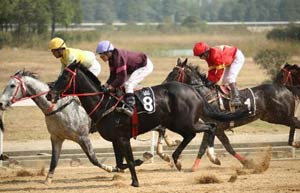
Two big regulatory challenges remain to limit the growth of China's equine sports. The first is the illegal status of betting on horseracing, which means the industry cannot fund itself, because revenue from sponsorship and ticket sales are insufficient to make events financially viable.
A prestigious event like Royal Ascot would be financially viable without betting, but most other horseracing events would not, says Barnett of Ascot Racecourse.
"For Royal Ascot, which is the most important horseracing meeting of the year, the majority of income would be generated through gate money and corporate entertainment, and on top of that sponsorship, TV viewing revenues and then betting."
In comparison, most other horseracing would be supported by income generated through betting and selling pictures to betting providers.
"Some days we would not make a profit without a betting element," Barnett says.
China has not been certified as disease free by the World Organization for Animal Health, which means that overseas horses that enter China are not allowed out again because of the concern that they might spread diseases contracted in China. The Chinese horses are also not allowed to leave the country.
Roly Owers, chief executive of World Horse Welfare, says China's lack of disease-free status for horses means it is difficult for it to host world-class horse competitions, because international owners are unwilling to send their horses there.
This also means China cannot have its horses compete in major international competitions alongside the world's best horses, Owers says.
To be considered for disease-free status, China needs to conduct regular and standard tests for horse health and apply for inspection, he says.
The country's veterinary infrastructure, training infrastructure and other equine industry support functions are slowly catching up with those in more developed international markets.
Yao Congbin, chief technical officer for Connolly's Red Mills, says China's horse veterinary infrastructure is now improving as the country's horse veterinary equipment and medicines are increasingly advanced.
However, its horse veterinary standards are still lacking compared with those elsewhere because traditionally veterinary schools and degrees have not focused on horses, Yao says.
It is only in recent years that horses have attracted more attention in veterinary courses, but there is still a shortage of skilled and experienced teachers. Consequently, China has a dearth of good equine vets.
Yao says he is optimistic about the future of China's equestrian and horseracing industries because horses are an important element of Chinese culture, and equestrian is seen as an emerging fashionable sport.
"In places like Inner Mongolia or Xinjiang Uygur autonomous regions, people learn to ride horses when they are young, so they have a special affinity for them. With the improvement of financial situations, these people would like to go to horse events and ride for leisure, even participating in horse racing.
"At the same time, many young people in big cities are increasingly adopting horse riding as a hobby, which is another important part of the market."

Copyright 1995 - . All rights reserved. The content (including but not limited to text, photo, multimedia information, etc) published in this site belongs to China Daily Information Co (CDIC). Without written authorization from CDIC, such content shall not be republished or used in any form. Note: Browsers with 1024*768 or higher resolution are suggested for this site.
License for publishing multimedia online 0108263 Registration Number: 20100000002731