 |
|
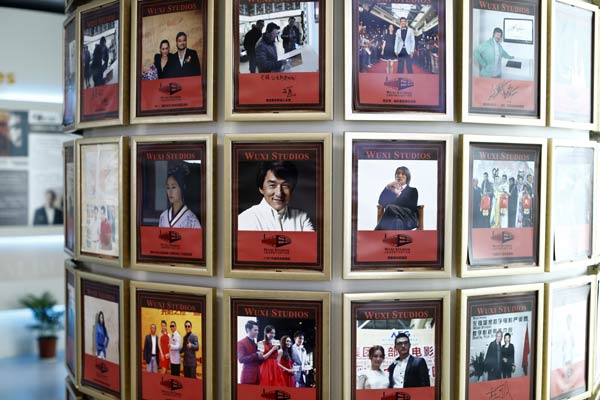
Film posters at Huallywood, one of the world's largest film studios, which was transformed from a deserted iron and steel factory in Wuxi, Jiangsu province. FENG YONGBIN/CHINA DAILY |
Movie facility will soon 'enter rapid period of growth'
The Wuxi government turned a deserted iron and steel factory into one of the world's largest film studios, dubbed Huallywood, two years ago.Since then, the booming Chinese film industry and increasing outsourcing of digital film production from foreign filmmakers have transformed Huallywood into a fast-growing film production center in China.
When the Wuxi government in Jiangsu province claimed it would invest 10 billion yuan ($1.61 billion) to build Huallywood, 80 percent of film studios built by local governments were losing money.
"You can understand the pressure we were under back then. But we are different," said Yan Heping, deputy director of Binhu district commerce bureau of Wuxi, the main sponsor of the project.
The governments built the studios mostly to follow the central government's order that year to revitalize China's weak cultural industry and boost investment. Hundreds of studios sprang up overnight in old factory workshops, villages and sightseeing spots in second- and third-tier cities.

|
 |
Huallywood embraced the lessons from such experiences. "We are confident in the prospects of China's film market, and we made a priority of the talent issue from the very beginning," Yan said.
Huallywood offers preferential policies not only for investors and companies but also for artistic talent.
"As long as you think you have an artistic dream and the talent to pursue it, we provide you living space and a working environment for free to help you use your talent to realize your dreams," said Shi Juan, Huallywood general manager.
Yan said: "Talent is what we need most. If we have enough talent, we can naturally attract more investors. The postproduction and creation stages of the studio can also take root in Wuxi."
The Wuxi government provides monthly subsidies of about 500 yuan to college graduates coming to work there. It is the only city government in China to do so.
A large number of college students and independent artists flock to Huallywood. Hundreds of postproduction and artistic creation firms from home and abroad set up branches in the Wuxi studio. Some even moved to Huallywood outright because of sufficient human resources, the low housing rent and low tax rates.
In the studios of a postproduction company that had moved from Hong Kong, which declined to be named for this report, about 100 young people are busy with the last phase of digital processing of the special visual effects for a Hollywood blockbuster that will come soon.
With a hamburger in one hand and a computer mouse in the other, the young people who are focusing on computer screens seem no different from video-game players in an Internet cafe.
"They are the core of our competitiveness," one studio manager said. "They can learn the skills of using the newest software in the industry in two to three years from our master tutors from the United States. Then they can work on their own."
Wang Fei, manager assistant of Huallywood, said: "The main advantages of foreign studios in digital film industry is their software. We are developing our own software. The young people trained and working in foreign companies will play a big role in helping China catch up. South Korea is strong in this field just because of its huge input in developing its own software and young talent."
According to the government plan, Huallywood will realize an annual production value of 20 billion yuan by 2017, when it will have 500 film industry enterprises and 30,000 to 50,000 professional employees.
Although the production value last year was only about 2 billion yuan, both Yan and Shi are confident Huallywood will soon enter a period of rapid growth.

Copyright 1995 - . All rights reserved. The content (including but not limited to text, photo, multimedia information, etc) published in this site belongs to China Daily Information Co (CDIC). Without written authorization from CDIC, such content shall not be republished or used in any form. Note: Browsers with 1024*768 or higher resolution are suggested for this site.
License for publishing multimedia online 0108263 Registration Number: 20100000002731