The renminbi has already made its mark among global currencies, but that is largely due to the dominance of China in world trade, said Monish Mahurkar, director of treasury client solutions at the International Finance Corp, a member of the World Bank Group.
In his view, capital-account liberalization can move much faster than many people now believe.
China has overtaken the United States as the world's largest economy in terms of purchasing power parity, according to the International Monetary Fund. It is only logical that the yuan will gradually have a more significant place in the spectrum of global currencies, said Mahurkar on the sidelines of a conference in Beijing on sustained growth and financial reform in China.
Earlier this year, the yuan overtook the euro in its use in international trade, accounting for about 7 percent of the total. But Mahurkar has found that companies outside of China are not using the yuan as much as they possibly could, because the currency is not sufficiently liquid and there are fewer investment choices.
"If Brazilian or Indonesian companies start receiving payments for Chinese exports in yuan, they want to be 100 percent sure that the money can be managed like the dollar or the euro in having a choice of accounts to invest it - in money market products, bonds and other pools of cash. That's still developing and not quite there yet," he said.
The US-based IFC has been pushing the development on the capital market side. Apart from routinely issuing discount notes, which are short-term money market instruments with maturities of three to nine months, it has been issuing yuan-denominated bonds of one-to five-year terms.
Mahurkar said that the international market in yuan can only mature based on how connected the market is to the domestic market.
"Today, the capital account is still relatively closed, although there are certain windows like the Renminbi Qualified Foreign Institutional Investor program and restricted licenses for bringing the money back to the domestic market.
"For the international market to really mature, that convergence and connectivity between it and the vast domestic market has to happen at some point," he said.
Although he hopes that capital-account liberalization will occur within five years, he warned that if the capital account is opened up too fast, there could be hot money inflows and outflows, which can create exchange-rate volatility and disturb the real economy. But how to manage those risks through a policy-based supervisory system is a complicated issue.
"China has moved from the stage of approving every single transaction to the stage of setting up broader quotas through programs like the Qualified Foreign Institutional Investor program. A further step from here would be to open up entire segments of markets to a broad range of investors and have only high-level controls and policies so that you manage more by exception. Only if something goes wrong will the regulator intervene," he said.
Starting with Hong Kong, where the dim sum bond market started, the model has been extended to other financial centers such as Singapore, London, Frankfurt and Paris. That appears to be the intermediate strategy of the government - to allow multiple financial centers to participate in the process of yuan internationalization.
Such efforts raise the profile of the yuan and give investors an alternative to diversify their portfolios into the currency. Eventually, as the yuan becomes a significant currency of international trade, investment and financing, it may consolidate to a few centers, he said.
While the direction is very good on the internationalization of the yuan, he said the currency is still not on track to become a reserve currency. By definition, a reserve currency means that central banks and investment institutions around the world feel comfortable in holding a large portion of their reserves in yuan. And that means they must have relatively free access to the domestic market.
"The renminbi may become more and more significant as a financing currency. It will continue to build strength as a currency of trade. But the third step of becoming a reserve currency is much more challenging. The transition from the British pound to the US dollar took many decades of the 20th century," he said.
|
 |
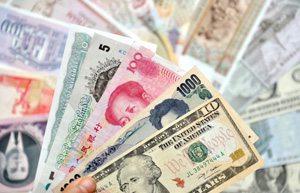 |
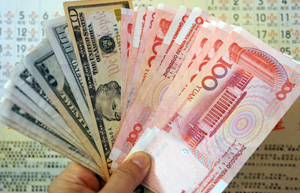
| US Treasury declines to name China as currency manipulator | Use of the renminbi is gaining ground globally |

Copyright 1995 - . All rights reserved. The content (including but not limited to text, photo, multimedia information, etc) published in this site belongs to China Daily Information Co (CDIC). Without written authorization from CDIC, such content shall not be republished or used in any form. Note: Browsers with 1024*768 or higher resolution are suggested for this site.
License for publishing multimedia online 0108263 Registration Number: 20100000002731