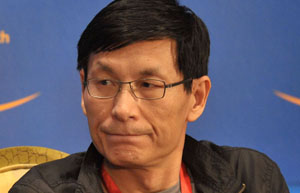
Whether the global economy can "get out of the woods" depends on leaders' ability to tackle structural reforms, Mark Weinberger, the global chairman and chief executive officer of the multinational professional service firm Ernst & Young Global Ltd, told China Daily.
The US Federal Reserve Board has just ended its long-running bond-buying stimulus program, known as quantitative easing.
Witnessing the effect of this process, policymakers in Europe and Japan have followed suit this year, rolling out their own versions of QE to battle the threats of deflation and unemployment. But in Weinberger's view, these programs, mostly monetary policy, "won't fix anything. They just buy you time, provide liquidity for governments and the private sector to ultimately improve".
QE will not create the improvement on its own, he said. "As monetary policy moves off the table, the question for developed countries is, will reform start to happen?"
Much time has been wasted as little reform progress has been seen in Europe's core nations following the eurozone sovereign debt crisis of 2010-12. In Japan, people wonder when Abenomics' "third arrow" of structural reform will be unleashed, following aggressive monetary and fiscal expansion.
Weinberger admitted that reform has gotten hard around the world, because "political payback for reform in the short term is negative" even if in the longer term, it is the right thing.
For example, politicians who propose to liberalize labor policy are not rewarded by voters. "Yet, without that, you will not see Europe being able to do what the US has been able to do", he said.
But ultimately, he believes that "by necessity", European leaders have to embrace reform.
"In the longer term, Europe will be fine. But they are going to need to get some real political will to be able to deal with these tough issues," he said.
Even in the US, where the economy has responded to QE relatively well, Weinberger said that a real recovery will occur only when structural reforms are undertaken to address the underlying problems.
"You have lower energy prices, low interest rates and low inflation (in the US), and you only have annualized GDP growth of 3.5 percent. That's not that strong," he said.
The underlying problems, according to Weinberger, a former assistant treasury secretary, is that US debt still exceeds $18 trillion and is expected to grow as interest rates go up and imbalances in international payments persist.
What also worries him is widening income inequality, a particularly ominous sign for an economy that generates 70 percent of output from consumption.
"Until people believe that they are going to have jobs and wage increases, they are not going to go out and spend," he said.
When it comes to China, it is also ultimately about reform. Growth has slowed, but that is not necessarily a bad thing.
"To me, it is a typical 'transitional phase' as you're trying to move China from exports and investment to a consumption-led economy. You allow some slowdown as you cut some investment.
"A transition to consumption does not happen overnight. There are going to be some bumps in the road," he said. "I'd rather have slightly lower GDP growth for a couple of quarters, making sure the reform moves forward to make a consumption-based economy with higher value-added jobs ... the real area we should be looking at, is whether the promised reforms are made," he said.
Despite concern that foreign investment in China decelerated this year, Weinberger said part of that reflected a slowdown in the global economy.
His conversations with global CEOs showed him that "everybody wants to invest in China", given the expanding middle class and entrepreneurship.
Related news
US QE exit to put further pressure on China's slowing economy
Fed announces end to quantitative easing stimulus, keeps low rates

Copyright 1995 - . All rights reserved. The content (including but not limited to text, photo, multimedia information, etc) published in this site belongs to China Daily Information Co (CDIC). Without written authorization from CDIC, such content shall not be republished or used in any form. Note: Browsers with 1024*768 or higher resolution are suggested for this site.
License for publishing multimedia online 0108263 Registration Number: 130349