BEIJING -- China, the world's leading coal producer and consumer, is to levy resource tax on coal on the basis of sales instead of production from Dec 1, in a move to shore up the dim industry and improve the deteriorating environment.
Clear off fees to usher in reform
The key to the reform, however, is to clear out charging fees involving coal. Due to historical reasons, Chinese coal producers pay taxes as well as fees under various names, such as coal price adjustment funds, compensation fees for native minerals, and fees for local economic development.
The State Council, China's cabinet, decided to clear off these fees before implementing the resource tax reform on coal, at an executive meeting on Sept 29.
The reform plan bans local governments from setting up funds that charge coal producers, according to a circular issued by the Ministry of Finance and the National Development and Reform Commission (NDRC) in October.
The circular stipulated that no more administrative charges or governmental funds involving coal, crude oil, and natural gas, are allowed to initiate by any local government, department or unit, except with permission from laws, rules and State Council regulations.
There must be accountability for any violations, warned the Ministry of Finance and the NDRC, who also set Sunday as the deadline for local governments to report their cleanup campaign and the list of fees to be canceled and to be kept.
China's top coal producers have sped up actions to meet the deadline. North China' s Shanxi province has cut 10.8 billion yuan ($1.77 billion) of fees coal producers have been charged since a massive cleanup in June.
"The 10.8 billion yuan represents what can be calculated," said a coal industry insider asked to be anonymous. "Coal producers' burden have been eased even more significantly if those 'invisible charges' are counted, as many of them are just uncountable."
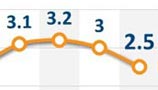
Shanxi, which has yielded one fourth of the country' s coal since 1949, has seen sharp decrease of coal profit since the second half of 2012. The per ton earning dropped to 2.6 yuan ($0.4) in the first three quarters this year, compared to 45 yuan ($7.4) in 2013, and 139 yuan ($22.8) in 2011.
The heavily coal dependent province was alert to the worsening situation in the coal industry even before the national reform was to launch. It worked out 20 measures last year in support of the industry, which cut 14.5 billion yuan ($2.4 billion) burden for coal producers.
Analysts from Taiyuan coal trade center do not see a price hike for coal in the fourth quarter, despite a modest increase of demand during the heating season and industrial consumption due to sluggish economic growth.
More than 70 percent of the coal producers are in deficit, according to statistics from China National Coal Association.
Less is more
Under the coal tax reform, the market is to play a decisive role in resource distribution, as required by the Third Plenary Session of the 18th Communist Party Central Committee held in November, 2013.
"The current practice does not reflect the scarcity of resources on the one hand, and leaves a loophole that allows some coal producers to conceal their real production and sales on the other," said Geng Mingzhai, head of school of economics, Henan University.
The waste during production and damage to the environment have not been calculated in the collection of taxes.
"This is to be changed in the new tax reform," said Geng.
The short-term benefit for coal producers is obvious. They need not pay dozens of kinds of fees charged in various names.
As a result of balancing local finance and coal producers, however, it is much likely the overall burden of coal producers will remain unchanged, said Kong Qingwen, chief of the bureau of finance, Wuhai City, Inner Mongolian Autonomous Region.
Kong suggested local governments consider coal mining cost when imposing the tax, and try every means to help coal producers get through the tough time.
According to the reform plan, provincial governments are the one to decide the tax rate within a specified range of two to 10 percent.
"Local governments decide how much tax coal producers should pay under the general principle of reducing their burden," said Geng. "In cases like Shanxi, it's a game between the government and coal producers, because the government in debt also wants the income."
A government official from Shanxi who declined to be named disclosed that the tax rate set by the province is less than 8.6%, which is to cut 17 billion yuan ($2.78 billion) fees to be charged with coal producers.
Local governments' appetite, however, can be counterbalanced when higher rate weakens the competitiveness of their tax payers in the market, said experts.

Copyright 1995 - . All rights reserved. The content (including but not limited to text, photo, multimedia information, etc) published in this site belongs to China Daily Information Co (CDIC). Without written authorization from CDIC, such content shall not be republished or used in any form. Note: Browsers with 1024*768 or higher resolution are suggested for this site.
License for publishing multimedia online 0108263 Registration Number: 130349