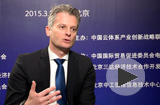
SINGAPORE -- China is not seeking unilateral gains from the Belt and Road Initiatives and the first major pilot projects will be crucial in boosting the strategy, a veteran diplomat said in Singapore.
Wu Jianmin, who is also the former president of the China Foreign Affairs University, made the remarks at a lecture organized by the S. Rajaratnam School of International Studies ( RSIS), a graduate school of Nanyang Technological University of Singapore.
During the lecture and the interview with Xinhua afterwards on Thursday, Wu said the most important change in international relations over the past centuries is the theme change from "war and revolution" to "peace and development", and the latter is what China embraces to kick-start the Belt and Road Initiatives in this region.
"After 36 years' strong growth, people in the international community say, 'look, China today is the second largest economy in the world, you have to provide some good,'" said Wu, adding the initiatives are designed to do this.
Asia has been rising after World War II, and has driven the center of gravity of international relations from, in Wu's words, "the Atlantic to the Pacific," among which East Asia is undoubtedly the biggest contributor to global economic growth in the last three to four decades.
Highlighting the great accomplishments East Asia has achieved in recent decades, Wu noted the imbalance of economic development among the Asia-Pacific region. The Belt and Road Initiatives will "bring common prosperity" to the whole region, he said.
"South Asia is catching up, yet central Asia is left behind," Wu said. "The One Belt, One Road (Belt and Road) initiatives are designed to link East Asia, South Asia and central Asia together, because the economies of the three regions are highly complementary. If these initiatives succeed, that will provide Asia with a powerful engine for further growth. That's good news not only for Asia, but also for the entire international community. "
Although warmly received by most economies along the 21st Century Maritime Silk Road and the Silk Road Economic Belt, there are still doubts over China's intention, as some think there are " no free lunch" in the world.
In response, Wu said the initiatives were originally not designed to offer "free lunch," but to contribute to the prosperity of the whole region.
When he visited Indonesia last April, the Indonesian president at that time said "China has 100,000 kilometers' highway, but Indonesia only has 700 kilometers, because we don't have sufficient fund," Wu recalled.
"Suppose China and Indonesia could together build a highway network, I believe this network will make Indonesia more prosperous, and we can also benefit from its prosperity," he said.
There is also concern that China might take this opportunity to get its own allies and expand its influence, and to seek unilateral gains through it. To this, Wu said one of China's foreign policy principles is non-alignment.
"In 1950s, we allied with the Soviet Union, that was an unpleasant experience. China would not repeat it, no allies with anybody is a very important principle. We stick to this principle for China's interest, but also for the interest of the international community."
Despite the huge potentials of economic cooperation, it is feared that uncertainties brought by issues like territorial disputes in the region and Thailand's political instability will put the initiatives at risk.
"There're always risks when you do something at that scale. On one side, we have differences, on the other side, we have large common grounds," Wu said.
"We have to first look at project that could contribute to the stability. Before we start, we have to make good preparation to see what kind of risks we face, from what part should we start first and how shall we move on. I believe the first major pilot projects will be crucial."
When asked if China has given a deadline for such initiatives, Wu said, "I think it will take a few generations."
"They may last till the end of the century, or even beyond. Because they're very ambitious initiatives, not only for China, but also for our region."

Copyright 1995 - . All rights reserved. The content (including but not limited to text, photo, multimedia information, etc) published in this site belongs to China Daily Information Co (CDIC). Without written authorization from CDIC, such content shall not be republished or used in any form. Note: Browsers with 1024*768 or higher resolution are suggested for this site.
License for publishing multimedia online 0108263 Registration Number: 130349