BEIJING - As a slower Chinese economy and recent volatility on its financial markets made headlines worldwide, a new course of growth for China has been emerging.
Where the world's second largest economy goes next was the hot topic at the Summer Davos Forum in the northeastern city of Dalian, after weak performance of major economic indicators and the latest stock market rout rattled investors' nerves.
Anaemic external demand and a cooling property market have dampened exports and investment, both traditional drivers of China's growth.
However, some signals show that new drivers, including innovation, technology and consumption, are playing a bigger role.
While the shift of pattern is far from complete, those signals have charted a new course of growth for China's economy.
Start-up tide, high-tech bright spot
Speaking of these new drivers at the forum, Chinese Premier Li Keqiang pointed to mass entrepreneurship and innovation, saying an average of over 10,000 new market entities have been registered every day since last year, despite the economic slowdown.
In the first half of 2015, newly registered enterprises had a total registered capital of 12 trillion yuan ($1.9 trillion), up 43 percent from a year earlier.
The government has rolled out reforms to streamline business registration procedures, provided tax breaks and fee cuts and set up a 60 billion-yuan fund to support small and medium-sized enterprises.
In "maker clubs" across major cities in China, small and micro start-up companies are offered low rents and easier access to venture capital.
"Almost all the young people I have met recently are thinking about starting their own business," said Huang Yiping, a Peking University professor in economics. "Some say there's a bubble, but a bubble of innovation is a good one."
The government efforts to boost innovation will play a strong role in driving China's growth in the next two or three years, said Liu Yuanchun, an economist at Renmin University.
Despite softening industrial production and investment, there has been an upturn in high-tech industries and strong growth in patented technology, Liu told Xinhua.
Output of high-tech industries expanded faster in July than the previous month, up 9.6 percent year on year, while overall industrial output growth slowed to 6 percent.
In the first seven months, investment in high-tech industries rose 16.4 percent year on year, 5.2 percentage points higher than the overall fixed-asset investment growth rate.
Though China has fewer advantages in labor costs than before as a result of an aging population, labor costs for higher-end industries have fallen as many more people have received college education, Liu explained.
College graduates made up 8.9 percent of the population in 2010, up from 3.6 percent in 2000, according to the last national census. Even if the ratio had not increased since 2010, it would still mean about 120 million people with college education in China, nearly equivalent to the whole population of Japan.
That advantage in human resources will pave the way for China's upgrade to higher-end industries, Liu said.
China already has some innovative companies of global fame, like Alibaba, Lenovo and Xiaomi, as well as other internationally competitive firms in high-tech and emerging industries, Huang noted.
"Though their total scale is not big enough to prop up overall national growth yet, it's only a matter of time until they mature and form a new pillar of the economy", he said.
Consumption shift
Jeff Walters, partner and managing director of Boston Consulting Group, observed an obvious transition by China's economy from the investment-led mode to consumption-led mode.
Consumption now contributes to more than 60 percent of economic growth, while the service sector accounts for half of GDP, Premier Li said at the Dalian forum.
China's retail sales continued to grow quite strongly, increasing 10.5 percent year on year to 2.43 trillion yuan in July.
Walters attributed the strength in consumption to income growth and high employment numbers, while noting a change of consumption pattern.
"We really see shifting growth from offline to online, and also from the emerging middle class to upper-middle class," he said.
Online sales jumped 37 percent year on year in the first seven months.
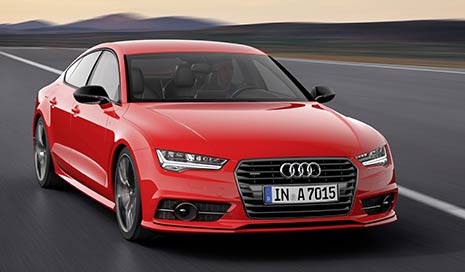
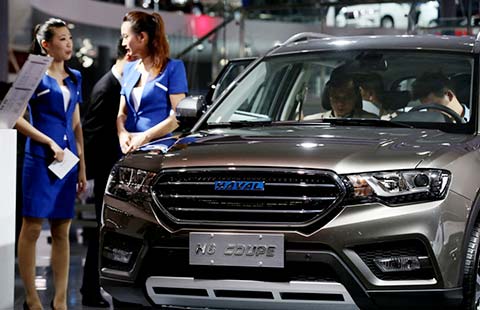
In the past decade, the emergence of a middle class drove a lot of consumption growth, but now a higher-income class is driving higher-end consumption like buying cars and travelling abroad, Walters said.
China's GDP per capita exceeded $5,000 in 2011 and reached $7,575 last year.
China is facing an upgrading of its consumption structure, as some provinces and cities in China already saw their per capita GDP exceed $10,000, the threshold for high-income economies, said Liu.

Copyright 1995 - . All rights reserved. The content (including but not limited to text, photo, multimedia information, etc) published in this site belongs to China Daily Information Co (CDIC). Without written authorization from CDIC, such content shall not be republished or used in any form. Note: Browsers with 1024*768 or higher resolution are suggested for this site.
License for publishing multimedia online 0108263 Registration Number: 130349