CHENGDU - Brilliant young engineer Hu Tianlian once faced a dilemma.
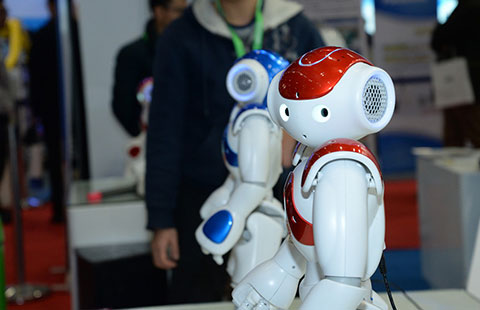
Hu was a lecturer at China's Southwest University of Science and Technology, where he also pursued the design of robots for remote operation in dangerous industrial environments. In 2012, he founded Fude Robot Co. But there wasn't enough time in the day for both pursuits.
So he quit lecturing. "There was no going back," Hu said.
For this robotics wunderkind, a new policy giving academics three-year sabbaticals to start businesses came just too late, but many more like him stand to benefit.
The guidelines were announced by the State Council last week in the hope of spurring scientists to turn their academic research into commercial products, boosting the economy.
They also required universities and scientific institutes to consider commercial achievements when assessing students and members for academic honors. And academics that license their research to an enterprise are now entitled to at least half the proceeds from any resulting products.
"I would have been able to continue teaching, had this happened earlier," Hu said.
Scientist and entrepreneur
In 2015, the Chinese economy grew at its slowest rate in a quarter of a century. Facing the slowdown, the country's leaders have been encouraging entrepreneurship and mass innovation, hoping they can become "twin engines" of economic growth.
Universities are of course hotbeds of creativity, but there was previously little incentive or possibility for academics to try to capitalize on their creations in the market. Why give up a comfortable, prestigious job to take a chance in the notoriously risky world of entrepreneurship?
China already has thousands of tech business zones, many affiliated to universities, which offer preferential policies for startups.
But according to official figures, only 10 percent of scientific research achievements are being converted into commercial products, much lower than the 40-percent rate in developed countries.
Chu Jianxun, an associate professor with the University of Science and Technology, described the State Council's announcement as "inspiring."

Copyright 1995 - . All rights reserved. The content (including but not limited to text, photo, multimedia information, etc) published in this site belongs to China Daily Information Co (CDIC). Without written authorization from CDIC, such content shall not be republished or used in any form. Note: Browsers with 1024*768 or higher resolution are suggested for this site.
License for publishing multimedia online 0108263 Registration Number: 130349