 |
|
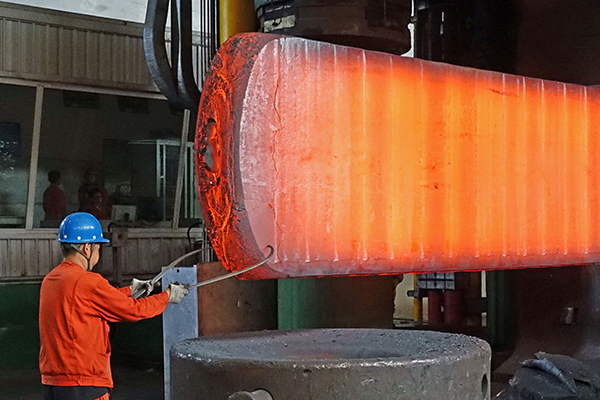
A man works in a factory in Dalian, Liaoning province, Oct 13, 2015. [Photo/VCG] |
Cost is high from over-reliance on heavy industry with too many smokestack industries and mines and too few private firms
Editor's Note: Now that the Chinese government has adopted its growth strategy for this year and the nation's five-year plan from 2016 to 2020, we have decided to publish a regular Policy Review Page to brief our readers about what the policies are and what they include, their underlining realities and political considerations. In this edition, we take a look at the challenging conditions in some of China's northern and northeastern provinces, and at the central officials' attitude toward China's capital outflow and the possible measures they may adopt should the outflow become so large it threatens the economy's overall health.
Overseas commentators sometimes wonder how China has maintained a high economic growth rate for more than three decades without encountering a crisis. But the fact is China's economy has encountered various crises, one after another, in its regions.
One example is the sluggish economies of its northeastern provinces. In 2004, the central government vowed to rejuvenate Northeast China's economy. But the northeastern region still lags behind other regions of China when it comes to private enterprises and opening-up to the global market.
An investigative report by China Economic Times says the northeastern region's symptoms are evident in some northern provinces too. All of them have too many smokestack industries and mines, and too few private and services enterprises.
On the country's 2015 GDP growth rate ranking list, Shanxi, Liaoning, Heilongjiang, Jilin and Hebei provinces, and the Inner Mongolia autonomous region occupied the bottom six positions among 31 provincial-level regions. Their economic structures have common features such as over-reliance on resource-intensive and heavy industries.
China Economic Times sent teams of journalists to probe deeper into the phenomenon, and they found that Gansu province and the Ningxia Hui autonomous region also had similar economic structures.
"We have one city built on crude-oil mining and four others on coal mining," says Chen Yongchang, head of the official economic advisory committee of Heilongjiang province. "The energy industry accounts for 60 percent of our provincial GDP and its problems drag our economy down."
The city built on crude-oil mining he is referring to is Daqing, where the GDP growth rate was minus 4.3 percent in the first three quarters of 2015, and still falling.
Things are even worse in Liaoning province. From January to August 2015, the profits of its cement industry, one of its pillar industries, dropped 145.3 percent.
Over-reliance on resource-intensive industries makes the economies of these provinces and regions rather vulnerable to fluctuations in energy prices. In Shanxi, "you can never talk about its economy without mentioning coal", says Chen Guowei, who heads industrial economy research at the provincial Development Research Center.

Copyright 1995 - . All rights reserved. The content (including but not limited to text, photo, multimedia information, etc) published in this site belongs to China Daily Information Co (CDIC). Without written authorization from CDIC, such content shall not be republished or used in any form. Note: Browsers with 1024*768 or higher resolution are suggested for this site.
License for publishing multimedia online 0108263 Registration Number: 130349