BEIJING - Economic data published by China's provinces and regions showed positive growth in the first quarter (Q1), but also highlighted the challenges faced by some areas.
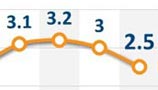
Tibet autonomous region and the economic powerhouse of Chongqing municipality performed the best in Q1, with growth of 10.7 percent. There were 24 provinces, municipalities and regions that posted growth rates faster than the national Q1 figure of 6.7 percent.
Economic observers said the service industry had played a central role in boosting the economy, while real estate sales, which jumped in many big cities following government incentives rolled out in Q1, also helped.
The Chinese economy has shown positive signs of stabilizing thanks to strong investment in infrastructure and the property sector, and it is expected to hold steady during the remainder of the year.
Anticipating downward economic pressure this year, at least two thirds of provincial-level regions lowered their growth targets for 2016 and left room for capacity reduction and restructuring of industries.
Analysts said the data showed that policies had been successful and local economies were prepared for the next phase of reform.
Robust growth in the west
Investment and infrastructure building are both helping to sustain growth in Tibet. In Q1, the central government allocated 30 billion yuan ($4.6 billion) to projects such as hydropower stations and a railway and highway linking Lhasa to Nyingchi Prefecture.
Tourism also contributed to the growth. More than 561,000 people visited the region in Q1, up 20.8 percent year on year. Tourist spending increased almost 30 percent. Moreover, per capita disposable income for urban and rural residents grew more than 11 percent year on year, statistics show.
"Tibet's growth depends largely upon favorable fiscal policies from the central government and aid from other provincial regions," said Lhorang Dradul, a professor with Sichuan University.
The underdeveloped mountainous region of Guizhou province benefited from anti-poverty funds and incentives. It has also reduced its reliance on mining, instead looking to tourism, computer and environment-related industries to drive development.
Ding Xiongjun, deputy secretariat of Guizhou government, said fixed asset investment was a key driver of economic growth in Q1. This year, Guizhou has plans for 1,948 large-scale engineering projects in the pipeline, 200 more than last year. These projects will greatly improve infrastructure in Guizhou, he said.
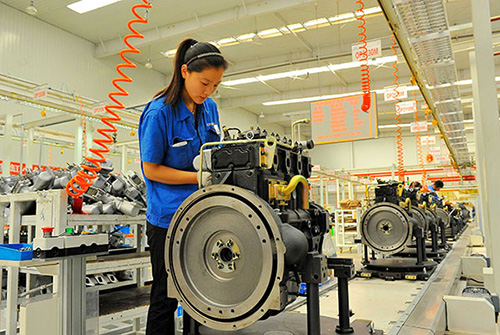
Thanks to the robust manufacturing and service industry, Chongqing posted 10.7 percent growth in the first quarter.
"The economy in Chongqing has seen stable Q1 growth, with more structural reforms, and new growth engines identified and nurtured. It is expected to maintain this positive momentum," said Tong Zesheng, Chongqing municipal statistics bureau spokesperson.
Revamping the northeast
Despite encouraging signs elsewhere, the northern industrial and mining provinces of Shanxi and Liaoning posted the country's lowest Q1 growth rates. The former posted growth of 3 percent, and Liaoning put the figure at minus 1.3 percent.
"The problems in Liaoning are not new. They are a hangover of years as an industrial base," said an analyst with Liaoning provincial information center.
"The data doesn't mean the economy is in a mess. Fast growth is seen in service sector and new industries such as robotics, general aviation and pharmaceuticals," he added.
Yi Baozhong, a Northeast Asia expert with Jilin University, said the recession in provinces like Liaoning is mainly caused by an over-reliance on the raw material and energy sectors. "The economy of this model can grow rapidly but is vulnerable to downward pressures," Yi said.
A Deutsche Bank report said there were three factors behind the northeastern recession: an outdated growth model driven by resources, huge losses from torpid state-owned enterprises and stalling population growth.
Policymakers have high hopes for the old industrial base. The government on Tuesday vowed it would do more to rejuvenate the northeast rustbelt through reforms and economic restructuring.
Reviving the northeast is not an expedient but a profound strategy that will help forge fresh economic engines, analysts said.
"China's economic transition needs new vitality, which requires the lagging northeast to keep up with reforms," said Song Donglin, president of Jilin University of Finance and Economics.


Copyright 1995 - . All rights reserved. The content (including but not limited to text, photo, multimedia information, etc) published in this site belongs to China Daily Information Co (CDIC). Without written authorization from CDIC, such content shall not be republished or used in any form. Note: Browsers with 1024*768 or higher resolution are suggested for this site.
License for publishing multimedia online 0108263 Registration Number: 130349