LONDON - China's coal consumption might have peaked in recent years, suggesting the country has entered the era of post-coal growth, according to a commentary article published Monday in the journal Nature Geoscience.
The commentary was co-authored by scholars from research institutes in China, Britain, and the United States.
The timing of China's peak coal consumption has been disputed, with the majority of projections now placing it between 2020 and 2040.
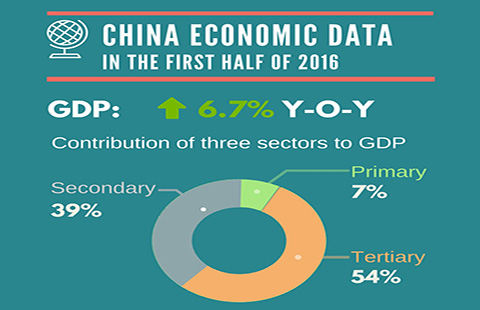
Yet China's coal use dropped to 4.12 billion tons, a decrease of 2.9 percent, in 2014, with another 3.6 percent decrease in 2015, all while gross domestic product (GDP) continued to grow by 7.3 percent and 6.9 percent respectively, the authors said.
Coal use in China might have peaked in 2013 or 2014, depending on the way it is calculated, and if the volume figures take into account the fact that higher quality coal was burned, 2014 is more likely to be the year of peak coal consumption, according to the article.
However, the authors pointed out: "it is not important whether the peak year was in 2013 or 2014, what matters is the reversal in the trend."
"We argue that China's coal consumption has indeed reached an inflection point much sooner than expected, and will decline henceforth, even though coal will remain the primary source of energy for the coming decades," said the authors.
Two forces are driving this trend. First, is the ongoing economic slow-down, especially in the construction and manufacturing industries. The second force is strengthened policies regarding air pollution and clean energy, according to the commentary.
"I think even if China's economic growth rebounds in the future, it is less likely that the consumption of coal will increase significantly again," one of the authors of the article, Qi Ye, told Xinhua. He is the director of the Brookings-Tsinghua Center for Public Policy in Beijing.
That is due to the fact that China's non-coal energy consumption has grown rapidly and the cost of this kind of energy has been going down, so the trend of using such an energy source to replace coal is irreversible, said Qi. But he also noted there might be some fluctuations in the consumption of coal in the future.
The end of coal-fired growth in China does not mean coal will cease to be a major energy source; it means that it is entering a phase of development when China's economic growth -- and the improving living standards of its population -- will not depend on rising coal consumption, according to the article.
China's experience is also relevant to the rest of the world.
"The peaking of China's coal consumption has a very important referential significance to other developing countries, say India and South Africa, and it boosts the global effort to tackle climate change," said Qi.


Copyright 1995 - . All rights reserved. The content (including but not limited to text, photo, multimedia information, etc) published in this site belongs to China Daily Information Co (CDIC). Without written authorization from CDIC, such content shall not be republished or used in any form. Note: Browsers with 1024*768 or higher resolution are suggested for this site.
License for publishing multimedia online 0108263 Registration Number: 130349