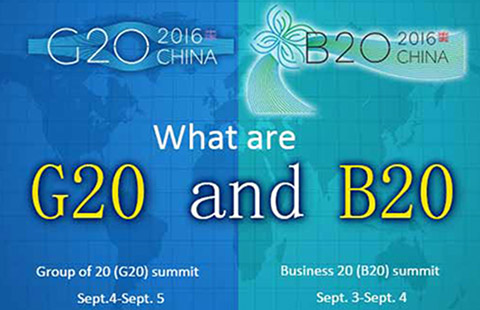
Major economic and financial affairs have topped the agenda of the past ten G20 Summits. They will also top the agenda of this year's summit in Hangzhou on Sept 4-5 and help silence the emerging anti-globalization forces.
Determined to strengthen coordination on international macroeconomic policies, level the playing field for all economies, and rebuild trust between the West and the emerging markets, the multinational bloc is now a leading platform for global economic governance, with the G7/G8 losing its magic.
After the United Kingdom's exit from the European Union and the rise of trade protectionism in some Western economies, globalization seems to be losing its charm for many, especially when it comes to economic integration.
The anti-globalization movement is a result of the consequences of globalization, especially the 2008 global financial crisis. In fact, globalization has not only widened the income gap between the haves and have-nots, but also marginalized many developing countries. And thanks to the global financial crisis, many economies have raised trade barriers higher and resorted to protectionism, leading to public resentment against foreign investment and immigrants in the West.
That developed economies are taking the lead in the anti-globalization campaign-Brexit for example-should make the international community reflect on the disorder and imbalanced development that globalization has brought about.
The rise of trade protectionism has hampered the flow of capital, technologies and human resources, casting a shadow over sustainable global growth. Donald Trump, the Republican presidential candidate, has said he, if elected to the US' highest office, would impose tariffs as high as 45 percent on Chinese goods. Worse, his endorsement of trade protectionism and tariff barriers has gained wide support at home and abroad.
Hopefully, the Hangzhou G20 Summit will offer a way to solve the problems with globalization in the light of cross-border investment.
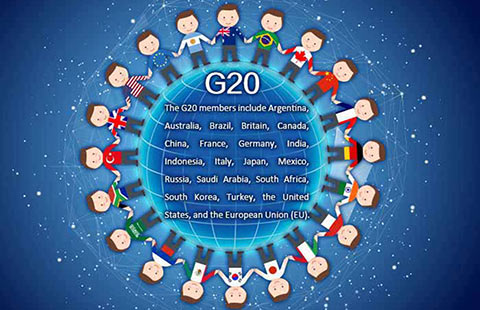
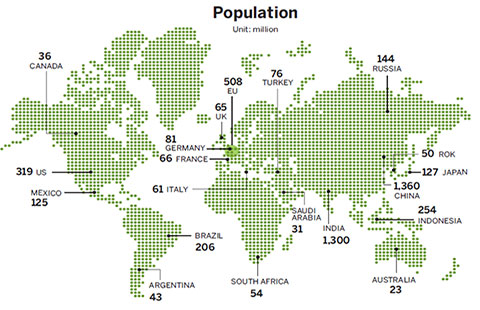
Comprising 19 developed and developing economies and the European Union, the G20 accounts for 85 percent of the world economy, 75 percent of world trade and two-thirds of the global population. It has played a significant role in accelerating global economic recovery and boosting investment and trade exchanges.
Investment is a major indicator of the global economy's health, and higher investments could potentially end the ongoing economic stagnation. But despite the signing of more than 3,300 multilateral and bilateral investment deals, the implementation has remained fragmented due to the lack of universal investment rules and mechanisms. The main cause of this investment dilemma is the diverse pursuits of developed and developing economies. Being a major exporter of capital for long, the West demands free entry into emerging markets, while developing countries often consider supervision of foreign capital more important.
In this context, the G20 Guiding Principles for Global Investment Policymaking, released in July as the first framework for multilateral global investment rules, should be able to strike a balance between the two sides. The framework highlights the need to abandon trade protectionism and advocates inclusive growth, while leaving enough policymaking room for governments to manage foreign investments in their countries.
Should the framework come into effect, it will add to the momentum of G20's pursuit of "inclusiveness, implementation, and investment for growth".
The author is an associate researcher at the Chinese Academy of International Trade and Economic Cooperation, Ministry of Commerce.


Copyright 1995 - . All rights reserved. The content (including but not limited to text, photo, multimedia information, etc) published in this site belongs to China Daily Information Co (CDIC). Without written authorization from CDIC, such content shall not be republished or used in any form. Note: Browsers with 1024*768 or higher resolution are suggested for this site.
License for publishing multimedia online 0108263 Registration Number: 130349