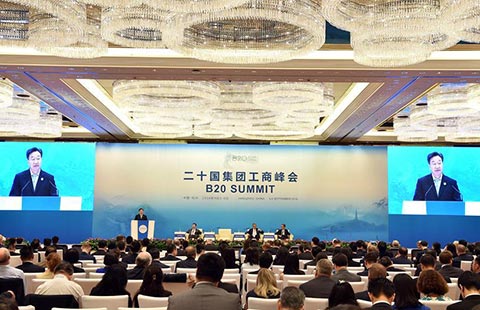
HANGZHOU - In the days just past, leaders from the world's 20 major economies reviewed how the international community saved the global economy from a financial meltdown in 2008.
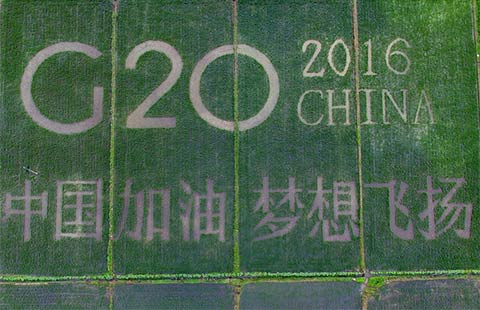
With the lessons of that incident in the not so distant past, policymakers at the G20 Summit, held in the eastern city of Hangzhou on Sunday and Monday, who oversee over 85 percent of the world's economic output, explored new ways to reboot global growth.
Under the presidency of China, the single largest contributor to global growth, it's widely expected that China's development vision and experiences will help chart the course for the world economy.
China hopes the Hangzhou summit will come up with "an integrated prescription to address both the symptoms and root causes so that the world economy could move along a path of strong, sustainable, balanced and inclusive growth," President Xi Jinping said while addressing the opening of the summit.
Structural reform
Eight years after the global financial crisis, the recovery remains slow and fragile. The world economy is mired in the quicksand of the mediocre, featuring low growth, low interest rates and sluggish trade.
The myriad fiscal and monetary stimulus policies used since 2008 have helped the world economy weather the crisis but structural problems remain.
Noting the world economy has arrived at "a crucial juncture," Xi said the growth momentum brought by the previous wave of technological progress is waning while the latest wave of technological and industrial revolution is yet to gather steam.
G20 leaders agreed to use multiple policy tools including fiscal, monetary and structural reform to ward off short-term risks and explore medium- and long-term growth potential, Xi said after the summit concluded.
It's a prescription offered by China, said Lu Feng, director of China Macroeconomic Research Center with Peking University.
Lu said forming a consensus and designing a roadmap for structural reform is a major achievement that China contributes to not only the G20 members but the world at large.
To forge ahead with structural reform, the G20 leaders have identified the priority areas, guiding principles and a set of indicators to assess the development of the reform.
Strong trade, investment
Since China took the chair of the G20 Summit, it has stressed strong world trade and investment, as well as inclusive and interconnected development, which are crucial to spreading economic benefits widely and shoring up support for free trade.
Trade and cross-border investment, which used to drive global growth, have been left by the wayside and the prolonged downturn has fueled a rise of protectionism.
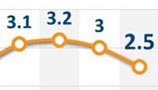
Global trade growth slowed from an average of over 7 percent each year between 1990 and 2008 to less than 3 percent between 2009 and 2015. Last year marked the fourth consecutive year that the global trade growth rate was below GDP growth, according to statistics from the World Trade Organization.
The G20 leaders reaffirmed their commitment to resist protectionism and vowed to revitalize the two engines for growth.
Leaders of the G20 members, which account for 80 percent of the world's trade volume, agreed to formulate the strategy for global trade growth and the guiding principles for global investment policy-making, as well as consolidate the multilateral trading regime.
These initiatives, a major step forward to improve the international trade and investment system, will help boost growth if better implemented, said Yang Fanxin, an economist with Chongyang Institute for Financial Studies at Renmin University of China.
Xi called on all G20 members to match their words with actions. "We should turn the G20 into an action team, instead of a talk shop," he said.
Luigi Gambardella, president of ChinaEU, a business association based in Brussels, said that China was taking on the responsibility of building an open global economy, and its efforts were increasingly recognized by Western countries.
In its latest step, China announced plans to set up seven new free trade zones, after the establishment of its first free trade zone in Shanghai in 2013 and another three in 2014.
China's top legislature on Saturday revised four laws to ease restriction on overseas investment. These, which will come into effect on Oct. 1, will lay a legal foundation for applying a "negative list" mechanism to all overseas investment.


Copyright 1995 - . All rights reserved. The content (including but not limited to text, photo, multimedia information, etc) published in this site belongs to China Daily Information Co (CDIC). Without written authorization from CDIC, such content shall not be republished or used in any form. Note: Browsers with 1024*768 or higher resolution are suggested for this site.
License for publishing multimedia online 0108263 Registration Number: 130349