|
|

Home
> Opinions
|
G20 summit should keep global recovery continuingBy Jaspal Singh Bindra (chinadaily.com.cn)
Updated: 2009-09-21 14:16 World leaders must be congratulated for successfully coming together to combat the biggest global economic crisis in generations. Six months after leaders from the world's leading economies joined hands at the G20 meeting in London, the global economy is slowly but certainly emerging from the slump, led by the resurgent economies of Asia.
As a result, China is recovering from its most severe slowdown in decades to report a 7.9 percent growth in the second quarter from a year earlier, up from 6.1 percent in the previous quarter. India has reported a 6.1 percent growth in the same quarter. All the major Asian economies have returned to growth, including Japan. Even Germany and France, the Eurozone's two biggest economies, are back on the growth path. Yet, this is no time for complacency. The US economy, the world's biggest and still the main engine for global commerce, remains in recession – its deepest and longest since the 1930s. Companies are still shedding jobs, mainly in the US and Europe, and millions of people in the developing world have been forced back into poverty. Meanwhile, financial institutions worldwide, after writing off more than $1.6 trillion of credit losses, are still cautious about making loans and investments. These are red flags which should provide enough reasons for global policy makers to carry on with the well-orchestrated fiscal and monetary stimuli embarked upon less than a year ago. For sure, governments and central bankers will need to map out an equally well-coordinated exit route to reabsorb the unprecedented levels of liquidity when the global economy is securely out of the woods. That time has not arrived, not yet. Indeed, the follow-up G20 meeting in Pittsburgh couldn't have come at a better time. Global leaders must know that the ongoing global recovery will remain fragile until rising unemployment in the US, Europe and Japan is reversed and consumers in those economies start loosening their purse-strings after repaying some of their debts and rebuilding their savings. Any move at this stage to tighten monetary and fiscal policies, especially in the developed world, risks the world economy repeating Japan's mistakes during the 1990s when a hurried rise in tax rates, without simultaneously loosening of monetary policy, triggered a financial crisis and eventually led Japan into the path of quantitative easing in 2001 which lasted for five years. We are all very familiar by now with Japan's last couple of decades.
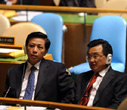
The resulting surplus of liquidity amassed by Asia's export-oriented economies found their way to the West, through investments in Western government bonds, helping keep global interest rates low and perpetuating the excessive spending patterns of consumers in the US and Western Europe. Although exporters in Asia have seen their trade surpluses shrink dramatically this year as consumers in the West cut back on spending following the onset of the economic and financial crisis, it will be some time before we see a substantial pick up in consumer demand in the East, enough to offset the slump in Western consumption. Paving a consumption-led growth path for Asia is essential but it will take years to implement. It will require Asian governments to provide social safety nets and healthcare guarantees for its citizens so that consumers do not have to save excessively for the rainy days. It will also require Asian governments to carry on with economic reforms to create jobs and increase overall efficiency and productivity. It will require deepening and broadening of the region's capital markets to prepare them to absorb large amount of capital generated by the region's own savers. Asia's reliance on equity capital markets to fund corporate investments often leads to excessive volatility and, in some cases, asset bubbles. Meanwhile, the lack of deep and liquid corporate debt markets prevents the companies from accessing long-term capital. It is clear by now that the West will take a long time to repair the damage to its economies caused by the financial and economic crisis and return to a sustainable growth path. The onus for engineering a relatively quick recovery now largely rests with China, India, Korea, Indonesia and the other large emerging markets. Indeed, these emerging economies, increasingly aware of their responsibilities, have played their new roles with aplomb so far. China's unprecedented 4-trillion-yuan fiscal stimulus was the cornerstone of the global economy's recovery this year. India's free-trade agreements with South Korea and ASEAN in recent months are laying the foundation for greater trade and investment flows within Asia. Established in 1945 under the UN Charter, the General Assembly (GA) occupies a central position as the chief deliberative, policymaking and representative organ of the UN.
In the past few years while adhering to the Scientific Outlook on Development Hu promotes, China has been working towards rigorous targets - which it had set for itself - to promote clean energy, push for energy efficiency and cut greenhouse emissions.
I hope China will categorically outline her stance on vital international issues. I would be totally disappointed if deliberations after this UN summits turn out to be "the same old wine in old cups."
|
      |
主站蜘蛛池模板: 灵川县| 西充县| 界首市| 房产| 来凤县| 上栗县| 永顺县| 珲春市| 泰州市| 措勤县| 兴山县| 新竹市| 青冈县| 罗江县| 河曲县| 泰宁县| 万盛区| 钦州市| 宕昌县| 大名县| 永靖县| 富顺县| 阜康市| 德化县| 桃园市| 保康县| 雷波县| 临湘市| 顺平县| 桑日县| 长垣县| 寻乌县| 苗栗县| 民丰县| 游戏| 铁岭县| 太仆寺旗| 资兴市| 牙克石市| 合作市| 柘荣县| 和田县| 安泽县| 麦盖提县| 隆德县| 丽水市| 宿州市| 隆回县| 行唐县| 逊克县| 文昌市| 中牟县| 江孜县| 卫辉市| 张家港市| 承德县| 祥云县| 盐津县| 北海市| 许昌县| 伊宁市| 德兴市| 临夏市| 兴和县| 通河县| 东兰县| 郁南县| 海晏县| 杭锦旗| 荃湾区| 平利县| 库尔勒市| 兴和县| 东方市| 长泰县| 合作市| 九寨沟县| 和静县| 石家庄市| 株洲市| 昭苏县| 泾源县|