
Changes to development model
By Zhang Xiaojing (China Daily)
2010-12-27 13:37
 |
It is crucial for the government to bring economic growth onto a sustainable track in the coming five years
The 12th Five-Year Plan period (2011-2015) is crucial for China. So it is essential that the decision-makers recognize the opportunities and challenges at home and abroad before drafting the new development plan to transform the country's growth model and industrial structure.
China will still have a labor advantage despite the growing pressure of an aging society. The high savings rate, which won't change much, is going to dramatically drive China's economic growth, together with the accelerating process of urbanization and the progress and opening-up of the Chinese market.
The global power shift to the East has been dramatically accelerated. The West has been traumatized by the financial crisis, while the emerging economies are recovering vigorously. According to the IMF, developing economies' share in global output, in terms of purchasing power, will surpass that of the developed countries, for the first time in history in 2013.
That is to say, China will be an indispensable partner actively participating in regional cooperation and global governance. This will provide China with a golden opportunity to internationalize its currency and gradually reform the global monetary system.
However, although opportunities abound, we should adopt a pragmatic attitude and pay attention t
| ||||


China has maintained 9.5 percent economic growth on average for more than three decades. Our research indicates over this period an average 1.3 percent of growth had environmental costs. This worrisome proportion climbed to 2 percent over the last decade. Given the restraints of a low carbon economy and the draining of labor resources, the potential growth rate for China may gradually fall below 8 percent in the next decade.
The social and industrial structure contains more knotty issues of imbalance in development. The imbalance between rural and urban areas, investment and consumption, growth and distribution, manufacturing and service industries, fetters future development.
On the one hand, economic catching-up and factor prices are distorted, which causes structural imbalance, wastes resources and damages the environment. On the other hand, a narrow-minded focus on growth without fair distribution leads to a mismatch between economic and welfare progress. Over-dependence on investment and heavy chemical industries are especially unsustainable with the depletion of natural resources.
Besides, the widening income gap has pushed the Gini coefficient of China to a dangerous 0.46. Statistically, the income ratio between city and countryside residents is about 3.3:1. But the real gap is much larger considering the advantageous social security and subsidies for urban residents. Moreover, the share of labor wages in national income has dropped constantly with the robust growth of the economy.
The Chinese economy is inevitably trapped in a self-made dilemma after more than 30 years of dramatic growth. Institutional reform is crucial to transforming China's development mode. The government should play down its role in promoting economic growth and gradually evolve into a service-oriented organ.
Government interference eats into the market's part in allocating resources and stakes public fiscal security on economic volatility, which also harbors numerous "rent-seeking" chances for unsupervised powers. Local governments' passionate involvement in economic activities is rooted in the evaluation system of civil servants. Economic indicators, say GDP growth, are still the most important tangible numeral reference to promote officials. But only when more social indicators, such as the growth rate of residents' incomes, employment, social security and environmental indices, are made a decisive part of the evaluation system can local governments start seriously thinking of changing their roles.
In addition, more importance should be attached to adjusting income distribution and industrial structure through price and tax mechanisms. Only when the prices of energy resources are reasonable and taxes on resources and the environment are in place, can the ambitious energy saving and emission reduction goals be met. Only when direct taxes are increased by a large margin, can local governments be prompted to build better local industrial structures rather than just blindly expanding the scale of industry. Only when relations between central and local finances are properly managed can the over-dependence on land transfer and lopsided malformation of the real estate market be corrected.
The fast development of Japan before 1980s overshadowed the structural defects of its economy, which were exposed after the mid-1980s when Plaza Accord was signed. The decade that followed was called "the lost decade" by the Japanese. In contrast, the US government spared no effort to adjust the industrial structure in the stagflation of the 1970s, laying a solid foundation for the lasting growth of the US economy during the decades that followed. Even in the economic crisis, the Obama administration is determined to push through healthcare reform and financial reform projects.
The Chinese government should heed the lessons of Japan and the US and make structural transformations for sustainable development in the long run, instead of pursuing temporary economic growth, which is doomed to irresistible collapse in the future.
The author is director of the macroeconomic research institute under the Chinese Academy of Social Sciences.
Charger captures power from Wifi
A US electronics company invented a charger that draws its power from Wifi signals, according to TGDaily.com.
'Green seeds' chewing gum bottle
The "Green Seeds" chewing gum bottle designed by Jiang Gonglue makes it easier for you to deal with gum residue.
Bulb water heater
A French graduate designed a kettle using an incandescent bulb to heat water, according to dezeen.com

China International Green Industry Expo 2010
The China International Green Industry Expo 2010 (CIGIE 2010) is an important international green industry exhibition hosted by the Chinese government and held at the Beijing Exhibition Center, Nov 24 to 27.
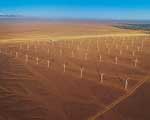
China Wind Power 2010 Conference&Exhibition
China Wind Power 2010 is the largest and most important international wind power conference and exhibition in China.
