|
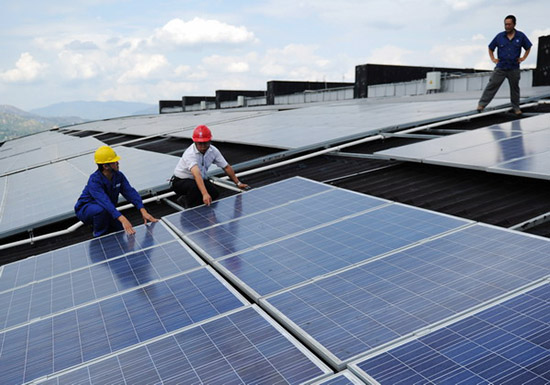
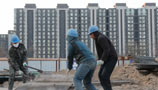
Two technicians install solar cells that generate electricity for domestic use in Pan Zhihua,Sichuan province. China will invest more in renewable energy to encourage sustainable development. Provided to China Daily |
State's support for new environmental initiatives promotes emerging sectors
China's investment in renewable energy will bring vast opportunities and challenges for the country's overall development, a senior official said at a recent high-level summit.
Xie Zhenhua, vice-chairman of the National Development and Reform Commission, said investments in renewable energy will hit 1.8 trillion yuan ($294 billion) during the 12th Five-Year Plan (2011-15).
He said the government also plans to spend another 2.3 trillion yuan on energy conservation and reducing harmful emissions to boost the green economy.
"China has carried out a series of policies to cope with climate change, and we have achieved some success after several years of effort," said Xie during the Caring for Climate China Summit held by Global Compact Network China in Beijing in late July.
According to the commission, the national energy consumption per unit of gross domestic product was reduced by 3.4 percent and carbon emissions were also reduced compared to the same period last year.
From 2006 to 2012, China's energy consumption per GDP was reduced by 23.6 percent, which is equal to a reduction of 1.8 billion metric tons of carbon emissions, Xie said.
He said China's economic development, which heavily depends on high energy consumption and high levels of emissions, has not changed yet, and the country's emissions per capita are still higher than the global average.
China has made a commitment to the world that it will reduce its carbon emissions per unit GDP by 40 to 45 percent by 2020 compared to the 2005 level and raise its non-fossil energy consumption percentage to 15 percent of the primary energy mixture.
"In every five-year plan, we have outlined specific targets for energy conservation and emissions reduction," he said.
Wang Xiaokun, an energy analyst with Sublime China Information Co, a Chinese commodities consultancy, said the new investment plans will bring increasing opportunities in nuclear, wind and hydrological power.
She said the investment will also go to such clean energy power generation projects and subsidies for power plants.
"The government encourages low-carbon projects, which also bring business opportunities to the suppliers for such projects," Wang said.
"For instance, the equipment manufacturers for power plants and grids will benefit from the policy."
Although China and the European Union reached an agreement on solar panel exports to Europe last month, the domestic market still faces an overcapacity of about 10 gigawatts, she said.
"The investment in distributed solar power generation projects may increase while the demand for traditional fuels, such as coal and natural gas will decrease in the long run," said Wang. "China has the resources and technological potential to develop renewable energy on a larger scale, which will be beneficial for society and economic development in the future," Wang said.
In 2012, the annual growth rate of global energy consumption was 1.8 percent, which is much lower than the average level - 2.6 percent -in China in the past 10 years, according to an industry report.
The BP Energy Outlook released in early July said renewable energy accounted for 4.7 percent of global power generation, a record high in history.
Another report titled China's Long-Term Energy Plan found that by 2050, renewable energy, excluding hydropower, will account for between 17 and 34 percent of the national energy demand.
Ban Ki-moon, secretary-general of the United Nations, said China has benefited the global economy and promoted socially sustainable development through its contributions to the Global Compact, a UN initiative to encourage businesses worldwide to adopt sustainable and socially responsible policies.
In addition to the increasing investment in renewable energy to reduce fossil fuel consumption, China has also made great efforts to encourage energy-saving industries.
One example is Sinopec Group, Asia's largest refiner, which announced in July that it will invest about 22.6 billion yuan to upgrade its current production equipment and operations to protect the environment and realize green development.
Other companies are also encouraged to build green buildings, apply green technologies and save energy during production.
Fu Chengyu, president of the company, said enterprises should pay increasing attention to social and environmental benefits and not concentrate solely on gaining profits.
"Companies can make profits and protect the environment at the same time through responsible investments and production," he said.
The company's biofuel research for aircraft as well as development of technology for carbon capture and utilization has been put into many applications, which has promoted clean energy use and emissions reduction.


Copyright 1995 - . All rights reserved. The content (including but not limited to text, photo, multimedia information, etc) published in this site belongs to China Daily Information Co (CDIC). Without written authorization from CDIC, such content shall not be republished or used in any form. Note: Browsers with 1024*768 or higher resolution are suggested for this site.
License for publishing multimedia online 0108263 Registration Number: 130349