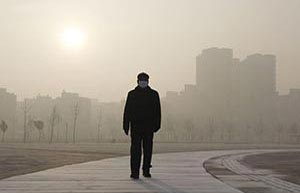
A successful transition to a green economy will require a new set of metrics. The good news is that some governments have already moved to establish a shadow cost for CO2 emissions. In the US, the "social cost" of carbon was raised from $21 to $35 per ton emitted. Publicizing fine-particulate (so-called PM2.5) levels was critical to mobilizing widespread Chinese public support for addressing air pollution. Similar metrics are now needed to measure other forms of natural capital destruction, such as deforestation, marine-reef bleaching, wastewater discharge, and soil degradation.
Once these metrics are established, they must be incorporated into international accounting standards for private and public financial statements. Some companies are already releasing annual reports with full details on their activities' social and environmental impact, and will eventually move toward fully integrated reporting.
But bringing about real change will require more than moral suasion. Policymakers must take advantage of the full range of tools available to them, including legislation, reporting guidelines, taxes, incentives, and public education about the costs of inaction. Financial regulators in emerging economies like Bangladesh and China have already taken a step in the right direction, introducing rules to promote financial inclusion. China's green credit banking guidelines call upon financial institutions to consider the environmental risks in their loan portfolios.
Finally, there needs to be an honest discussion on the merits - and limits - of current monetary policy and financial regulation. Central-bank subsidies like quantitative easing and near-zero interest rates should have increased the supply of low-cost financing for green projects. Instead, they have boosted the profits of ever-larger financial institutions, leaving credit to small and medium-sized enterprises and long-term projects severely constrained.
The irony is that regulations aimed at strengthening financial stability tend to reward short-termism (higher liquidity), adding risk-weights and costs to long-term projects - that is, most green investments. Regulators must recognize that if the real economy is unsustainable, no amount of bank reforms will protect people's livelihoods, let alone the financial system. Adding a green-investment requirement of just 0.5 percent would be sufficient to cover the annual financing gap.
The global financial crisis occurred because we ignored externalities - shadow prices and institutions - allowing instability and inequality to proliferate. Building a more stable, sustainable future requires getting policies, prices, and incentives right. It will not be easy, but - as with Kermit - green is the only option.
The author is Distinguished Fellow of the Fung Global Institute and a member of the UNEP Advisory Council on Sustainable Finance.
 |
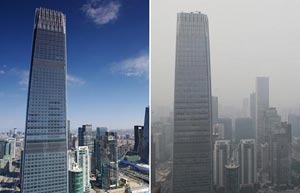 |
| Top 10 cities with worst smog in China |


Copyright 1995 - . All rights reserved. The content (including but not limited to text, photo, multimedia information, etc) published in this site belongs to China Daily Information Co (CDIC). Without written authorization from CDIC, such content shall not be republished or used in any form. Note: Browsers with 1024*768 or higher resolution are suggested for this site.
License for publishing multimedia online 0108263 Registration Number: 130349