Does HK need a 'cultural bureau'? Probably not
Updated: 2011-06-29 07:24
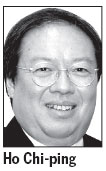
By Ho Chi-Ping (HK Edition)
|
|||||||||||


Recently, some friends asked me whether Hong Kong should establish a "cultural bureau" to develop and implement culture-related polices. I think I should start with some of my thoughts about culture and cultural policies in Hong Kong. The city has long been described as a "cultural desert", and many people complain that it does not have cultural policies. Anyone who has attended the Arts Festival, the Art Fair, one of the several fine orchestras based in the city, or any of the increasingly significant art auctions knows that this is an unfair characterization.
But culture is in any event more than this: it is also everything that makes Hong Kong what it is. It includes our food, language, way of life and shared attitudes - none of the many people who visit Hong Kong and fall in love with it complain about the lack of a Hong Kong "culture".
On a more practical basis, cultural policy is the area of public policy-making that governs activities related to the arts and culture. Generally, this involves fostering processes, legal classifications and institutions which promote cultural diversity and accessibility, as well as enhancing and promulgating the artistic, ethnic, sociolinguistic, literary and other expressions of people.
Even in this more limited definition, we do not - or should not - mean only "high culture", but also activities that the bulk of the population can partake of and benefit from.
It also helps to divide culture into its smaller constituent parts. I believe that core cultural policies include five key parts. Firstly, that which relates to creativity, creation and performance, what we might summarize as "fine arts policy". Second is the preservation of aesthetic heritage and traditional culture. Third, it involves education, and in the fourth part, language. Religion is the fifth area. Hong Kong already has well-developed policies and institutions in all five of these core areas.
In addition, almost every other policy - whether it be housing, district planning, tourism, immigration, even security - has a cultural element to it, as do the politics, law and diplomacy needed to make any cultural policy work properly. Seen in this way, it is clear that the entire administration is working on promoting culture, and all existing policies are culture-related.
The Home Affairs Bureau is responsible for making and promoting most of the core cultural policies, but other cultural policies are made and enforced by other bureaus. Although there is no specific "cultural bureau" in Hong Kong, it does not mean that Hong Kong does not attach importance to culture, nor that its cultural polices are not successful. Hong Kong has instead fused cultural factors into every single field.
This is not to say that the establishment of a dedicated "cultural bureau" is a bad idea. However, it may not be necessary, and whether it will offer enough improvement over the status quo to be worth the effort and expense is debatable.
The author is former secretary for home affairs of the Hong Kong SAR government.
(HK Edition 06/29/2011 page3)
- China's CNR delays $5b IPO after crash
- IT lags business growth at SOEs
- Chinese outbound M&As hit record levels
- Rate of sales' rise in decline
- Bright Food to buy Australian producer
- Ascent Solar to sell stake, eyes China growth
- Gas imports double in July as use surges
- CBRC seeks public opinion on new capital rules