About the University of Hong Kong
Updated: 2011-08-15 20:57
(hku.edu.hk)
|
|||||||||||


The Early Years
|
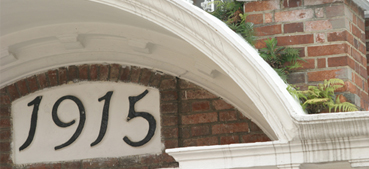 |
The University of Hong Kong (or HKU, as it is familiarly known to students, staff and alumni) is the oldest tertiary education institution in Hong Kong. On March 16, 1910, Sir Frederick Lugard, the then Governor of Hong Kong, laid the foundation stone for the University, signifying the birth of Hong Kong's first tertiary institution. On March 11, 1912, the University launched its official opening with its founding Faculty of Medicine which had evolved from the Hong Kong College of Medicine, founded in 1887. Of the College's early alumni, the most renowned was Dr Sun Yat-sen, the founder of modern China'.
The Faculties of Engineering and Arts were established within a year of the official opening.
In December 1916, the University held its first congregation, with just 23 graduates.
It was ten years after the founding of HKU that women students were admitted for the first time. In 1937, Queen Mary Hospital opened and has served as the University's teaching hospital since that time. Before the outbreak of the Second World War, which temporarily arrested the otherwise steady progress of the University, there were four Faculties - Arts, Engineering, Medicine, and Science.
After 1945, the University underwent structural developments as post-war reconstruction efforts began in earnest.
The Past 50 Years
|
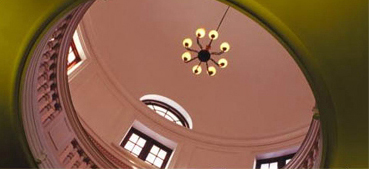 |
The study of architecture was first introduced to the University in 1951. In 1956, it established a Department of Extra-Mural Studies to provide continuing adult education in response to the demands of a rapidly-changing society. In 1961 when the University celebrated its golden jubilee it had more than 2,000 students, four times greater than in 1941. The Faculty of Social Sciences was established in 1967, and embraced a newly-founded Law Department in 1969. In 1982, the Faculty of Dentistry, based at the Prince Philip Dental Hospital, was established. It remains the territory's only faculty producing dental professionals. In 1984, both the School of Architecture and School of Education became fully-fledged faculties, and in the same year a separate Law Faculty was created. The Faculty of Business and Economics, the tenth and youngest faculty, was established in 2001.
In 1992, in response to the needs for continuing education, the Department of Extra-Mural Studies became the School of Professional and Continuing Education (HKU SPACE). It is now Hong Kong's largest tertiary-level institution for continuing education with cumulative enrolment totalling more than one million students.
The University Today
|
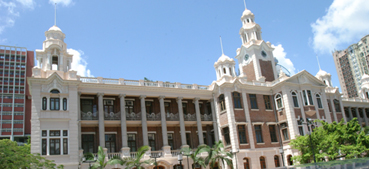 |
Outstanding academic staff of the University are recruited through rigorous selection procedures, comprising internal peer-reviews and external assessments conducted by international and prominent experts in the relevant fields. About 50% of academic staff are drawn from overseas. The University has recruited distinguished academics from all over the world. University teachers are top researchers in many major areas of research including Human Health and Development, Biotechnology and Drug Development, Nanoscience and Nanotechnology, Build and Natural Environments, Theoretical and Computational Sciences, Public Law and Public Policy, China Studies, and Communications.
The University attracts the best students in Hong Kong. In the 2009-2010 academic year, there were 22,139 students (11,589 undergraduates, 10,550 postgraduates), of which around 6,388 were Mainland Chinese and international students. Local students admitted to HKU are consistently among the most proficient in English among UGC-funded institutions. From 2003-04, the great majority of the highest achievers at the Hong Kong Certificate of Education Examination (i.e. candidates with 8-10 Grade-As in the Examination) joined HKU under the Early Admissions Scheme for Secondary Six Students.
All ten faculties and their departments provide teaching and supervision for research (MPhil and PhD) students with administration undertaken by the Graduate School.
For details of undergraduate and postgraduate admissions, please kindly refer to http://www.hku.hk/ugadm/.
HKU undergraduate curricula encourage students to construct their own understanding of issues and devise solutions to real-world problem scenarios through means such as Problem-Based Learning (PBL). They enable students to work in teams and exercise and develop their research and communication skills, critical thinking and ability to integrate information across different domains.
For more statistics of the University's latest development, please kindly refer to:
http://www.cpao.hku.hk/qstats/
- China's CNR delays $5b IPO after crash
- IT lags business growth at SOEs
- Chinese outbound M&As hit record levels
- Rate of sales' rise in decline
- Bright Food to buy Australian producer
- Ascent Solar to sell stake, eyes China growth
- Gas imports double in July as use surges
- CBRC seeks public opinion on new capital rules