Leader opts for electric, signaling government support for cleaner cars
To get to this year's two sessions, Wan Gang, minister of science and technology, will not be driving a black Audi, the car that has become synonymous with Chinese officialdom.
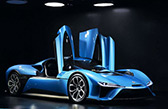
Instead, Wan has elected to drive a pure-electric vehicle, symbolizing the government's commitment to promoting alternative-energy vehicles.
In 2009, China began promoting alternative-energy vehicles in public transportation.
As of the end of last year, there were 27,800 alternative-energy vehicles on the roads in 25 cities, 80 percent of which were buses, Wan told reporters.
Starting this year, the number of privately owned pure-electric vehicles is expected to rise due to government incentives.
In Beijing, a regulation encouraging individuals to buy electric cars will take effect in May.
According to the regulation, buyers of electric cars do not need to enter the lottery for licenses and could get a combined subsidy of up to 120,000 yuan ($19,308) from the central government and the Beijing municipal government for the purchase, said Chen Guiru, deputy director at the Beijing New-Energy Vehicle Development Promotion Center.
Options for domestic pure electric cars are limited at the moment.
Only a few domestic automakers sell electric vehicles to individuals. This list of available electric models includes the BYD e6, priced at 369,800 yuan, as well as the SAIC Roewe e50, a small car priced at 234,900 yuan, and the Springo, produced by Shanghai-GM, which sells for 258,000 yuan.
"We are quite encouraged by the country's commitment to promoting alternative-energy vehicles. It has given us hope and confidence," said Chen Yunfei, deputy general manager of the BYD sales company.
At present, the national capital has only 12 BYD e6 cars with local license plates on the roads, and all are owned by central government organizations.
Chen said Beijing now has 4,000 to 5,000 electric buses for public transportation. The city has established several charging stations in and around the urban area.
After implementing the new regulation, the charging stations will also be available for use by private owners of electric vehicles.
The Beijing municipal government plans to further promote electrics in the private and public sectors from 2013 to 2015.
China's approach to promoting energy-efficient vehicles has also been questioned. The country projects there will be 500,000 electric vehicles on the roads by 2015.
However, Zhong Faping, deputy chairman at China Battery Industry Association, said it is almost impossible to achieve that goal.
Zhong said the technology for electrics is not mature, so in the short term, it is not practical that these cars could be widely used.
He said the country should focus on hybrid vehicles for the time being while developing and promoting pure electrics in the long term.
Developed countries have gone further in promoting alternative-energy vehicles, especially hybrids, but the future still remains uncertain.
When US President Barack Obama first took office, he put forth a target for the country to have 1 million alternative-energy vehicles on the road by 2015.
To encourage consumers, he declared that each buyer of a hybrid could receive a subsidy of $7,500.
However, industry insiders do not agree that this ambitious goal is feasible.
They say that in a "cheap fuel era", when 1 gallon (about 3.8 liters) of gasoline is less than $4, expensive hybrids lack enough competitiveness.
Jon Bereisa, CEO of consulting company Auto Lectrificatio, said Obama's goal "will never be reached", noting the serious overcapacity in the lithium battery industry. He said all the factories have been built 10 years earlier than they should have.
Despite such criticisms, Obama said he would invest another $120 million to develop and research alternative-energy vehicles after being reelected last year.
Currently, government subsidies for electric vehicles favor pure electrics in order to protect the interests of domestic brands because many plug-in hybrids are produced by foreign companies, which already have more recognition and a wider customer base in the market.
xuxiao@chinadaily.com.cn

Copyright 1995 - . All rights reserved. The content (including but not limited to text, photo, multimedia information, etc) published in this site belongs to China Daily Information Co (CDIC). Without written authorization from CDIC, such content shall not be republished or used in any form. Note: Browsers with 1024*768 or higher resolution are suggested for this site.
License for publishing multimedia online 0108263 Registration Number: 20100000002731