UBS chief sees brighter prospects for 2017


 |
|
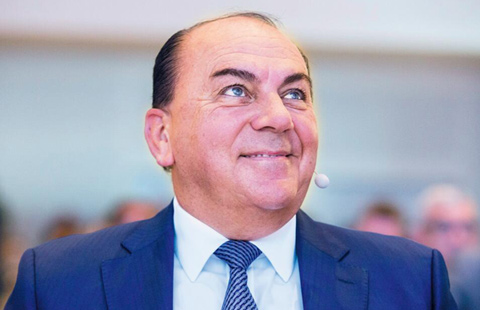
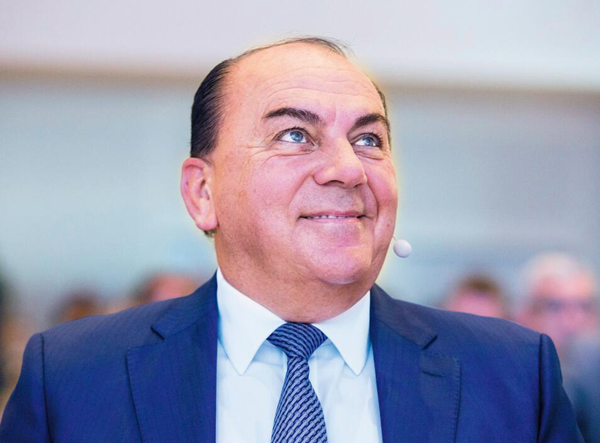
Axel Weber, chairman of UBS Group AG. [Photo/Agencies] |
Former head of German central bank sees 'upside potential' amid uncertainties
When it comes to risk assessments, Axel Weber, chairman of UBS Group AG, is among the few who have been able to see things from both a regulatory and business perspective.
A former German central bank governor and a member of the governing council of the European Central Bank, the Swiss bank chief sees political uncertainties as the No 1 risk facing the global economy and the financial industry this year.
After a wild and unpredictable 2016, risks could emerge from such quarters as the Brexit negotiations and the policy choices of the Trump administration in the United States, which could have a substantial impact on the world's major economies, he told China Daily in an interview.
Nonetheless, Weber remains upbeat about the prospects for the global economy and believes there will be an "upside potential" in global growth for the first time in five years.
When it comes to UBS' China operations, Weber said the bank has no plan to shrink its presence despite a disappointing financial performance that saw its global net profit decline to 3.3 billion Swiss francs ($3.26 billion) in 2016 from 6.2 billion Swiss francs a year earlier.
Instead, the bank is in discussion to increase its stake in its securities joint venture in China, which Weber said showed its long-term engagement with the world's fastest growing economy and wealth market.
The following are edited excerpts from the interview.
How do you view prospects for the global economy and the major risks in 2017?
I think there is a good chance that, for the first time in the last five years, global growth may surprise on the upside in 2017.
We might see stronger growth largely spearheaded by a strong US economy. Monetary policy normalization in the US is also likely to continue to progress and that provides some upside for returns in financial markets.
I expect 2017 to continue to be a good environment for equities as easy monetary policies still support a rotation out of fixed income investments into equity investments.
Financial markets are likely to continue to improve and financial institutions' and banks' profitability is likely to increase as a result of that.
The key risks to the global economy are political, such as the outcome of Brexit negotiations and the mix and the timing of trade, fiscal and structural policies in the US. Then there are a number of election risks in Europe.
How do you think the Trump presidency is going to impact financial regulation in the US and how is UBS preparing for the possible changes?
We have built a solid capital position and our Core Tier 1 capital ratio is roughly at 14 percent as we speak. We've done all the things that are needed on the regulatory side to be better equipped for the future.
I don't think we will see a massive rollback of regulation at the global level. Nor will we see it in the United States.
The banks have done a lot to improve their resilience compared with the pre-crisis level. I expect to see a new balance between fostering growth, which needs an intact and functioning banking system, and new regulation which is impacting, at least during the transition period, the financial system's ability to finance growth.
So I do expect much less regulation going forward from the major economies.
What do you think are the risks and opportunities facing China's economy?
The property market will continue to be an issue for the Chinese authorities. Second, is the change of course of the renminbi since 2015.
China has committed to open up its capital market. But it is going to happen in a controlled fashion and not in a "big bang" solution. We are going to continue to see the application of capital controls to provide an orderly transition.
What is the priority of UBS in China in terms of business segments?
The core of what UBS does internationally is wealth management, supported by a targeted business of investment banking and asset management. That is also our strategy in China.
The country is a large growing economy, with the largest growing wealth market. So being a wealth manager in China is important. For institutional business, having an investment banking business with a structuring capability is important for us to get closer to clients. Many of the founders and owners of the companies will also do capital market transactions, and will receive and put funds through the wealth management service as they increase their private wealth and as they become successful entrepreneurs.
Why has UBS been increasing the stake in its joint venture in China?
It shows our commitment with Chinese partners and it is part of the long-term engagement plan that UBS has in China.
We have a continuous plan to increase our onshore presence in China. We now have more than 600 people in the onshore business in China, and we will be doubling the headcount by 2020.
Our joint venture, UBS Securities, has been working very well for us. It is important for us to be part of China's success story and the process of the opening up of its financial markets.
How do you see Chinese companies' M&A trend in 2017?
Chinese M&A activities were strong in 2016. While we expect lower outbound activity this year, we are going to continue to see interest from Chinese investors to diversify their operations and invest their money not just domestically but also internationally. UBS has been a leading M&A advisor in the country, participating in many of the landmark deals, and we expect continued interest from our clients in this field.
What do you think are the opportunities for UBS, as China promotes the Belt and Road Initiative?
It will add investment opportunities in the Asian region. It is something we are observing very closely. Most of the projects will be related and linked to infrastructure investment.
UBS is one of the banks that has always looked favorably at private and public partnerships in financing growth. UBS being present in all the major markets in Asia will contribute to this growth and investment opportunities.
We are not concretely involved in any specific projects yet, but I think the whole initiative is shaping up well.
We believe such a targeted investment program will create more constructive interaction and dynamics in the region.
It should be very favorable for growth and business opportunities and for banks like us in the region.
As a former policymaker, what is your suggestion for Chinese policymakers?
Striking the right balance between the countervailing forces in the economy is the challenge faced by Chinese policymakers.
If interest rates were to rise, it could jolt growth and have a negative impact on the economy.
If the rates were to fall further it could accelerate the depreciation of the currency and produce new financial bubbles in other areas.
I think keeping the monetary policy as it is and using capital controls, to sustain the opening up process in an orderly fashion, is an appropriate policy choice.
CV
Age: 60
Nationality: German
Career:
2012 onwards: Chairman of the Board of Directors of UBS AG
2011-12: Visiting professor, University of Chicago Booth School of Business, United States
2004-11: President of Deutsche Bundesbank; Member of the Governing Council of the European Central Bank; Member of the Board of Directors of the Bank for International Settlements;
2001-04: Professor of International Economics and Director of the Center for Financial Research, University of Cologne, Germany; Member of the German Council of Economic Experts
1998-2001: Professor of Applied Monetary Economics and Director of the Center for Financial Studies, Goethe University of Frankfurt/Main, Germany
1994-98: Professor of Economic Theory, University of Bonn, Germany
Education:
Habilitation and PhD in Economics, University of Siegen, Germany