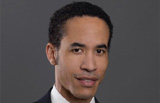
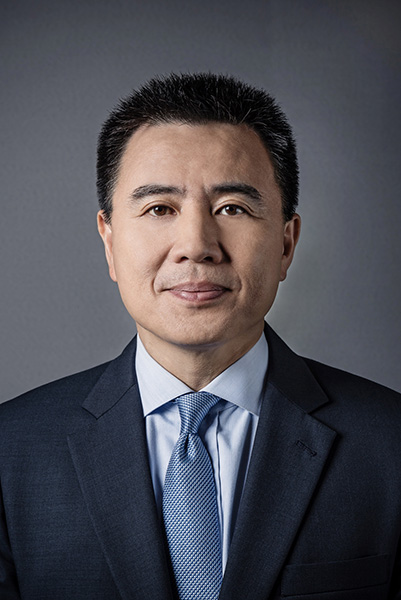
Gao Feng, President & Chief Country Officer, Deutsche Bank China
Editor's note: At the World Economic Forum's three-day meeting in Dalian, Liaoning province, China's economic growth is once again in the spotlight. More than 1,700 participants from 90 countries are attending "Summer Davos", opening on Wednesday, to chart a new course for growth as global recovery sinks into uncertainty. Before the conference began, business leaders from international companies shared their opinions with China Daily about China's economic prospects and what strategies they may take to readjust to the nation's new normal of growth.
Here are the excerpts from the interview:
1.Economic slowdown pressures have increased in China since the second half of 2014. During the first six months this year, GDP growth has fallen below 7 percent, while deflation pressures have risen in the manufacturing sector. Against this backdrop, what are the challenges that you have faced/continue to face in China, especially with regard to the business development strategy and actual operations?
In the next phase of China’s economic development, reform-led enhancements will replace growth driven by commoditized exports and low labor cost. The country’s policies are gearing toward a more open economy with a convertible currency. Reforms will give China’s marketplace greater financial and operational efficiency. I expect to see corporations mobilize savings and allocate financial resources domestically and increasingly globally, leading to greater productivity. Challenges such as labor force, regional disparity and internal consumption are not unconquerable. The right reforms can substantially boost productivity and economic potential.
2. How do you see the economic reforms unraveling further in China? What do you think are going to be the key takeaways from the ongoing reforms for your business?
Being in the financial industry we’ve witnessed clearly the country’s commitment to reform. Key measures include interest rate liberalization, RMB convertibility and gradual capital account opening. These measures will shape China’s new financial market, which will have deeper market structure, stronger regulatory and legal infrastructure, and more efficient financial resource allocation. All this will enable the financial sector to better support real economic growth.
3. Have you been facing more pressures due to the energy conservation and emission reduction moves? If so, could you tell us a little bit about the pressures and the measures taken to counter the same? Did the moves entail additional investment for energy conservation and emission reduction?
Deutsche Bank believes in the benefits of acting sustainably and combating climate change. Environmentally friendly technologies will help create new industrial sectors. Being environmentally conscious is expected to drive higher returns over the long term. Deutsche Bank is one of the first signatories of the UN Global Compact in 2000, we committed ourselves to adhere to 10 principles relating to human and labor rights as well as environmental protection and anti-corruption. We have plans to set up China-focused clean energy investment vehicles to bring in investment in related technology and companies. Furthermore, we have built up an environment and sustainability management system at the Bank that fulfils the requirements of ISO 14001.
4. How would you rate you company's performance in China during 2014? Over the next five years, do you see an increase/decrease in China's contribution to your global business? Having said that, do you also foresee any major risks in the China market over the long term?
In 2014, Deutsche Bank China continued on a strong momentum that we have enjoyed since we locally incorporated in 2008. I’m certain that China’s contribution to our global business will increase going forward. This is driven by both China’s vast market potential and our headquarters’ plan to further build out the China franchise. In addition to making sound business efforts, the rate of growth for international banks is tied to the rate of RMB internationalization and capital account opening as these are main catalysts for cross-border financial activities.
5. What are your views on the government’s added focus on Public-Private-Partnership projects? Has your company been party of any such projects before? If so, could you share with us some interesting anecdotes or case studies? Does your company plan to be a part of the future PPP projects in China?
The bank manages the Global Climate Partnership Fund which allows public financing to catalyze private investment. Fund investors include a German doctor’s pension fund, Germany’s Federal Environment and Building Ministry, and the UK’s Department of Energy and Climate Change. The fund is a strong example of international climate finance and the international goal of providing $100 billion of support to developing countries. The Deutsche Bank Americas Foundation is in long-term partnership with the New York City Economic Development Corporation to support immigrant communities in New York City, particularly to identify talent and top-shelf companies that show promise in their respective industries. We would be honored to participate in PPP projects in China.

Copyright 1995 - . All rights reserved. The content (including but not limited to text, photo, multimedia information, etc) published in this site belongs to China Daily Information Co (CDIC). Without written authorization from CDIC, such content shall not be republished or used in any form. Note: Browsers with 1024*768 or higher resolution are suggested for this site.
License for publishing multimedia online 0108263 Registration Number: 130349