A little-known college in Central China has made national headlines after it drew recruiters from more than 180 companies, while shutting the door on another 40 at a recent campus job fair.
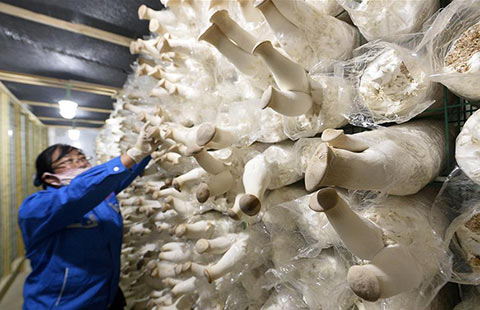
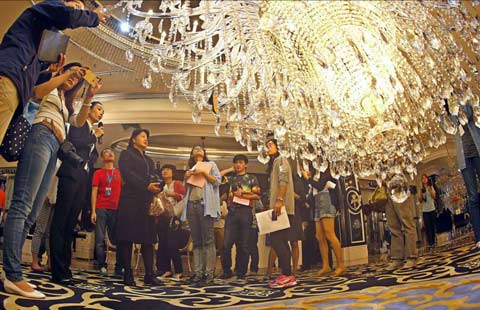
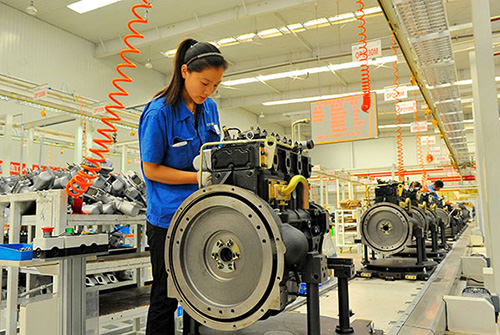
Nearly 3,000 students will graduate with a diploma from Hubei Ecology Vocational College this summer, who despite their fancy specialties like gardening technology, ecological tourism, hotel management and vehicle inspection, will start work as trained gardeners, tour guides, hotel receptionists or mechanics, which don't require a bachelor's degree.
What has made the college's job placement especially unusual this year is that amid a general economic slowdown, the college has raised the bar for the jobs offered to its students, while continuing to aim for almost full employment for those who intend to work.
Based on surveys of living costs and salary levels in Wuhan, the adjacent provincial capital, the college sets a minimum monthly pay of 2,500 yuan with complete social insurance coverage by prospective employers. It blocks out employers who provide low-skilled work or commission-based pays without a base salary, according to local media reports.
The jobs and pay might not sound as glamorous as those commanded by top grads from elite universities. But they were still a shot in the arm for an education sector that represents a major future thrust of Chinese higher education, but currently languishes in discrimination and low self-esteem.
Vocational colleges are typically three-year diploma programs that succeed on market-driven curriculums to train technical workers. About 10 million students are placed in more than 1,000 such colleges across the country ever year. Their graduates hold more than 70 percent of low- to middle-level technical jobs in a wide spectrum of industries like transportation, logistics, e-commerce and the information industry.
But compared with universities, vocational colleges usually have far fewer faculties for teaching the same number of students, and receive much less public funding.
And many have difficulty in enrolling good and sufficient high-school graduates, because their students carry a social stigma of being "problematic" as they scored the lowest in the national college entrance examination, and face blatant and direct discrimination in getting good jobs.
I investigated several struggling vocational schools several years ago and have found that such difficult situations haven't improved much since. As a way to overcome the unfavorable public perception, vocational colleges have tried to offer preparatory courses that are linked to bachelor's degree studies at partner universities. Some emphasizing English-language training are proud of being feeder schools for foreign universities.
I heard college heads saying that they would like to offer four-year bachelor's degrees, as they believed this would be the ultimate solution to their recruitment and funding woes. But education authorities plan to do just the opposite. Some universities that were upgraded from vocational colleges are set to be returned to their former guises.
Policymakers are worried about a glut of bachelor's degrees and a growing mismatch between what universities teach and what the market needs. They believe vocational education is crucial to supplying a skilled labor force for "Made-in-China 2025" that will elevate low-end manufacturing to more value-added production.
The successful Hubei college said that its grads were popular because of its ability to respond to the market. For example, this year, 45 local wedding service companies competed for its 42 newly minted emcees, with the highest salary offer of 120,000 yuan a year.
However, the college also claims that it recommends "a large number of top graduates" to continue to study for a bachelor's degree in several partner universities, as a competitive strength listed on its website.
Perhaps it's just a pragmatic recruitment pitch. But the fact that even the best ones still entertain the notion of losing the vocational tag, speaks volumes about the challenges facing technical education in China.


Copyright 1995 - . All rights reserved. The content (including but not limited to text, photo, multimedia information, etc) published in this site belongs to China Daily Information Co (CDIC). Without written authorization from CDIC, such content shall not be republished or used in any form. Note: Browsers with 1024*768 or higher resolution are suggested for this site.
License for publishing multimedia online 0108263 Registration Number: 130349