 |
|
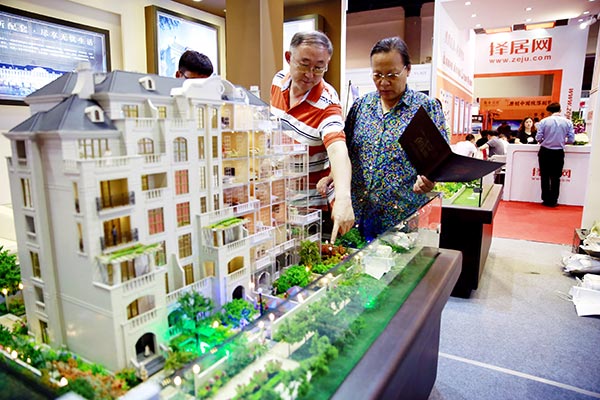
Visitors check out a model of an apartment building at a real estate show in Beijing.[Photo/Xinhua] |
Why do housing prices keep hovering at high levels, if not continuing to soar in Chinese cities?
Over the past couple of decades, pundits have come up with a number of reasons or jokes to explain the phenomenon. One of the most famous ones, the "mother-in-law theory", blames it on the loving lady who pressures her would-be son-in-law into buying a house before marrying her daughter. There is also the "kept-woman theory", which says many young mistresses now demand a house in their names from their men, fueling property prices.
You may laugh away such ideas as being frivolous and unproven. However, on a more serious note, they show the desire and vigor of many Chinese women who strive to own a place they can call their own. Homeownership is widely accepted as the centerpiece of personal financial security after housing assets became the dominant component of Chinese household wealth. More than half of the wealth creation in recent years is due to the appreciation of home prices.
So I was surprised when I read in a recently published national study that almost 80 percent of Chinese housing assets were in husbands' names, while wives accounted for 13.6 percent. Merely 6.5 percent were in both names.
The China Family Panel Studies 2015 by Peking University finds that spouses with a higher socioeconomic status are more likely to own the house. The report acknowledges a less favorable economic position of women that stands in the way of their homeownership and defies their popular, exalted image of "holding up half the sky".
Whether a house is in a spouse's name matters because it's a complex matter if a husband and wife want to split up the asset in a divorce.
Traditionally, it's a Chinese groom's duty to provide a home while a bride brings furnishings, money and jewelry, but rarely real estate. However, in a divorce, a wife may end up homeless as a property purchased before a marriage will belong solely to the person who bought it. Also, a husband will have full ownership if the house was purchased by his parents.
When my wife and I married eight years ago, we were both late bloomers who had bought our own homes. Who owns what has become even less of an issue after we have had a family and our properties have been upgraded to more convenient locations for the care of our children.
However, the CFPS report, which focuses on the overall well-being of the Chinese population, suggests a jostling for ownership of housing assets due to their increasing importance to family wealth holdings and a decline in people's confidence in marriages.
While wives are motivated to have their names on the deed, their efforts haven't been successful so far, judging by the low percentage of joint ownership. Even with a willing husband, wives may be discouraged from doing so because adding a name to a property acquired before a marriage is usually considered a resale with heavy transaction costs and taxes.
But all is not lost in women's pursuit for a fair share of the family wealth and peace of mind. The report does find from its survey results that the percentage of women homeowners who were born after the 1970s rises "significantly" due to their higher social status and better education and employment opportunities.
"Women are gradually shaking off their subordinate role and are starting to share ownership of household wealth with their husbands," the report said. "In some households, wives have more property ownership than their husbands."
This might be welcome news to housing developers, too, as they count on more brides or wives to buy homes in order to help prop up property prices in the future.


Copyright 1995 - . All rights reserved. The content (including but not limited to text, photo, multimedia information, etc) published in this site belongs to China Daily Information Co (CDIC). Without written authorization from CDIC, such content shall not be republished or used in any form. Note: Browsers with 1024*768 or higher resolution are suggested for this site.
License for publishing multimedia online 0108263 Registration Number: 130349