 |
|
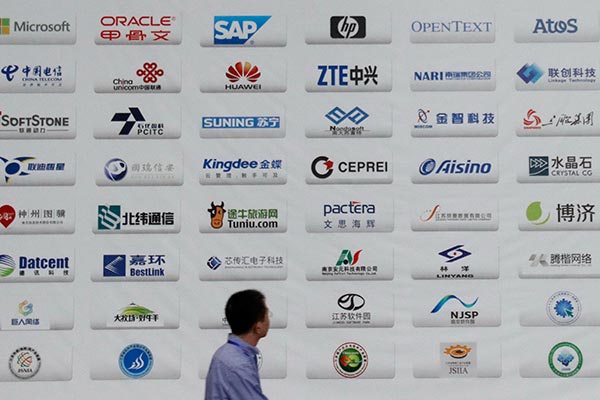
A visitor walks past a wall of trademarks of participating companies at an international industrial exhibition center in Nanjing, Jiangsu province.[DONG JINLIN / FOR CHINA DAILY] |
Microsoft Inc's former chief executive Steve Ballmer offered a brilliant example of what I mean, when he said he picked "Bing" for its new search engine's name, because it "worked globally" and could potentially, "verb up".
He was clearly dreaming of the moment when we all "Bing" for a fact or service, rather than "Google".
And, of course, there's the industrial "verbinoun" (verb or noun) daddy of them all.
"Googling" is the world's most frequent online action today and a process that's generated unequaled free conversational publicity in every corner of the globe for its namesake.
Having your brand or company embraced into the vernacular makes it ubiquitous, needed, and most potentially lucrative of all, even loved.
Consumers latching in their billions onto a name through such "wordification" is marketing gold dust, as their use is invariably followed with buying or using the product in question.
According to Keller Fay Group, which measures the effects of everyday social influences, the average American now mentions specific brands 56 times a week just in their routine conversations.
An older, but equally dominant example in its own sector is "to Fedex", which has been mainstream language for years because it's just better and more fun than saying "deliver that package overnight".
For even longer, many have asked for a Band-Aid to cover a graze rather than a sticking plaster, a Kleenex rather than a tissue, or to have something Xeroxed rather than taking a photocopy.
In Britain, "to Hoover" has effectively replaced, to vacuum. We "Astroturf" when we lay all-weather patches of grass, "Tarmac" when resurfacing roads, or simply "Sellotape", if sticking things together.
More recently, I'd wager if you think, "I must buy a tablet computer", there's a strong chance you'll actually say something beginning with "i".
All these names are protectively trademarked. But they're free to use verbally because we simply like using them.
Knit your brand or firm into consumer chatter, and blockbuster sales and market share will surely follow-but only, of course, if your verbinoun's use is followed quickly by a purchase of your product, not someone else's that does the same thing.
The most recent trend has been to pin two words together to make one: ie "to Facebook, YouTube, Powerpoint, or Photoshop".
But tellingly, this ongoing global fondness for corporate colloquial is yet to rub off on Chinese giants, outside of their own shores at least, despite the country's creation of some of the world's most modern and nimble technology and digital leaders.
In Europe and the United States, millions are already "Ubering" a ride home, so maybe "Didi-ing" might eventually become more popular worldwide.
I'm an addicted "eBayer", but might I convert to "Taobaoism"? Or instead of Googling, might everyone ultimately turn to Baiduing?
I enjoyed an outing last week to what the family calls Wuhan's "Wandaland"-an area where the big-spending property steamroller appears to have taken over, building entire shopping streets and entertainment complexes.
My wife already spends hours happily "Jingdonging" (shopping on JD.com), which also has a happy ring to it, so there's a real possibility of global spread.
Will a world already with a fierce hunger of all-things-electronic, ever be sated in the future by "Huawei-ing" or "Haier-ing"?
But if any potential Chinese verbinouns are ever to be adopted globally, something drastic has to change.
In some markets still, China Inc's image remains weak to win over the level of public warmth needed to be verbed or nouned "up".
Overseas moves by Chinese companies are sometimes viewed with suspicion, rather than welcomed with open arms.
As Chinese companies' influence spreads, their marketers must think hard about how the world might actually start to like China's goods and services better.
Only then, might a new vocabulary of cherished Sino-catchwords stand a chance of finding their way onto the tips of global consumer tongues.


Copyright 1995 - . All rights reserved. The content (including but not limited to text, photo, multimedia information, etc) published in this site belongs to China Daily Information Co (CDIC). Without written authorization from CDIC, such content shall not be republished or used in any form. Note: Browsers with 1024*768 or higher resolution are suggested for this site.
License for publishing multimedia online 0108263 Registration Number: 130349