Sina Weibo monetization finally takes off
Updated: 2013-09-04 09:31 Comments
  Print
Print  Mail
Mail  Large Medium Small
Launched on August 28th, 2009, Sina Weibo has become the largest micro-blogging platform in China with more than 500 million registered users. Its stock price fluctuated greatly as investors' expectations on its monetization capabilities varied from time to time.
Weibo started monetization from the first half of 2012 after its registered users reached 250 million at the end of 2011. Currently its revenue sources include display ads & sponsored posts, premium membership subscription, third-party games.
|
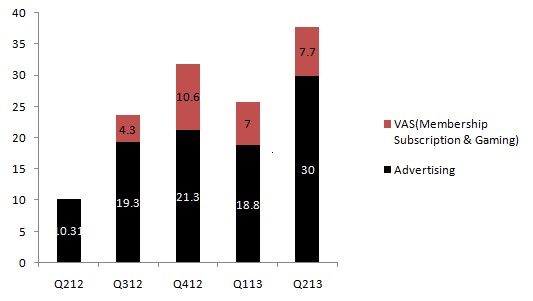 Sina Weibo revenues (US$ million) [Photo / technode.com]
|
In 2012 Weibo recorded $66 million in total revenues with 77% from display advertising and 23% from value added services, membership subscription and gaming. In 2013, it began making revenues from sponsored advertisements in news feed, ads for Taobao retailers, and flash sales & group-buying deals.
Starting from premium membership
In January 2012 Weibo rolled out a premium membership service that charges a 10 yuan monthly subscription fee. With more features or privileges added to the package along the way, subscribers now can restore the posts that have been deleted, design customized homepages, receive free virtual items in games, among others.
Before that, in late 2011, the company tried selling Weibo IDs and reportedly sold weibo.com/888888 for 1.5 million yuan. All the above-mentioned are similar to what QQ membership offers that was a stably growing revenue source for Tencent for several years.
Advertising
Display advertising debut for brands in April 2012. After a quarter, Weibo became a contributor that accounted for 10% of the company’s total online advertising revenues.
The focus, however, is sponsored Weibo posts mixed in users' news feeds when it comes to advertising, as Charles Chao ever put it. One quarter after the launch of display advertising, Weibo began testing the sponsored post product and officially launched it in March 2013. It's a self-service ad placing system targeting at SMEs. Advertisers can choose which user demographics, age, gender or location they'd like to push ads to.
Micro-task, a platform for advertisers to hire Weibo account owners to post or forward ads, was, according to Sina CEO Charles Chao, not for generating too much money but for having third-party social marketing agencies or advertisers behave on Weibo platform. But Sina does share revenue cuts there.
Third-party games
Weibo opened its platform to third-party developers that did attract many apps. However, as always, it's way easier to make money from games than any other category of apps. A channel for games was rolled out earlier than all other monetization services but didn't take revenue shares until the second half of 2012. It immediately surpassed the premium membership subscription and now accounts for the majority of Weibo's non-advertising revenues.
E-commerce
In the fourth quarter in 2012, with the launch of the payment solution Weibo helped Xiaomi sell 50 thousand smartphones directly on Weibo. Then Weibo tried to sell more goods directly by launching a flash sale site which includes a group-buying channel.
After having obtained a license for online payments, Weibo came up with a Micro-bank and a mobile payment gadget trying to tap into other online/mobile financial services.
Alibaba
In April 2013, Alibaba announced to acquire 18% of Sina Weibo and promised to bring the latter approximately $380 million worth of Weibo advertising revenues in the next three years — Weibo would create separate ad inventories for Taobao retailers and the revenues will be shared between Alibaba and Weibo.
Soon Weibo began featuring display ads from Alimama, Alibaba's ad exchange system. Later Weibo was integrated into Taobao system for retailers to send customized Weibo posts and interact with Weibo followers.
But the above-mentioned has little business with Weibo user data. From July this year, Weibo users can bundle their Taobao accounts so that retailers will be able to leverage Weibo user data. Sina's Charles Chao mentioned the two sides might even come up with a new ad exchange system together or create brandnew ad products.
Mobile
In the past two quarters, Weibo saw one third of advertising revenues coming from mobile end. More than three quarters users visit Weibo through mobile devices and a considerate number of them only visit mobile Weibo.
Advertisers now can place mobile ads through the self-service system for sponsored ads. Weibo came up with Page, a content program, for the mobile app in order to generate more content for users to consume — it also can generate more and more ad inventory.

Tracey Xiang is a Beijing-based tech reporter.
You can reach her at tracey@technode.com