

Sign of the times
Updated: 2013-10-02 10:25 Comments
  Print
Print  Mail
Mail  Large Medium Small
Orders for Apple's new smartphones are surging despite high prices. What does this mean for China's middle class?
Will Chinese consumers pay more than $700 for an iPhone? Apple is betting that many will -- enough to lift the company's sagging sales of smartphones. For the first time, the newest generation of iPhones (5C and 5S) will debut simultaneously on September 20 in both American and Chinese markets, featuring a flashy new color (gold) and softwaretailor-made for the Chinese market.
|
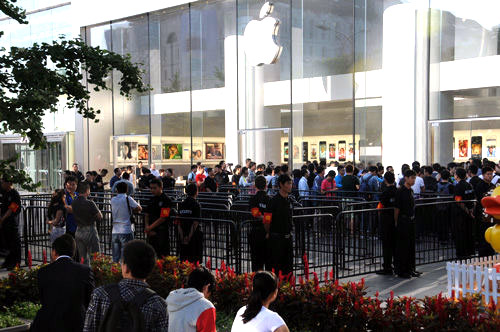 China debut: Customers line up at the Xidan Joy City Apple Store in Beijing on September 20, the day when the new generation of iPhones were released in nine countries, including China. [Photo / bjreview.com]
|
The 5C model is aimed to be a cheaper model of the smartphone, using plastic instead of aluminum and cheaper materials. After Apple's announcement, some observers said the "C" must stand for China, or for "cheap" as the company targets consumers in developing markets. However, Apple said on its website that the iPhone 5C, would start at 4,488 yuan—higher than the retail prices in both the United States and Hong Kong. The "C" really stands for "costly", complained Chinese consumers.
There is one more meaning that can be read in the model number, "C" is for the "comfortable" class, the upper-middle and high-end consumers who can afford to spend a little more on a trendy smartphone without breaking the bank. The rise of luxury product sales has already been evident in the market. Sales of high-end cars, rare wines and watches are surging. Luxury apartment buildings are popping up all over Shanghai and Beijing. Exclusive shops selling Louis Vuitton, Gucci and Hermes are buzzing with customers. Now, we are seeing buying power extend from millions of Chinese consumers who perhaps cannot afford a BMW, but can certainly flash around a gold iPhone.
China Unicom, China's second-largest wireless carrier, announced on September 16 that pre-orders for the iPhone 5C and 5S had already surpassed 100,000 units—just one week after the product announcement. Sure, Chinese carriers will offer subsidies for the new iPhone in exchange for long-term contracts, but the surge of pre-orders is just one more sign of the rise of the comfortable class in the country.
China's cellphone market surpassed the US last year, and Apple is craving a bigger bite of the potential profits. To do that, they need domestic partners and China Mobile, with 700 million potential new customers, has been biding its time, waiting for the right moment to play its hand.
"With every passing month, China Mobile is getting stronger and Apple is getting weaker," Tero Kuittinen, a mobile analyst for Alekstra, told the New York Times, "We have a moment where all of the cards are in China Mobile's hands."
Other carriers, China Unicom and China Telecom, have already agreed to retail the devices. Projections by the IDC show that smartphone shipments to China will reach 458 million units by 2017. A deal with China Mobile would help Apple sell 32 million more iPhones a year in the country.
To capitalize on the growing number of upper- and middle-class buyers in China, Apple needs to do what it has done best over the past decade: being popular. Other handsets may be cheaper, may have better features, or be more powerful, but Apple products are known for their addictive usability, their sleek designs, and their popularity as a status symbol.
According to McKinsey & Company, by 2022, China's middle class should number 630 million – 75 percent of urban Chinese households and 45 percent of the entire population. The number of households with an annual income of between $10,000 and $60,000 has already reached more than 300 million, surpassing the entire population of the United States.
The rise of the comfortable class is crucial to maintaining stable, long-term growth. It is not enough for China to grow rich; it must also ensure that a cancer of inequality does not take root. Apple is betting on China, as are other high-end product retailers. The surge of pre-orders is a sign that they are right.
The author is a contributing writer to Beijing Review, living in New York City