 |
|
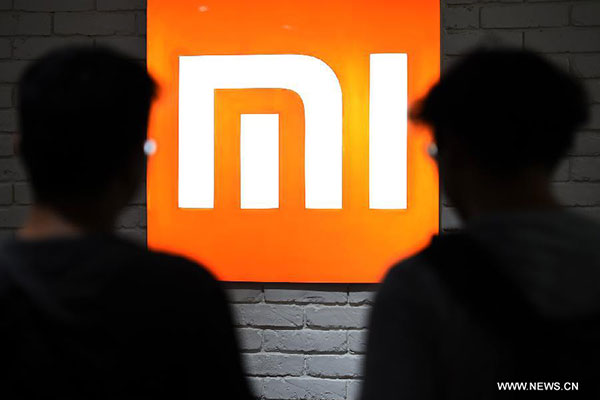
Reporters visit the first Xiaomi store opened in Taipei, China's Taiwan, Aug 6, 2015.[Photo/Xinhua] |
Things were going so well for Xiaomi Corp. Customers were lining up, investors were swooning and the Beijing-based startup closed funding at a $45 billion valuation. That was last year.
Now the high-flying smartphone maker is stumbling. Founder Lei Jun's latest business, one of China's most exciting startup stories of the past few years, is likely to miss its own goal of selling 80 million smartphones this year, according to two people with knowledge of its production plans. Suppliers also cut their internal targets for Xiaomi in anticipation of the shortfall, they said.
Xiaomi's falter shows the startup's challenge in trying to maintain momentum after a meteoric ascent past Apple Inc and Samsung Electronics Co in China. Investors bought into the company's story of youthful disruption and online sales, yet the subsequent lowering of China's growth target and the copying of its sales strategy by rivals have neutralized Xiaomi's first-mover advantage, putting its high price tag in doubt.
"All those expectations of growth aren't being realized, which now makes that $45-billion valuation unfeasible," said Alberto Moel, an analyst at Sanford C Bernstein in Hong Kong. "The argument was that their business is kind of like Apple and they're growing very fast, but they're no longer growing so fast and they're not as good as Apple."
Xiaomi doesn't provide exact shipment targets to its suppliers, instead working on a real-time basis with orders fulfilled as they come in on Xiaomi's website. Yet the companies tasked with preparing the components and capacity to meet Xiaomi's needs have started scaling back production and diverting resources elsewhere, said the people, who have knowledge of the supply chain and asked not to be identified because the details are private.
Domestic shipments of Xiaomi smartphones, including its premium Mi 4 and more economical Redmi series, dropped 8 percent in the third quarter from a year earlier, its first-ever decline, according to researcher Canalys. IHS, another research firm, estimates that Xiaomi shipments dropped 3.9 percent, barely maintaining the lead over Huawei Technologies Co.
That's a big change from the bold growth projections used to justify Xiaomi's tag as one of the world's most-valuable technology startups. In March of last year, Lei Jun, CEO of Xiaomi, predicted selling 100 million smartphones in 2015. Through the first nine months of this year, Xiaomi shipped about 53 million smartphones.
With its optimistic forecast, Xiaomi secured $1.1 billion in December from investors including GIC Pte, All-Stars Investment Ltd and DST. Xiaomi drew comparisons to Alibaba Group Holding Ltd, the Chinese e-commerce company that months earlier held the largest initial public offering ever.
At 3.75 times last year's $12 billion in revenue, Xiaomi's fundraising gave it a price-to-sales ratio exceeding that of Apple, which currently trades at 2.9.
That pricing of Xiaomi does not seem to have been based on any known or accepted valuation methodology, said Peter Fuhrman, chairman and CEO of China First Capital. "Hype and hope seem to have been the two key drivers," he said.
In March, after that round of funding and after China set its lowest growth target in 15 years, Lei trimmed his earlier prediction to "80 million to 100 million" units for the year.
Its first year-on-year decline came during a quarter when Xiaomi released its Redmi Note 2, a lower-priced handset that sold for an average of 801 yuan ($125) each. On Nov 24, it unveiled RedMi Note 3, a metallic version of phone with a fingerprint sensor, as well as a new tablet computer and air purifier.
Growth might be reignited in the fourth quarter by China's Nov 11 Singles' Day shopping promotions and the latest version of the Redmi Note. The company, which traditionally unveils an update to its marquee Mi smartphones during the third quarter, hasn't yet announced a Mi 5 after last year's Mi 4.
"I am not concerned about the valuation because, over time, their market is substantial," said Hans Tung, managing partner at Xiaomi investor GGV Capital in Menlo Park, Calif. "Over the next 12 months, it'll become increasingly obvious what Xiaomi is doing in the smart home and services space."
Hugo Barra, a Xiaomi vice-president, declined to comment on shipment targets or valuations and referred questions to Chief Financial Officer Shou Zi Chew, who didn't reply to an e-mail seeking comment.
Xiaomi has struggled partly because competitors Huawei, Lenovo Group Ltd and Gionee-among others-quickly copied its business model with ultra-thin devices, glossy websites and lower prices, allowing consumers to easily switch to the hippest new phone.

Copyright 1995 - . All rights reserved. The content (including but not limited to text, photo, multimedia information, etc) published in this site belongs to China Daily Information Co (CDIC). Without written authorization from CDIC, such content shall not be republished or used in any form. Note: Browsers with 1024*768 or higher resolution are suggested for this site.
License for publishing multimedia online 0108263 Registration Number: 130349