BIZCHINA> General Economy

|
BIZCHINA> General Economy
|
|
China's GDP up 11.5% in first nine months
By Dong Zhixin (chinadaily.com.cn)
Updated: 2007-10-25 10:16 The Chinese economy continued its robust growth, driven by rapid expansion in investment, retail sales and exports, while inflation pressure eased slightly, official figures released on Thursday showed.
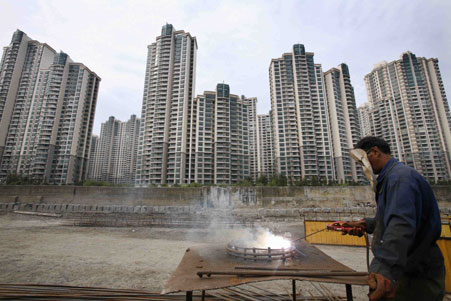
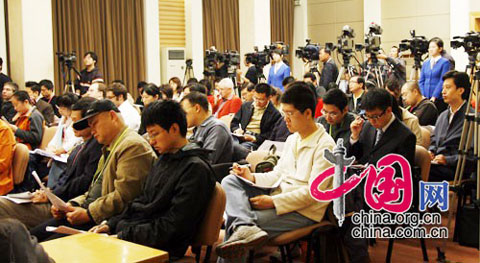
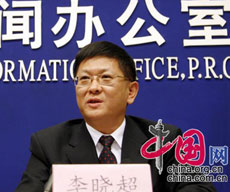
The Gross Domestic Product (GDP) increased 11.5 percent in the third quarter from a year earlier for an aggregate growth rate of 11.5 percent in the first nine months, Li Xiaochao, spokesman for the National Bureau of Statistics told a press conference in Beijing. That marked a slowdown from the 11.9 percent growth in the previous quarter, thanks to a series of macro-control measures by the government, according to Li. He told reporters investment is the largest contributor to the economy, accounting for 41.6 percent of the growth. In the first three quarters of 2007, fixed asset investment in the country soared 25.7 percent to 9.15 trillion yuan, Li said, adding that investment in properties rose 30.3 percent. The investing spree was backed by rapid expansion in credit. By the end of September, the total amount of outstanding loans of all financial institutions jumped by 3.36 trillion yuan from the end of 2006, an increase of 642.2 billion yuan over the same period last year, according to Li.
Retail sales were another driver of the economy, contributing 37 percent of the GDP growth, the spokesman said. In the first nine months, the total retail sales of consumer goods in the country reached 6.38 trillion yuan, a year-on-year rise of 15.9 percent - 2.4 percentage points higher than a year earlier, according to the press conference. "Consumption is expected to keep growing rapidly, becoming an important factor in pushing economic growth," Li said. Earlier this month in a work report to the 17th National Congress of the Communist Party of China, General Secretary Hu Jintao pledged to boost domestic demand in consumer goods to let retail sales play a bigger role in the economy.
From January to September, the per capita disposable income of urban residents stood at 10,346 yuan, a year-on-year increase of 13.2 percent after adjusted for inflation, while the per capita cash income for rural residents was 3,321 yuan, a real growth of 14.8 percent year-on-year. Also driving up the retail sales is the larger work force. By the end of September, the newly increased employment total in urban areas reached 9.2 million, reaching the target of 9 million for the whole year. Export, the third engine of the economy, made up for 21.4 percent of the GDP growth, according to Li. In the first nine months, China exported US$ 878.2 billion worth of products, up by 27.1 percent, while value of imports was $692.6 billion, Li said. That marked to a trade surplus of $185.7 billion, an increase of $75.8 billion year-on-year. Turning to inflation which has often made headlines this year, Li said the consumer price index (CPI) slowed down to 6.2 percent in September from an 11-year-high of 6.5 percent in August. "However, the inflationary pressure is still there," Li told the reporters, citing the rising prices in agricultural and primary products, as well as crude oil in the global market. The CPI growth for the first nine months was 4.1 percent, Li explained, far above the official target of 3 percent for 2007. The growth was mainly because of a 10.6 percent jump in food prices. In a breakdown, meat prices soared 29.1 percent, followed by a 26.2 percent increase in egg prices. Grain prices went up 6.3 percent. The spokesman also pointed to several factors that might bring down inflation. "The output of grain will register a fourth year of bumper harvest, and with the implementation of various policies, pig raising was recovering, and the total output of pork, beef, mutton and poultry continues to grow," Li said. The rapid growth in the GDP, credit and investment, as well as the remaining inflationary pressure increased the pressure for further monetary tightening. The central bank has raised interest rates five times and bank reserve ratio eight times so far this year. Last week, central bank governor Zhou Xiaochuan pledged to take a more aggressive approach to prevent the economy from overheating. Zhou pledged to use monetary tools to keep the economy on track, including interest rates and exchange rates, adjustments in bank reserve ratios, and open market operations. (For more biz stories, please visit Industries)
|
主站蜘蛛池模板: 华池县| 大余县| 文山县| 汨罗市| 宁陕县| 墨竹工卡县| 黄浦区| 汽车| 遂宁市| 女性| 达拉特旗| 托里县| 杭锦后旗| 新宁县| 金乡县| 锦屏县| 井研县| 峨眉山市| 竹山县| 灵石县| 神池县| 舞阳县| 长宁区| 射洪县| 梅州市| 马边| 武强县| 乐安县| 铜川市| 陇川县| 防城港市| 遂宁市| 泸溪县| 惠东县| 桐乡市| 曲麻莱县| 旅游| 望江县| 清河县| 三台县| 长汀县| 西乡县| 宿州市| 定西市| 尼勒克县| 莆田市| 株洲市| 北碚区| 七台河市| 壤塘县| 凤翔县| 乌苏市| 克拉玛依市| 威海市| 栾川县| 广州市| 扶沟县| 榕江县| 永泰县| 清苑县| 平安县| 前郭尔| 湖南省| 印江| 宜城市| 甘洛县| 房产| 加查县| 黄大仙区| 苗栗县| 天水市| 奈曼旗| 根河市| 贺兰县| 千阳县| 永丰县| 丰镇市| 澄城县| 睢宁县| 黔西| 绥棱县| 习水县|