BIZCHINA> Biz Life

|
BIZCHINA> Biz Life
|
|
Related
Heavy price
By Lu Haoting and Qu Xiaozhen (China Daily)
Updated: 2008-04-24 11:05
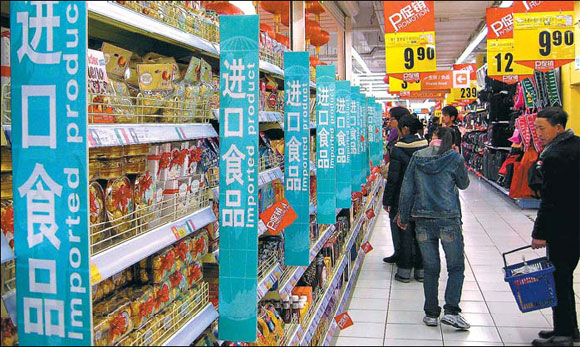
Bread, pasta, tortillas, canned fish and meat, dairy products, imported vegetables and fruits. These are staples of foreigners living in China. And that's precisely why spiraling food prices across the globe and the rise of the yuan against the US dollar have spelt double trouble for them. Prices of wheat and corn have doubled over the past year or so, according to the US-based Earth Policy Institute. This means higher prices of food products made directly from them, such as bread, pasta and tortillas. Pork, beef, milk and eggs, which depend indirectly on the grains, have become costlier, too. More than the rising food prices, it is the decline of the greenback that has made expatriates' life more difficult, says a 29-year-old Canadian living in Shanghai. "The exchange rate of the dollar against the yuan has dropped more than 20 percent from when I came to China," he says. He was posted to the Shanghai office by his international export firm three years ago. "The devaluation of the dollar can be interpreted as a drop in my pay because I have to pay in yuan here." Then take the example of a young French woman who lives in Beijing and shops almost daily at Jenny Lou's, a well-known chain store that imports a variety of food products. Peisha, as she prefers to be called, says prices of all imported food products she normally buys, such as canned tuna, bread, pasta, vegetables and fruits, have gone up. Her preferred loaf of bread alone costs an extra 2 to 3 yuan. Desperate to save as much as possible, she has started buying tuna canned in China because they cost less. But it is not only consumers who are feeling the pinch of the rising food prices. People running restaurants that specialize in foreign cuisine have been hit hard too. "Everything has become costlier," says Lu Hongwei, owner of Agrilandia-Italian Farm. The 9-year-old restaurant in the northeast suburb of Beijing is popular among expatriates and white-collar workers for its rustic Italian countryside flavor. "The price of pasta imported from Italy has risen thrice since last September. It's 70 percent more expensive than last year," says Lu, who also owns another Italian restaurant, Il Casale, near Lido Hotel. Pasta prices in Italy rose more than 20 percent last fall, triggering a nationwide protest in the country. The cost of raw material has gone up by 40 percent in Lu's restaurants, forcing her to raise prices on her dishes by 15 percent. "I had to pass the pressure on (to customers)," Lu says. "Even then I earn less than what I used to." But she still considers herself lucky because the flow of customers in her two restaurants has not ebbed. Global warming and the increasing use of durum wheat to make biofuels are the main reasons for the spiraling food prices, experts say. Durum wheat is the main ingredient that goes into making pasta in Italy. Italian millers' association Italmopa figures show durum wheat prices in the country have jumped 150-170 percent since April 2007. And the country imports about 40 percent of the durum wheat it consumes. (For more biz stories, please visit Industries)
|
主站蜘蛛池模板: 姚安县| 乌拉特后旗| 阳西县| 乐清市| 巨野县| 东丰县| 嘉鱼县| 南汇区| 福州市| 孝义市| 兴义市| 哈尔滨市| 龙海市| 瓮安县| 丁青县| 沙田区| 桐乡市| 漳州市| 栾川县| 博罗县| 新巴尔虎左旗| 兰考县| 通道| 潍坊市| 连平县| 涿州市| 孝昌县| 西青区| 新密市| 丰顺县| 临桂县| 胶州市| 江北区| 云阳县| 景德镇市| 孟津县| 松江区| 巴林左旗| 宾川县| 行唐县| 文昌市| 龙泉市| 景洪市| 苗栗县| 东光县| 宣恩县| 子长县| 江城| 宜川县| 聂拉木县| 东乌| 墨竹工卡县| 方山县| 同心县| 措美县| 黄冈市| 樟树市| 吴忠市| 仪征市| 武鸣县| 台北市| 鸡泽县| 克东县| 兴山县| 海口市| 丹寨县| 康定县| 福建省| 巫山县| 霍邱县| 乌审旗| 盐边县| 宁安市| 房产| 泗水县| 安陆市| 巴楚县| 庄河市| 阿拉善右旗| 马关县| 甘南县| 桦川县|