BIZCHINA> News

|
BIZCHINA> News
|
|
Bourses face uncertain future
By Wen Xin (China Daily)
Updated: 2008-06-16 09:42 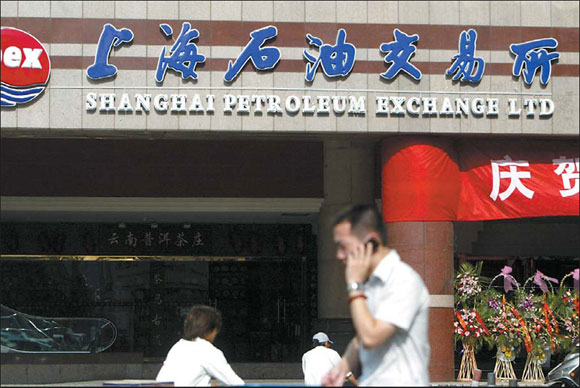 Despite its limited functions under the Chinese government's price control mechanism, the Shanghai Petroleum Exchange (SPE) has served as a platform to facilitate domestic oil traders to enter into spot or forward contracts by providing them with real-time industry information and settlement service. The bourse, established in November 2007, trades in a range of petroleum products, including fuel oil and gasoline and various oil-based chemicals. Separately, Shanghai Futures Exchange (SHFE) began trading in fuel oil futures contracts in August 2004. Trading in oil futures contracts is possible because there is no control on its spot price. Future development of these two markets, of course, will depend on the progress of price liberalization, oil traders and industry analysts say. "Under the present situation, it is difficult for Shanghai Futures Exchange and Shanghai Petroleum Exchange to fulfill their function of price discovery," says Lin Hui, an analyst at Orient Securities in Shanghai. "Other futures contracts on petroleum products cannot be launched until their spot prices are fully dictated by supply and demand conditions in the domestic market," Lin adds. To be sure, the dismantling of the price control mechanism is unlikely to happen anytime soon because of inflationary pressure. But many economists and industry experts believe that it may be possible to gradually allow the prices of petroleum products to reflect global crude prices and domestic market forces. "It is a natural trend to gradually leave oil product prices to market forces based on true supply and demand," says Zhou Zhiqiang, an analyst at Great Wall Futures Co in Shanghai. "A 50 percent price disparity of petroleum products between domestic and global markets is causing an excessive energy consumption in China, which is leading to a waste of natural resources in the longer term," Zhou added. The establishment of an efficient domestic oil market calls for diversified participants and a supply-and-demand-relation based price mechanisms, industrial analysts say. The two Shanghai markets are a positive step in paving the way for the full globalization of China's oil market. "Oil refiners have to passively accept the petroleum price disparity between international and domestic markets as government price curbs prevented them from passing the rising crude oil cost to end users," says Zhao Xianbing, a specialist on the petroleum industry at CITIC's China Securities. China has become a major consumer and importer of crude oil, whose price had soared from $100 per barrel to around $139 per barrel over the past weeks. According to the latest figures from the Ministry of Commerce, in the first four months of 2008, the price of imported crude oil increased by 9.8 percent to 59.77 million tons from the earlier year period while the imported refined oil products rose 9.2 percent to 12.69 million tons. During the first four months of 2008, the prices of imported crude oil averaged $674 per ton, up 64.7 percent from the earlier year period. Meanwhile, prices of imported refined oil products were averaged at $684.5 per ton, up 63.6 percent from the year before. Fuel oil futures contracts, starting trading on SHFE from Aug 27, 2004, were as yet the only petroleum futures product being traded in China. On SPE, there are some 10 State-owned companies allowed to trade crude oil. Although a total of more than 3,000 companies are engaged in trading of refined oil products in China, the government price curbs on refined oil products make the trading far less active than other markets in the world. Nowadays the international market takes WTI (West Texas Intermedium) futures prices quoted on New York Mercantile Exchange and Brent futures prices on London's International Petroleum Exchange (IPE) as benchmark prices. Industrial analysts say that in order to function smoothly, both spot and futures markets need an expanding participants base and a market-dictated price mechanism, which can fully reflect supply and demand relation. Industrial analysts suggested allowing private and international oil refiners access to spot and futures markets in order to increase the market liquidity and bring the two bourses into full play. "The quite limited trading volume in the Shanghai Futures Exchange and Shanghai Petroleum Exchange has much to do with the price controls on petroleum products," says Zhao. "Of course, it is not a good timing to lift the price curbs on petroleum products at a time when the domestic inflation pressure is mounting," says Zhou Zhiqiang at Great Wall Futures. (For more biz stories, please visit Industries)
|
主站蜘蛛池模板: 武隆县| 鄂尔多斯市| 宜兴市| 云浮市| 太仆寺旗| 柳河县| 济阳县| 南投县| 龙陵县| 乌拉特中旗| 甘洛县| 泽库县| 托里县| 民勤县| 长沙县| 井研县| 绵竹市| 鄂伦春自治旗| 铜山县| 合江县| 嘉荫县| 蓬安县| 东辽县| 仙居县| 从江县| 姚安县| 蓝田县| 绥芬河市| 闽侯县| 木兰县| 搜索| 济宁市| 阿尔山市| 平昌县| 石楼县| 黄冈市| 哈密市| 宁明县| 北辰区| 土默特右旗| 绥宁县| 长顺县| 安吉县| 屏南县| 凤阳县| 鸡西市| 行唐县| 新营市| 多伦县| 宜黄县| 赞皇县| 乌兰察布市| 宁陵县| 台湾省| 韶山市| 雷波县| 澎湖县| 丰县| 桦甸市| 当雄县| 玉环县| 临沭县| 驻马店市| 永昌县| 比如县| 沙坪坝区| 恩施市| 宜良县| 宜兰市| 漳浦县| 股票| 南丰县| 涪陵区| 重庆市| 喀喇沁旗| 南城县| 商河县| 汉川市| 胶州市| 凌云县| 聂荣县| 四会市|
