BIZCHINA> China Statistics

|
BIZCHINA> China Statistics
|
|
CPI rises 7.9% in first half of 2008
(Xinhua)
Updated: 2008-07-17 10:00
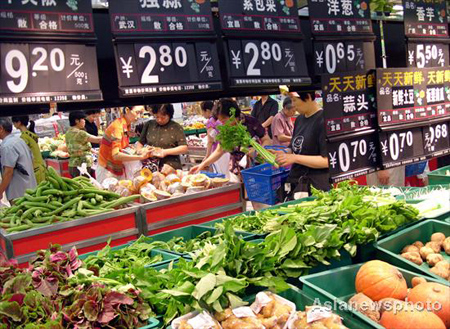
China's consumer price index (CPI), the main gauge of inflation, rose 7.9 percent in the first half over the same period last year, 0.2 percentage points lower than the first five months, the National Bureau of Statistics said on Thursday. The figure, compared with 7.1 percent in June, 7.7 percent in May, 8.5 percent in April and a 12-year-high of 8.7 percent in February, was broadly in line with most forecasts. The prices rose by 7.6 percent in cities and 8.6 percent in rural areas. Grouped by commodity categories, prices for food rose 20.4 percent, contributing 6.64 percentage points to the overall CPI rise and prices for housing were up 6.9 percent, contributing 1.02 percentage points. Prices for other categories of commodities rose or dropped slightly. Yao Jingyuan, chief economist of the bureau, attributed the slowdown of CPI growth to the government's efforts to curb inflation. The government has introduced a wide-range of measures, including increased fiscal support for grain and food production, and raised the required reserve ratio for commercial banks. But the central bank has not raised interest rates to rein in investment growth so far this year. Rising PPI Despite a drop in the CPI growth, the producer price index (PPI), which measures the value of finished products when they leave the factory, rose 7.6 percent during the first half, said the bureau. The growth rate was 4.8 percentage points higher than the same period last year. The PPI rose 8.8 percent in June from a year earlier, compared with 8.2 percent in May. Meanwhile, the purchaser prices for raw materials, fuel and power rose 11.1 percent. The growth rate was 7.3 percentage points higher than a year earlier. Li Xiaochao, spokesman of the bureau, said the rising PPI imposed greater pressures on inflation and the latest oil and power price rises could add to the pressure. Export growth down, FDI up During the first half, the value of exports was $666.6 billion, up 21.9 percent. The growth rate was 5.7 percentage points lower than the same period last year. "Many export-oriented companies could face increasing pressures in the second half of this year due to uncertainties in the global economy," said Zhang Liqun, a macro-economist at the Development Research Center of the State Council, the Cabinet. The country had a trade surplus of $99 billion, a decrease of $13.2 billion over the same period last year. The total value of foreign direct investment (FDI) actually utilized was 52.4 billion U.S. dollars, up 45. 6 percent. The growth was 33.4 percentage points higher than a year earlier. By the end of June, the foreign exchange reserves stood at $1,808.8 billion, up by 35.7 percent. Problems remain Inflation was expected to slow in the second half, but China should remain vigilant against high inflationary pressure due to rising prices of commodities and oil on the global market, Yao said. The bureau said in a statement that outstanding problems existing in economic performance included persisting pressure for rapid price rises, factors to constrain steady agricultural production and raise the income of rural residents, and the severe international financial situation. "We must continue to curb inflation," the spokesman said. He said many countries, both developed and developing, suffered rising inflation in the last two months. Globally, prices of primary products, such as oil and grain, had risen more than 30 percent. Energy prices continued rising in June with coal up 19.9 percent and oil 7.2 percent. "With the further opening-up of Chinese economy, we are more vulnerable to international factors," Li said. He also said the post-quake reconstruction would drive up demand on building materials, which could contribute to CPI rises. "The government should continue encouraging the industrial transfer from the economically developed eastern region to the less developed central and western regions to help ease the pressure of rising production costs for labor-intensive industries," he said. "Meanwhile, it must further the reform of energy pricing to help solve the shortage of coal, power and oil," said Zhu Hongren, deputy director of the Bureau of Economic Operations with the National Development and Reform Commission. (For more biz stories, please visit Industries)
|
主站蜘蛛池模板: 安远县| 张家界市| 张掖市| 金堂县| 葫芦岛市| 伊宁市| 枣阳市| 喜德县| 昂仁县| 渝北区| 大埔县| 清河县| 偏关县| 哈尔滨市| 当阳市| 富裕县| 江川县| 郸城县| 白银市| 罗甸县| 晴隆县| 武隆县| 文昌市| 洛浦县| 成安县| 香港 | 万山特区| 东港市| 新建县| 沁水县| 高雄市| 焉耆| 天长市| 株洲县| 潜山县| 垣曲县| 孝义市| 房山区| 色达县| 平和县| 祁连县| 肃宁县| 内黄县| 兴山县| 易门县| 固原市| 梓潼县| 合江县| 宾阳县| 潍坊市| 仪陇县| 通州市| 拜城县| 大姚县| 房山区| 北票市| 柳江县| 博罗县| 洛扎县| 民丰县| 和顺县| 沁源县| 丰镇市| 长岭县| 甘洛县| 铁岭市| 景泰县| 油尖旺区| 潼关县| 增城市| 彭泽县| 广饶县| 靖江市| 行唐县| 太康县| 徐州市| 藁城市| 浦江县| 惠安县| 利辛县| 大丰市| 丘北县|