BIZCHINA> Bizchina

|
BIZCHINA> Bizchina
|
|
Related
Jackpot!
By Li Weitao (China Daily)
Updated: 2008-07-28 15:04
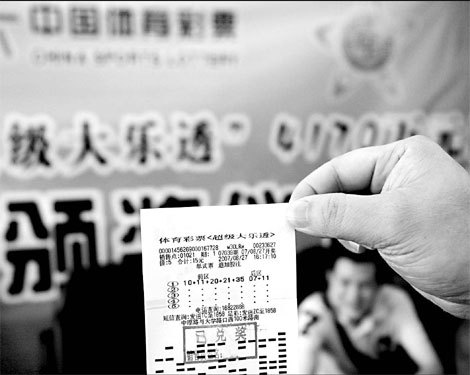
Li Zhenjie became an overnight sensation last November. The media hounded the sales agent for the China Welfare Lottery after it was revealed that a lucky individual who bought a 40 yuan lottery ticket from her counter had struck it rich. The buyer made more than 100 million yuan, a record in China's lottery history. Journalists across the country swarmed to Li's counter in Jiayuguan city, Gansu province, prodding her for clues as to who the lucky winner might be. The local bureau of the Ministry of Civil Affairs, which issued the China Social Welfare Lottery, awarded Li 3,000 yuan and proclaimed her a "hero" for promoting lottery sales. This was unimaginable two decades ago when lottery and gambling of any kind was officially taboo in China. The winner, whose identity has never been disclosed for security reasons, would have been branded as a capitalist who made "unearned income". Lotteries in China can be traced back to the 1880s. But after the founding of the People's Republic of China in 1949, the new government banned gambling as a vice related to feudalism and capitalism. It was not until the country embraced the reforms and opening-up policy that the government started rethinking lotteries.
In 1984, Cui Naifu, minister of civil affairs, while meeting an overseas Chinese, mentioned the difficulties he was facing in financing the country's cash-strapped welfare system. Cui was given three suggestions: organizing horse races, taxing banquets and lotteries. The idea of reintroducing lotteries interested Cui the most and he launched a feasibility study. Although at that time the country had already thrown its doors open to Western practices and new ideas, lotteries remained a sensitive topic. Any form of gambling could meet with stiff resistance from conservative government officials and even the public. But the financial difficulties in pushing the country's fledgling social welfare undertaking forced top decision-makers to give the nod. In 1985, China had only 400 million yuan for social welfare while there were 150 million people who needed financial relief. On December 20, 1986, the State Council "basically" approved a plan proposed by the Ministry of Civil Affairs to introduce lotteries. To counter possible opposition from the public, the Cabinet stipulated that the money raised be used only for social welfare. In July 1987, Cui suggested Hebei and Zhejiang provinces, and Shanghai and Tianjin municipalities issue lotteries as part of a nationwide pilot project. Shijiazhuang, capital of Hebei, took the initiative by issuing the first lottery tickets in the country since 1949 on July 26, 1987. (For more biz stories, please visit Industries)
|
主站蜘蛛池模板: 安达市| 襄城县| 三江| 沙洋县| 七台河市| 娱乐| 威信县| 嵩明县| 平远县| 台安县| 定陶县| 河池市| 曲水县| 曲麻莱县| 安塞县| 余干县| 江源县| 铅山县| 裕民县| 湾仔区| 汉源县| 成安县| 双峰县| 富平县| 绍兴县| 鄂尔多斯市| 望都县| 双桥区| 桐梓县| 巴彦淖尔市| 蓝山县| 团风县| 临夏市| 蒲城县| 定兴县| 克东县| 托里县| 轮台县| 原阳县| 宜州市| 稻城县| 塔城市| 英吉沙县| 仙居县| 晋江市| 湛江市| 安国市| 娄烦县| 邻水| 肇东市| 嵊泗县| 青冈县| 平陆县| 鄂伦春自治旗| 克东县| 盐山县| 桐庐县| 榕江县| 开化县| 红安县| 内江市| 友谊县| 盘锦市| 北宁市| 大丰市| 泰和县| 崇仁县| 九台市| 久治县| 镇安县| 江陵县| 金华市| 西藏| 漯河市| 将乐县| 万宁市| 山东省| 化州市| 沽源县| 昌黎县| 枣庄市| 黄浦区|