BIZCHINA> Center

|
BIZCHINA> Center
|
|
Related
Capital, the real winner of the Games
By Liu Jie (China Daily)
Updated: 2008-08-25 10:48
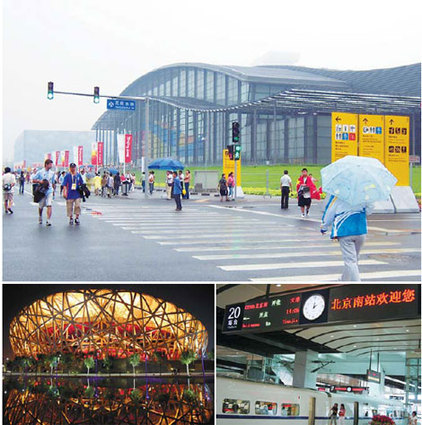 Forget the medal tally. The real winner of this year's Games is Beijing. Not only has Olympics given the capital a mega facelift that must be the envy of cities the world over, the huge infrastructural boost it has got provides other Chinese cities a perfect model to emulate. The 3.2 billion yuan Bird's Nest is only the most visible face of the changes Beijing has undergone in the past years. Many of the other projects are no less stunning. These include the 6.2 billion yuan express rail linking downtown Beijing and the Capital International Airport; the 27 billion yuan new airport terminal (T3); the 67.7 billion yuan relocation program for steelmaker Shougang Group; the 11.99 billion yuan No 5 subway line and the 15.99 billion yuan No 10 subway line; and the 14.3 billion yuan Beijing-Tianjin express rail. Some critics say the Beijing Games may have been way too extravagant, compared with Athens' $15 billion infrastructure program in 2004 and Sydney's $5 billion in 2000. But what is overlooked in such criticism is that most of the money went into infrastructure rather than venues per se, ensuring more long-term bang for the billions spent. Statistics from Beijing Organizing Committee for the Olympic Games (BOCOG) show only 13 billion yuan was spent on venues - 31 for contests and 45 for training. On the other hand, over 180 billion yuan was injected into infrastructure. So far, eight new railway lines, covering 200 km with a daily capacity of around 4 million people, are under operation alongside 60 km of a rapid bus transport system. These combined with new terminal, upgraded expressways and public transportation system, have changed the face of Beijing forever. As a result of a 15 billion yuan investment, over 90 percent of the city's wastewater is now treated; over 50 per cent of the city is forested; and natural gas accounts for more than 60 per cent of energy generation - up from 45 per cent in 2000. Some 50,000 old taxis and 10,000 buses have been replaced with new ones, and 4,000 of the buses are powered by natural gas - now the largest fleet of its kind in the world. Some 200 polluting units have been closed, moved or have switched to cleaner modes of production over the past seven years. All these cost about 45 billion yuan. Informatization upgrading, involving fixed and wireless communications, broadband, long-distance communications, e-government and e-commerce systems cost another 30 billion yuan. "Beijing Olympics has tremendously improved the city's infrastructure, increasing the capital city's 'value'," says Liu Jinhe, senior researcher of Samsung Economy Research Institute. Andreas Flaig, managing director of property management and consultancy Jones Lang LaSalle Hotels China, has been in Beijing for three years now. "I am very happy with the way the city has changed. I think it's phenomenal and extraordinary for the government to have invested so much in reshaping the city," he says. Model for change Beijing's radical makeover has come as a great example for other Chinese cities trying to redefine themselves to increase the general standard of living, attract investors and set themselves apart. Chongqing is to pool 3.7 billion yuan to set up a railway station equivalent to the Southern Beijing Railway Station, the largest one in Asia. Some 15 cities, including Shanghai, Guangzhou, Nanjing and Wuhan, are busy building or expanding their metro and light track systems. According to the Ministry of Construction, urban rail reached 602 km on the Chinese mainland by the end of last year, while a number of projects running up to 2015 will add another 1,453 km. Brian Dennehy, partner of Dennehy Weller & Co, a UK-based independent financial adviser, says China's huge population and area means there is more scope for improvement of infrastructure and new industries. "With millions expected to move from rural to urban areas, the Chinese will need to build the equivalent of two New Yorks every year for the next 15 years," he says. A city's renovation and cleanup are a lengthy process, but events such as the Olympics inject such endeavors with a new vigor. Beijing has used the opportunity afforded by the Games to speed up its metro and light track construction. While the 200 km urban rail system was finished by July, the city's original plan in the late 1990s was to complete 150 km by 2010. "That's one of the reasons why cities compete to host international events. They can act as an engine for rapid improvement," says Flaig. Shougang's relocation demonstrates how urban green projects can impact other areas. The 67.7 billion yuan project removed the old facilities, paid for employee relocation as well as environmentally friendly facilities in Caofeidian, an islet which has been turned into a booming economic development zone. Numerous such projects are afoot in China as the central government has issued related policies on relocation of heavily polluting enterprises, opening up numerous opportunities for investors from home and abroad. (For more biz stories, please visit Industries)
|
主站蜘蛛池模板: 双峰县| 郴州市| 黄大仙区| 都兰县| 宜春市| 池州市| 天等县| 永城市| 海安县| 平利县| 顺昌县| 安丘市| 忻城县| 弥勒县| 博湖县| 旅游| 河东区| 穆棱市| 辽宁省| 临夏县| 县级市| 桦川县| 波密县| 麻城市| 根河市| 临泉县| 东乡族自治县| 蓬溪县| 普兰县| 南皮县| 根河市| 奎屯市| 安陆市| 泰兴市| 酒泉市| 中山市| 武宣县| 南通市| 禄丰县| 长乐市| 高台县| 西峡县| 尉犁县| 肥东县| 古丈县| 巧家县| 新竹市| 汾阳市| 吴桥县| 胶州市| 瓦房店市| 阳城县| 上犹县| 奉新县| 高淳县| 启东市| 和政县| 义马市| 高碑店市| 樟树市| 女性| 胶南市| 凤庆县| 四子王旗| 绵竹市| 镇宁| 抚远县| 祁东县| 海南省| 大关县| 河北省| 嘉峪关市| 历史| 八宿县| 兴文县| 安福县| 安塞县| 雅安市| 鹰潭市| 麦盖提县| 佛冈县| 阜平县|
