BIZCHINA> Wen's Lens

|
BIZCHINA> Wen's Lens
|
|
Related
In with the new
By You Nuo (China Daily)
Updated: 2008-09-08 09:15
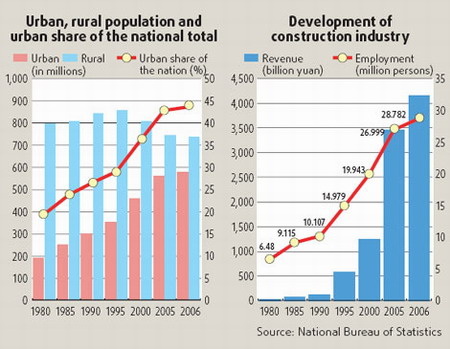
 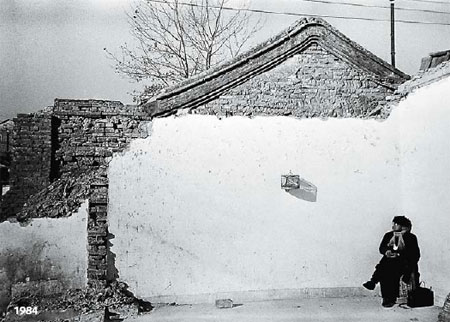 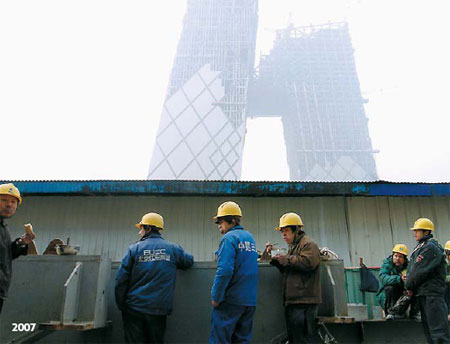 People have long been arguing about the disappearance of China's old cities - whether it should not be so fast, and whether it should not be so cruel as to knock down the buildings that used to give Chinese cities their unique style. Nostalgia has been part of the urban dwellers' culture. Frequently, when the older cab drivers meet customers who speak with the distinctive "local flavor" they soon begin to compare notes about where they used to live - with the expectation that all homes were once within a bike ride from each other, and now many families, if not all, have moved at least once in the last 30 years from the city's central area to some distant, formerly obscure, suburban spots. Today's Beijing has indeed grown so large, and is so much a mixture of Chinese classic buildings and ultra-modern architectural designs, as the argument still continues about protecting traditional houses. In the meantime, the good thing is that the building industry has become one main pillar of the economy in terms of the capital investment and for the jobs it can create. The demand from the construction industry has also fueled rapid increases in the businesses of steel and cement. The change in the cities' skylines has also brought former rural workers into their first urban jobs. In the photo of workers having their lunch break at the construction site of the new headquarters for CCTV, the national television station, you may hear people greeting each other daily in more than five provincial accents. According to figures released at the end of 2006, all Chinese cities were able to accommodate some 577 million fully-registered residents, or around 44 percent of its entire population. But at this stage, China is still in an early stage of urban development. And the building of new houses and new public infrastructure in most cities other than Beijing and Shanghai is still lagging behind. Cities are being built in a markedly decentralized fashion, partly also because of the country's large land area. In comparison with South Korea, where half of its population and GDP are concentrated in Seoul, the capital city, Beijing, as the Chinese capital city, makes up only a little more than 3 percent of China's GDP.
(For more biz stories, please visit Industries)
|
主站蜘蛛池模板: 衡水市| 万年县| 锦屏县| 聊城市| 铜梁县| 黎平县| 依安县| 凤山县| 顺平县| 南京市| 灵丘县| 铅山县| 广昌县| 常德市| 谷城县| 呼和浩特市| 建瓯市| 鲜城| 海丰县| 洞头县| 吉隆县| 阿荣旗| 张家界市| 平塘县| 哈密市| 潍坊市| 涟源市| 溆浦县| 芦溪县| 天台县| 正镶白旗| 汉阴县| 伊吾县| 梓潼县| 三门县| 西宁市| 五指山市| 闻喜县| 江安县| 葫芦岛市| 涟源市| 二手房| 黑河市| 汉寿县| 株洲县| 东至县| 启东市| 龙南县| 刚察县| 潼南县| 鸡西市| 乌鲁木齐县| 巫溪县| 张北县| 都匀市| 抚宁县| 崇仁县| 从化市| 江门市| 江川县| 波密县| 泾阳县| 龙州县| 桦甸市| 乌拉特前旗| 怀仁县| 砚山县| 莱西市| 甘德县| 驻马店市| 西和县| 孝感市| 桓仁| 罗田县| 甘洛县| 吉隆县| 瑞丽市| 敖汉旗| 武清区| 达尔| 潜江市| 黑河市|
