BIZCHINA> Top Biz News

|
BIZCHINA> Top Biz News
|
|
Related
Steering progress
By Scott Kronick (China Daily)
Updated: 2008-12-08 07:58
Editor's Note: After 1978 when China threw its door open to the outside world, some brave foreigners came to China and built pioneering, thriving businesses. Their memories and insights give a glimpse into the extraordinary changes in China during the past thirty years.
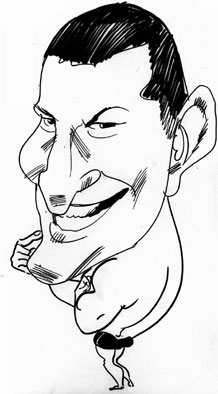
China Business Weekly is authorized by ACA Publishing Ltd to publish excerpts from its latest book My Thirty Years in China: 1978-2008 True-Life Stories of a Changing China. In this issue, we present an excerpt written by Scott Kronick, president of Ogilvy Public Relations Worldwide, China who first came to the Chinese mainland in 1991 and helped to build Ogilvy PR into China's leading public relations consultancy.
As well as successfully helping to develop branding strategies for many leading Chinese firms and international firms seeking to enter the China market, Kronick is a director of the Tsinghua-Ogilvy Program for Public Branding. This joint venture between the Ogilvy Group and Tsinghua University serves as a think tank on location branding for officials throughout China and on the way that China communicates with the outside world. In 2007 its work included addressing Western media perceptions of Chinese exports, while in 2008 it has focused on the XXIXth Olympic Games in Beijing. Some minor changes have been made to this excerpt. One highlight of my 13 years in China was becoming one of the first foreigners I knew to purchase a house. Friends who had lived in China for years did not trust the legal system and told me I was crazy, and to 'kiss goodbye' to the money I put forward. My wife, however, insisted, and we paid $100,000 as a down payment on a two-bedroom apartment, with the condition that we paid the other half off within one year. One solution to this problem was to see what mortgage options were available to me. I went back to Flint, Michigan to Citizen's Bank and asked if taking out a mortgage was possible. When I mentioned that the apartment was in China, they politely told me that they only loaned money to people living within something like a 100-mile radius. I responded, 'I guess that means Beijing is out of the question.' After our very supportive parents came to the rescue, we owned our first house together in the Diyang Mansions, located in the Central Business District of Beijing. Although the apartment was far from being a mansion, it was wonderfully located in downtown Beijing, right next to the local school, Fangcaodi primary school, which my kids would eventually attend.
The Diyang was well regarded among Westerners and well-to-do locals, in part because of its proximity to the school, and it attracted many people from the arts community. Our neighbors included Chinese actor and director Jiang Wen, gymnast and entrepreneur Li Ning, writer on the Ming dynasty Wang Shixiang, singer Ai Jing and a number of members of the Western news media. Articles were published in the local press about the great fengshui that existed at the Diyang, and our lives thrived. Years later, I loved watching my kids from the window of our apartment as they chanted school songs and did group exercises. The investment certainly paid dividends. Living downtown had its advantages, but we also loved to travel outside of the city at weekends. My wife, tired of having a driver accompany us everywhere, insisted that I get my driver's license. Although I worried a bit about the traffic, and all of the neophyte drivers on the road, I agreed. It was a simple exercise anyway - all I needed to do was to drive 100 meters in a straight line and I would receive my license. Or so I thought. It just so happened that in late 2003 - just the time I wanted to get a local license - the rules changed. Policy changes were common in China, so this was no big surprise. The new rules, however, stipulated that I needed to take a 100-question test. There was no study book in English, as this was a new test, and I needed to get at least 90 percent of the answers correct. Test day came and I showed up on time. I was told I would have 45 minutes to finish the test and they would let me know immediately if I had passed. Tests were handed out and I began. After answering all of the multiple-choice questions I knew the answers to in the first 20 minutes, I still had approximately 20 questions that could go either way. I went back and took a few calculated guesses, turned in the questionnaire with minutes to spare and awaited the good news. The questions that puzzled me had more to do with awkward translations than anything else. I remember one particular question that asked in rather broken English whether a person who had been in an accident and had a bone sticking out of their body should be moved or left in the street. There were other questions that would have kept even the best linguistic detectives on their feet. As I waited outside the classroom, at a speed uncharacteristic of China, my answer came. As I stood with approximately ten other applicants, the proctor exited the room and announced my name: 'Ke Ying de xiansheng.' I looked up eagerly. 'Ni guo bu liao.' Or in English: 'You did not pass!' I first felt embarrassed, as all of the other participants laughed, and then ashamed, as I had to explain to my wife and kids that I had failed. I would not be defeated though. I asked around to see if there was a book that I could use to prepare for another attempt. "No problem," answered a colleague, and he kindly purchased this for me. The Beijing Traffic Regulation Manual is a comprehensive traffic management book, with all of the questions and answers listed inside. The only caveat is that you need fairly good Chinese language skills to read this book - it did not come in English. No problem though, I thought, and I promptly had the questions and answers section translated. Among the questions: 'Categorized according to the specification terms, carriers for agricultural use refer to ____________.' A. Three-wheeled, four-wheeled vehicles; B. Three-wheeled, four-wheeled ordinary goods carriers, four-wheeled vans, four-wheel tank carriers, and four-wheeled automatic unloading trucks; C. Three-wheeled, four-wheeled and six-wheeled vehicles.' Or here is another good one: 'True or false: When big trucks are loaded with goods, the height of the goods from the ground should be not more than 5 m, the width of the goods should not be more than that of the carriage, the front part should not stand out of the vehicle body by more than 1m, and the rear part should not stand out of the carriage by 2 m or touch the ground.' By now, word had spread to my colleagues and friends, and the pressure mounted. A test date was set and, with a translated portion of the book in hand, I crammed like I was back in college. This time, I showed up early and mentally prepared myself for the test. I went through the questions one by one and thought through each answer in detail. I then turned in the test at the completion of the 45 minutes and waited to hear whether I would be taking to the road, or having to face my family and colleagues another time with word of defeat. Fortunately, today the coveted license rests in my car and, with a combination of pride and fear, I have become one of the best defensive drivers in Beijing. (For more biz stories, please visit Industries)
|
主站蜘蛛池模板: 家居| 宁陕县| 蕉岭县| 平度市| 乐昌市| 高清| 来凤县| 固原市| 甘泉县| 达孜县| 凤台县| 井冈山市| 绥中县| 当涂县| 唐河县| 德清县| 枞阳县| 吉隆县| 武鸣县| 夏河县| 乌兰察布市| 新宾| 山西省| 高青县| 古丈县| 哈密市| 界首市| 林口县| 德化县| 灵璧县| 河池市| 墨玉县| 东乌珠穆沁旗| 石狮市| 庆安县| 太白县| 犍为县| 华宁县| 高邮市| 宣汉县| 台中市| 南阳市| 丘北县| 平邑县| 台北县| 肥西县| 鸡东县| 侯马市| 怀柔区| 渭源县| 思南县| 新余市| 吉木萨尔县| 时尚| 浦东新区| 紫阳县| 龙游县| 唐河县| 镇原县| 汽车| 林甸县| 平原县| 金川县| 渑池县| 汪清县| 庆云县| 竹北市| 高青县| 从化市| 巫溪县| 钦州市| 东台市| 德安县| 静宁县| 西乌珠穆沁旗| 两当县| 门头沟区| 观塘区| 黄骅市| 湛江市| 虹口区| 炉霍县|