BIZCHINA> Editor Choice

|
BIZCHINA> Editor Choice
|
|
Economy of scales
By Jules Quartly (China Daily)
Updated: 2009-07-07 07:57
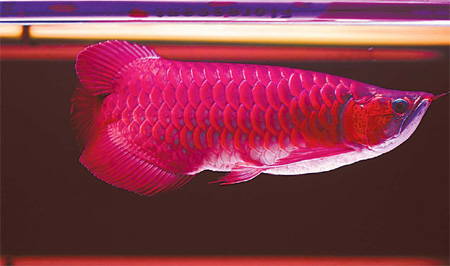
Forget gold bars, marquee cars and fancy houses. Red dragon fish are the ultimate status symbols for a growing number of wealthy Chinese. The endangered species is traded legally and fetches up to 800,000 yuan ($117,000) for a perfect specimen. And to prove their worth, unlike most commodities, they have doubled in value since the global economic crisis bit in September last year. According to their owners, red dragon fish have excellent feng shui as they emanate strong yang vibrations to balance the yin of water, which attracts qi, or energy. Beijing architect Liu Baohe, for example, has kept fish since he was young, raising various dragon fish varieties before investing in the red. "It benefits my job and life by making me relaxed and happy," he says. "And I believe kindness to others results in good fortune." Celebrities and high-profile investment bankers are among the growing circle of red dragon fish owners. They are attracted by the fish's likeness to the dragon, a traditional symbol of China, with its elongated body, large eyes and mouth, metallic scales, and barbels on the chin that look like dragon tendrils. They are also hooked on the idea of owning something so precious and rare. "Their spirit and arrogance when swimming is just like a Chinese dragon," says Beijing civil servant Zhang Zhengqiang, who keeps fish ranging in price from 10,000 ($1,460) to 30,000 yuan. "Their cost is reasonable because they're so rare and I can afford it." The red dragon fish is close to extinction and listed by CITES (Convention on International Trade in Endangered Species of Wild Fauna and Flora) as an Appendix 1 animal, the highest classification. There are virtually no wild fish left and a captive stock of 8,000 "breeders" are mostly held in farms by the Kapuas River in West Kalimantan, Indonesia, the only place they are native to. They are notoriously difficult to breed anywhere else and this adds to the species' mystique. The sale of Appendix 1 animals is usually prohibited but this convention was lifted in the case of the red dragon fish because it is bred in captivity and can therefore be sold, subject to restrictions. First generation breeders cannot be traded, but second filial generation (F2) fish can. (For more biz stories, please visit Industries)
|
主站蜘蛛池模板: 博客| 万安县| 富蕴县| 本溪市| 新田县| 报价| 囊谦县| 依兰县| 石柱| 湘西| 驻马店市| 大田县| 射阳县| 博罗县| 牡丹江市| 衡山县| 云南省| 商洛市| 盱眙县| 昭通市| 呈贡县| 封开县| 九台市| 彩票| 西宁市| 秀山| 固镇县| 华池县| 太白县| 博野县| 寿光市| 周宁县| 通许县| 丹东市| 永春县| 资兴市| 万州区| 泾源县| 甘南县| 宝应县| 新宁县| 海城市| 仙居县| 定远县| 繁昌县| 涿鹿县| 仙桃市| 东阳市| 普宁市| 云林县| 扶余县| 浮梁县| 昂仁县| 景德镇市| 阿合奇县| 新闻| 丰台区| 噶尔县| 巫溪县| 桐梓县| 乌苏市| 刚察县| 上犹县| 呼伦贝尔市| 寿光市| 吐鲁番市| 武汉市| 垣曲县| 渭源县| 景德镇市| 湾仔区| 永泰县| 米林县| 镇原县| 栾城县| 襄城县| 应城市| 兴业县| 磐石市| 翁牛特旗| 屏东县| 济阳县|