|
|

NPC & CPPCC Annual Sessions > Biz & Economy > Backgrounder
|
People's Congress system and NPCBy (Xinhua)
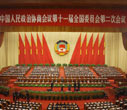
Updated: 2009-03-04 08:03 The Second Session of the 11th National People's Congress (NPC) is scheduled to open in Beijing on March 5, 2009. The People's Congress system is the fundamental political system of the People's Republic of China (PRC), the organizational form of state power of the people's democratic dictatorship in China, and the system of government of the country. The system most directly reflects the nature of the PRC, indicating the status of the Chinese people of various ethnic groups as masters in the country's political life. The NPC is the highest institution through which the Chinese people exercise their state power. In 1953, China held people's congresses at different levels. In1954, the First National People's Congress was convened, marking the establishment of the people's congress system in China. The NPC exercises legislative power, amends the Constitution and supervises its enforcement, formulates and amends basic statutes and other laws; elects and decides on the leading personnel of state-level administrative, judicial, procuratorial and military bodies, and has the right to recall them; supervises government work in accordance with the Constitution and laws; and examines and decides on the fundamental, long-term and key issues of the state. All administrative, judicial, procuratorial and military organs and other state-level institutions are responsible to the NPC and supervised by it. The NPC Standing Committee, the permanent organ of the NPC, is elected by the NPC and exercises the legislative power of the state together with the NPC. Liu Shaoqi, Zhu De, Ye Jianying, PengZhen, Wan Li, Qiao Shi and Li Peng successively served as chairmen of past NPC Standing Committees. Wu Bangguo is chairman of the 10th and 11th NPC Standing Committees. Among the ten terms of the NPC, nine had special committees except the Fourth NPC, which was in sessions during the period of the "Great Cultural Revolution" (1966-1976). The special committees are permanent bodies under the leadership and supervision of both the NPC and its Standing Committee. The NPC's delegation to the Inter-Parliamentary Union (IPU) is known as "the NPC Delegation." On Dec. 8, 1983, the Third Meeting of the Sixth NPC Standing Committee decided to join the IPU. In April 1984, the IPU Council's 134th meeting made an official announcement to accept the NPC Delegation as its member. The NPC Delegation is aimed to promote mutual understanding and friendly exchanges with parliamentary members of different countries, develop friendship and cooperation with peoples of different countries, and safeguard world peace.
|
       |
主站蜘蛛池模板: 呼伦贝尔市| 民丰县| 长治市| 昌邑市| 卢氏县| 土默特左旗| 肃宁县| 昌乐县| 河北区| 蕉岭县| 渝北区| 宁强县| 丰宁| 伊金霍洛旗| 玉林市| 西宁市| 眉山市| 修武县| 阳春市| 梁山县| 庐江县| 肃南| 长顺县| 客服| 沂水县| 精河县| 安达市| 镇康县| 布拖县| 阳城县| 云浮市| 绥阳县| 东宁县| 陵川县| 高邮市| 曲松县| 拉萨市| 宜都市| 东丰县| 平凉市| 景德镇市| 吴桥县| 韶关市| 喜德县| 石棉县| 资中县| 西宁市| 威信县| 陆良县| 溆浦县| 南昌县| 霍州市| 桦南县| 鹤庆县| 冷水江市| 新郑市| 沧州市| 潜江市| 上饶市| 丹棱县| 尼勒克县| 铜陵市| 奉节县| 蒲城县| 永济市| 青州市| 黔东| 伊川县| 博白县| 平阴县| 乌兰浩特市| 启东市| 富民县| 屏东市| 淅川县| 澄城县| 平远县| 英超| 赣州市| 永城市| 綦江县| 兴安县|