Need to narrow income gap
Updated: 2011-09-16 08:01
By Xiao Gang (China Daily)
|
|||||||||||


The key issue for China now is to focus on implementing bold, comprehensive reforms to rebalance wealth distribution
According to the 2011 Forbes Billionaires List, the BRIC countries (Brazil, Russia, India and China), contributed 108 of the 214 new billionaires and accounted for one in four of the total number, a jump from one in ten five years ago. The number of Chinese billionaires on the list nearly doubled.
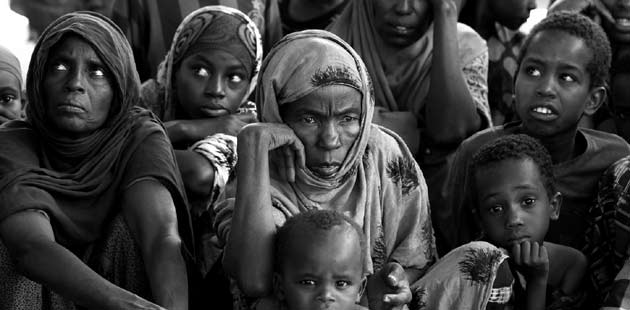
In striking contrast, China still has about 150 million people living on less than one US dollar per person per day and more than 60 percent of urban residents cannot afford an apartment. China's Gini coefficient, a key indicator of inequality, reached a record high of 0.49 in 2006 and has been hovering around 0.5 in recent years, surpassing the "warning line". Many people believe that the income gap is actually far larger than the official figures suggest.
The fast growth of China's economy has fueled the rising number of wealthy individuals, whose wealth comes mainly from private businesses, property speculation, initial public offerings and high-earning jobs. Interestingly, the average age of Chinese millionaires is 39 years old, 15 years younger than their Western counterparts.
Although historically the course of industrialization and modernization in pursuit of economic prosperity seems to lead inevitably to wealth disparity, the key issue for China now is to focus on implementing bold, comprehensive rebalancing reforms.
Adjusting China's development model means refocusing gross domestic product (GDP) growth toward more "people-oriented growth", in order to boost the welfare of ordinary citizens. The Chinese economy's over-reliance on investment has aggravated the declining household share of the national income, resulting in consumption making up just 35 percent of GDP. This figure is a record low for any major economy, and well below that of other developing countries such as India.
To reverse this trend, various measures need to be taken to further raise household incomes, including enacting mandatory wage growth targets, spending more on social welfare programs and expanding affordable housing, as well as comprehensively reforming the personal income tax system.
A survey, conducted by the Shanghai Committee of the China Democratic League, has found that about 68 percent of the working population in the city is employed in the lowest-paying sectors, such as manufacturing, construction, catering and retail. The minimum monthly salary is 1,120 yuan ($170), and despite ranking the second highest among Chinese cities, this is only around 30 percent of the average salary in the city, down from 44.6 percent in 1993. In contrast, an internationally accepted level is that a monthly minimum salary should be no less than 50 percent of the city's average income levels.
Obviously, the system of fair distribution according to performance should further reflect the labor value in the market, but getting "the first income distribution" right is more important because if there is something wrong with the first distribution, it is very hard to correct it through a second one.
The financial system must play a role in narrowing the income gap. Gradual liberalization of interest rates could be a better way to raise deposit rates, thus preserving households' purchasing power in inflationary periods. Meanwhile, raising the lending rates might be helpful in curbing investment and transferring wealth from producers to households.
Given the current tightening liquidity environment, Chinese banks are starved for funds and are intensifying the competition for deposits through exploring innovative ways to deliver wealth management products for high-value customers. As a result, wealthy individuals and companies are the largest beneficiaries of the banking system.
Considering the importance of employment created by small-and-medium-sized enterprises, Chinese banks should be developed on a more balanced, coordinated base, making microfinance more accessible to both small businesses and average citizens to improve employment and increase household incomes.
For decades, a widening income gap has been one of the problems faced by those countries stuck in the "Middle Income Trap" both in Latin-America and Asia. Only a few countries such as Japan, South Korea and Singapore, have successfully avoided the trap. China faces a similar situation despite its characteristics of a large population and fast-growing urbanization, and will not maintain long-term sustainable growth without closing the gap between the haves and have-nots.
This is not only an economic issue, it is also closely related to political theory and social stability. Paul Collier, an Oxford University economist, examined data from nearly every country going back to 1960. He found that above a certain income threshold, democratic countries become less prone to unrest as they get richer, whilst autocracies tend to suffer higher levels of unrest.
Usually, reforms in countries entering the middle-income development phase are fettered by specific interests groups, which leads to rent seeking, speculation and corruption. Therefore, it is necessary for policymakers to contemplate a set of top-to-bottom steps on the road to reform.
Rebalancing an economy is never an easy process, since it requires both a strong stomach for reform and also a suitably cautious approach, combined with a true sense of the moment.
The author is chairman of Board of Directors, Bank of China.