Cash-strapped SMEs see dawn break
Updated: 2011-10-17 13:08
(Xinhua)
|
|||||||||||


BEIJING – As China's central and local governments have taken multiple relief measurements to help private firms, more small- and medium-sized enterprises trapped in the liquidity crunch are now seeing dawn break.
Previous media reports stated that small- and medium-sized enterprises (SMEs), which contribute to 60 percent of China's industrial output and create 80 percent of the country's jobs, have faced an unprecedented crisis this year as they struggle to survive a fund shortage amid the country's tightened macroeconomic control policies.
 |
|
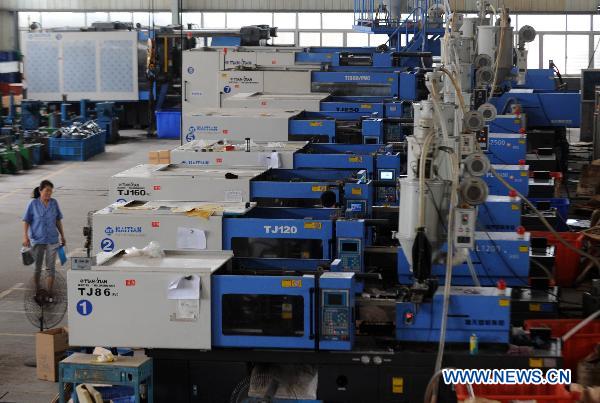
A few machines run relied on temporary generators in a powered-off workshop in Wenzhou, East China's Zhejiang province, June 30, 2011. [Photo/Xinhua] |
At least 80 cash-strapped businesspeople in the city of Wenzhou, east China, have committed suicide or gone into hiding to invalidate more than 10 billion yuan in debt owed to individual creditors pooled from the private lending market.
News of the incidents has even made waves in the central government. During a visit to Wenzhou on Oct 5, Premier Wen Jiabao urged financial support for debt-laden small businesses.
According to Xinhua, an official investigation has shown that the crisis has now largely been kept under control, while some of the runaway small-businessmen are returning in the last week.
Government's efforts
The government has become increasingly concerned about the well-being of small businesses and called for more financial and fiscal supports to help them out of the debt crisis.
"Small enterprises should be a priority for bank credit support and enjoy more preferential tax policies," Premier Wen said during his visit to Wenzhou. "Banks should increase their tolerance for the non-performing loan (NPL) ratios of small enterprises and reduce the cost of securing credit."
Wen also requested a crackdown on the high-interest informal lending market, which operates outside the country's banking industry. The informal lending market between companies and individuals provides high-interest loans to many private entrepreneurs facing a cash squeeze.
The State Council, or China's Cabinet, on Oct 12 pledged stronger financial and fiscal support to small- and micro-sized businesses by reducing their tax burdens and encouraging banks to increase loan support for small firms.
The Cabinet's fiscal support measures for small firms include raising the tax threshold for corporate value-added taxes and business taxes, extending a policy to halve business income taxes by another four years, and forgiving banks' stamp tax on lending contracts with small firms for three years.
China also aims to boost the scale of special funds designated for small- and medium-sized enterprises. Data from the Ministry of Finance (MOF) showed that these special funds have totaled 43.81 billion yuan since 1999. In 2009 and 2010, these funds amounted to 23.32 billion yuan.
"The policies have come in time, especially the fiscal policies which can directly benefit small firms by reducing their taxes and offering them a better environment for development," said Liu Shangxi, deputy chief of the Research Institute for Fiscal Science under the MOF.
More surpports from financial institutions
Under the government's coordination, commercial banks of the country now have increased their lending ratio to assist small- and mid-sized enterprises overcome the current difficulties.
They are also prohibited from charging fund management fees, financial consulting fees and other unreasonable fees for their services to small firms.
Sources with the Bank of China said that the bank plans to lend 120 billion yuan ($18 billion) to small firms this year, and lending growth to small companies will be 30 percentage points higher than its average lending growth.
The Agricultural Bank of China announced Thursday that its Wenzhou branch plans to lend at least 10 billion yuan this year. It also promised that new lending would give priority to small firms.
"Tax reductions are particularly important to small firms on what already are thin profits. Structural tax reduction is also necessary in China considering the government's fiscal income growth has been much faster than economic growth in recent years," said Lu Zhengwei, an economist with Industrial Bank.
- Wal-Mart China CEO quits amid pork scandal
- Cash-strapped SMEs see dawn break
- China's import expansion benefits world economy
- Railway head is replaced following accident
- Tollways overloaded with debt
- China becomes EU's top trade partner
- China to launch 3 new stock indices
- Top dollar for early iPhone 4S