|
|
|
 |
|
|
|||||||||
The Shu River residential buildings, four kilometers away from the northwestern of the old town of Lijiang, is a small market surrounding the city. The residential houses are arranged in a picturesque disorder which is very similar with Sifang Street of Lijiang. The Qinglong Bridge constructed during Ming Dynasty (from 1368 to 1644), the largest stone arch bridge in Lijiang, was constructed above the Qinglong River flowing across the buildings.
The Tusi government office was located in southern Lijiang in ancient times and was surrounded by palaces and animal farms. The government office of the Tusi Mushi in the old town was constructed during the Yuan Dynasty (from 1271 to 1368) and became the Old Town Museum after being reconstructed in 1998. The government office covers an area of 46 mu and contains a total of 62 rooms. There are also 11 horizontal inscribed boards granted by emperors from different ages, reflecting the history of the Mushi family.
Most streets of the old town of Lijiang were constructed beside mountains and rivers and laid with red rubble rock. Therefore, the streets will not be muddy during the rainy season and will not be dusty during the dry season. The patterns on the stones are natural and elegant, making the streets complement the environment of the entire town. Sifang Street in the center of the old town is the representative of Lijiang’s old streets.
Authenticity and completeness
The distribution of the town, forms of folk houses, architectural materials, technological decorations, construction technology and environment of the Old Town of Lijiang all maintained the traditional styles. Roads and river systems have remained unchanged, calcirudyte pavement, stone arch bridges, wooden bridges, and commerce and trade plazas in Sifang Street are handed down from generation to generation. The folk houses are still repaired and constructed by traditional technologies and materials. The local government has tried their best to protect the features of the Old Town and strictly control and guide all construction. The Old Town of Lijiang is created by common people and will continue to be built. As a settlement, the appendages or “new buildings,” which deviate from the original form and structure in part of the Old Town, will be gradually demolished or reformed in order to promote the artistic and historical value of the Old Town.
Heritage value
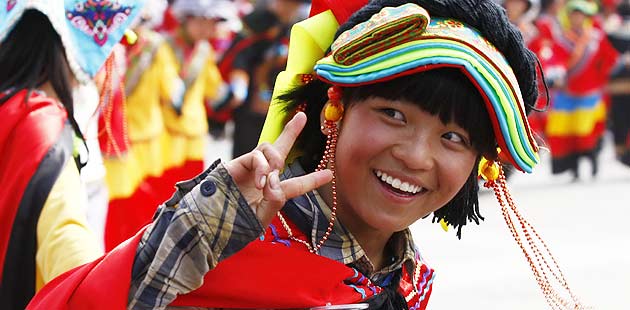
The Old Town of Lijiang is a historic city that has a high comprehensive and overall value. It has a long history and combines features of water regions and mountain cities. As an ethnic city with a long history, the general distribution of the Old Town, projects and architecture all absorb the characteristics of the Han, Bai, Yi and Tibetan nationalities, at the same time, they also show the unique styles of the Naxi nationality. They are precious heritage relics for studying the construction, architecture and cultural history of Chinese cities. The policy that the town’s construction should adhere to respect nature, seek practical results, advocate openness and compatibility reflects mankind’s creativity and progressive significance in the cities and towns under specific historical conditions.
The Old Town of Lijiang has a rich traditional national culture, reflects the prosperity and development of the Naxi nationality and is an important historical material for studying the development of human culture. The Old Town of Lijiang has gradually become the economic and cultural center of northwest Yunnan and provided a good environment for the development of national culture. The Naxi nationality has produced a glorious national culture with other minorities who live here. Whether the streets, memorial archways in the square, water system, bridge or decorations of dwellings, gardens, couplets, steles, inscriptions as well as block stones, they all reflect the cultural accomplishments and aesthetic interests of the Naxi nationality and the cultural connotation, artistic conception and romantic charm of local religions, aesthetics and culture. Furthermore, they also showed the deep and abundant historical culture and some traditional culture and arts, especially the Dongba culture that has abundant connotations and Baisha Murals, also left brilliant works in human civilization.