 |
|
|
 |
|
|
|||||||||
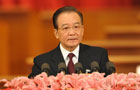
When Premier Wen Jiabao repeatedly mentioned raising income levels and improving social welfare during his annual government work report on Monday, some people were happy, others not.
Wen is sending a message to all Chinese companies that they should raise their employees' salaries and pay more for their medical treatment and housing on an annual basis.
However, at a time when global demand has slackened and the Chinese economy is slowing down, this is likely to have a harsh impact on small and medium-sized private enterprises, which make a major contribution to the Chinese economy, as it will mean increasing labor costs and business operation pressures.
So what is the way ahead? To let matters be or try to turn the crisis into opportunity?
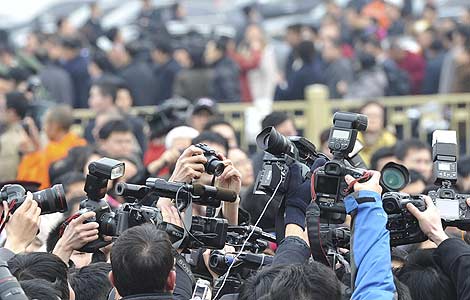
The curtain of the long-awaited annual Lianghui, also known as the two sessions, was raised on Saturday.
As a business reporter who has covered the big event for the past four years, I notice that the national economy and people's livelihoods are the hot topics in discussions among the representatives this year.
During his speech on the government work report, a significant part of the two sessions every year, Wen pointed out more than 10 times that China will try to improve people's livelihood and make sure they are happy and comfortable, which won several rounds of applause from the audience in the Great Hall of the people.
Wen emphasized this was a "key task" this year, saying China will try to establish a mechanism whereby employees incomes can rise regularly.
The Chinese government is already on course in addressing the issue. Only a month ago, the State Council said in employment promotion guidelines that from 2011 to 2015, China's minimum wage level will increase annually by more than 13 percent. Based on the calculations, personal incomes are expected to double by the end of 2015.
Since late last year, the rising cost of labor has emerged as the key factor, rather than the strength of the yuan or shrinking global demand, in eating up the profits of companies and exporters in China's coastal regions.
During the first three days of the two sessions, complaints about rising labor costs, especially by private companies, were often heard in discussions.
This seems to be an unfortunate story. But think again is it really that bad for Chinese companies? Not necessarily.
China surpassed Germany as the largest exporter in 2009, and has held the top position since then. But, unfortunately, we cannot proudly say the nation is the strongest exporter worldwide, as many made-in-China goods are still lagging far behind their foreign counterparts in quality, design and branding.
Rising labor costs and shrinking profits could force the majority of Chinese companies to improve products and services, and their competitiveness, from merely relying on making low-end goods and grappling with each other over price.
More than that, higher quality and price would likely help reduce the risk to exporters from trade restrictions by other countries. As a nation that has been the major target of trade protectionism worldwide in the past decade, China has incurred numerous losses due to high duty charges.
During the discussions, the participants of the two sessions agreed the Chinese policy is reasonable, but they expect the government to launch other measures to assist them in areas such as financing and innovation.
Wen said in the report that China will continuously provide credit support to small and micro-sized companies to help and encourage the nation's exporters to transform their business growth model and improve business.
The time when Chinese companies reaped profits solely from low labor costs is over and cannot return. A new era is beginning.
Of course, we cannot stop the deputies complaining in the coming two weeks, but I believe the majority are already preparing to herald the way forward, which will be bumpy but hopeful.
You may contact the writer at dingqingfen@chinadaily.com.cn.