|
|
|
 |
|
|
|||||||||
|
 |
|
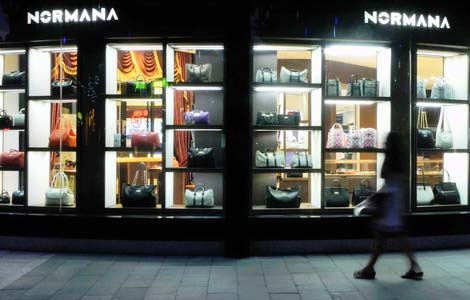
A luxury store in Hangzhou, East China's Zhejiang province. China's online luxury sellers are having tough times but analysts say the online market will continue to boom. [Photo / China Daily]? |
China's online luxury retailers, who experienced a boom in 2011, are running into trouble due to the industry's low-price strategy.
Some leading online luxury retailers had to contract their business by reducing employee numbers.
A staff member at Zoshow.com Inc surnamed Hu, who used to work in the company's marketing department, left the company in January, when it moved both its marketing and data managing departments from Beijing to Shenzhen, where its headquarters are located.
"The movement was just a normal staff transfer," said Ji Wenhong, CEO of Zoshow.com.
But Hu said very few of the original 60 employees transferred to Shenzhen.
It is rumored that Shangpin.com, a member-only online luxury retailer, has also reduced its payroll since January.
A former employee of Shangpin.com, who refused to be identified, said she left the company because of its decreasing turnover.
The industry's tough times started at the end of 2011.
Last December, employees of Wooha.com posted a letter on the website's homepage demanding their back pay. Wooha.com was one of China's pioneering luxury online retailers and had planned to be listed by 2013.
The website's business ground to a virtual halt after the wage arrears affair.
NetEase Inc, one of China's four largest portals by market share, closed its online luxury sales department on Jan 1.
The business model of online luxury sales has been cast into doubt after these incidents.
"There is an inherent contradiction between luxury goods and e-commerce," said Feng Po, an analyst with China Venture.
An important feature of luxury goods is scarcity, but the greatest advantage of e-commerce is the low price of the items on offer, Feng said.
Most online luxury retailers still adopt the low-price strategy and consumers go to luxury websites for low-priced goods. Price cuts have become almost the only weapon for most Chinese retailers as they are yet to develop more effective sales strategies.
Chen Yijia, former vice-president of Zoshow.com, said she was worried that a price war may start in the sector. But she told China Daily in an interview last July that Zoshow could provide luxury goods at lower prices than its rivals.
This model cannot work in the long term, because online sellers cannot secure enough luxury products at low prices, said Feng.
"The low price strategy damages every part of the business," said Sun Yafei, chief executive officer of Fifth Avenue Globe - one of the earliest online luxury retailers in China.
Usually, online luxury retailers get goods in three ways - purchases from overseas stores or outlets, from agents of luxury brands or being directly authorized by the brands.
But online luxury retailers have recently met opposition from almost all famous luxury brands.
Swarovski (Shanghai) Trading Co Ltd, for example, has accused 360buy.com, a major online retailer, for selling Swarovski products without authority, according to media reports.
The online retailer, which is one of the largest e-commerce players in China and entered luxury business in 2011, said its turnover of luxury products exceeded 500 million yuan ($79.4 million) in 2011 and forecasted the number could arrive at 1.5 billion yuan in 2012.
As many as 38 luxury brands, including LV, Prada and Hermes, reportedly confirmed in March that they never gave any Chinese online retailer the authority to sell their products.
Because it is difficult to cooperate directly with luxury brands, obtaining goods has become the biggest problem for luxury online retailers.
Due to the poor supply of real luxury goods, some fake luxury products have appeared online, whose sellers do not explain where they obtained them.
Consumers also take an adverse view of luxury online retailers due to the fake products.
Meanwhile, retailers may also become losers since they do not get much profit from the low-price strategy, either, despite the huge size of China's luxury market, analysts said.
According to the prospectus of Vipshop.com, the company's net loss increased from $1.38 million to $107 million from 2009 to 2011, although its net operating revenue expanded by about 80 times over the three years.
"I know some websites that even sell luxury items at the same price as the purchase price in order to get more turnover," said Sun.
Without enough profit, the industry is not attractive in the capital market.
The price of Vipshop.com, China's first listed online luxury retailer through an initial public offering in New York on March 23, dropped below its issue price on the day of its listing and fell by 30 percent of its issue price in two days.
Investors have also shifted their attention from online luxury sales, which adds to the industry's capital pressure.
According to China Venture Investment Consulting Group, only one online luxury outlet received investment since October 2011, while 13 financing cases were announced from January to September 2011, securing investment worth $350 million.
"Online luxury sales will not get more investment in 2012 since investors are not confident in the industry," said Feng.
However, business insiders remain confident in the future expansion of the industry.
Neiman Marcus Group Inc, the US luxury retail giant, plans to enter China through online luxury sales and will launch an e-commerce website in China by the end of 2012, Bloomberg News reported on March 22.
"It is a reshuffle period now, as the industry has grown too fast in the past year," said Sun.
She said she believed that as consumers are getting more used to online shopping due to its convenience, two or three industry giants may stand out as a natural result of market competition.
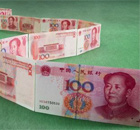
Statistics from the China e-Business Research Center show that the trading scale of online luxury sales reached 10.7 billion yuan in 2011 and could be up to 23.76 billion yuan by 2013.
But online luxury retailers have to change their strategies to tackle supply and financing problems. Expanding the brand pool is a new strategy many retailers have adopted recently.
"We cannot secure enough goods from the very top luxury brands, but we can enlarge the brand pool," said Zhao Shicheng, CEO of Shangpin.com. Zhao said there are many high-end brands worldwide, but most Chinese consumers are familiar with only a handful of them. The website can introduce more luxury brands to China and then get enough goods for sale.
Sun has also sought to introduce consumers to more foreigner designer brands via her website, which is authorized by about 300 high-end brands, few of which are well-known luxury brands.
"Luxury products are only the top part of fashion products and the larger market will come from fashion brands," Zoshow.com CEO Ji told Shenzhen Economic Daily.
wangwen@chinadaily.com.cn