|
|
|
 |
|
|
|||||||||
|
 |
The nation's top economic planning agency has said that yuan-denominated funds managed by overseas private-equity firms are "foreign" and may not invest in strategic sectors, which could limit exit channels such as initial public offerings.
The Wall Street Journal reported on Monday that the National Development and Reform Commission decided last month that all of the capital in a yuan-denominated fund must come from local Chinese investors, or the fund will be classified as foreign and cannot invest in sensitive industries, such as national defense-related companies, and they also face restrictions on investing in industries including resources, telecommunications, education and the Internet.
The NDRC specifically cited a fund run by Blackstone Group LP, which could have benefited from getting local status for a 5 billion yuan ($795.4 million) fund that is about halfway through its fundraising, the Wall Street Journal said.
"I am not surprised by this, and I think most foreign PE firms were already expecting to be deemed (foreign direct investment investors). So, there's no big immediate impact," said Chris Rynning, CEO of Origo Partners Plc, a PE company listed on the London Stock Exchange that focuses on the Chinese market.
"The Chinese PE market has been a fabulous success story and has created many leading companies, to the benefit of entrepreneurs, investors, employees and society as a whole," said Andre Loesekrug-Pietri, chairman and managing partner of the European PE company A Capital.
"Foreign funds have been instrumental in bringing this industry to China, where it found very fruitful ground with world-class Chinese entrepreneurs. It is now important to preserve the added value that foreign (PE firms) can bring to this rapidly maturing market.
"We are now entering a new phase and see the trend of mergers and acquisitions, of market consolidation and of outbound investment growing very fast. These require a whole new set of competencies, where foreign PE firms with experience can play an important role in the Chinese market," said Loesekrug-Pietri.
"It is rational that yuan-denominated funds managed by a foreign PE company should not be allowed to invest in sensitive industries in China, but such funds should be regarded as domestic, or there is no reason for a foreign company to raise yuan funds," said a senior executive at a foreign PE firm who declined to be named.
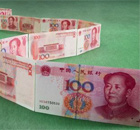
China relaxed rules last year to allow foreign PE firms to launch yuan-denominated funds as the government sought to channel more savings into the private sector to sustain growth.
The Shanghai government conducted a trial program under which foreign PE firms could have their yuan funds classified as local even if up to 5 percent of a fund's capital came from outside of China.
"China would hugely benefit from continued reforms, leveling the playing field among foreign and local PE firms. After all, China will benefit from FDI, so it is not ideal to have different rules for foreign and local firms, with the exception of only a few protected sectors (involving) national security," Rynning said.
"We hope foreign investors can be equally treated and more positively take part in this market of great potential," Loesekrug-Pietri said.
In 2011, yuan funds raised totaled $23.4 billion, topping the $15.4 billion raised by dollar funds, the Wall Street Journal said.
China carried out a trial program for qualified foreign limited partnerships in several cities including Shanghai and Beijing last year, allowing a certain number of foreign PE funds to make equity investments in China after exchange settlement.
The Blackstone Group LP, The Carlyle Group and DT Capital Partners Co were the first companies to win licenses to operate under the program.
In 2009, the State Administration of Foreign Exchange ruled that unless otherwise specified, foreign enterprises' yuan funds after settlement may not be used to buy equity investments in China. That was meant to prevent hot money inflows.
SAFE granted Shanghai a $3 billion initial quota last year for the program, sources with knowledge of the situation told Reuters in November. Carlyle and Blackstone received quotas of $100 million each.
A spokesman for Carlyle China said the firm is studying the NDRC statement, and declined to comment.
caixiao@chinadaily.com.cn