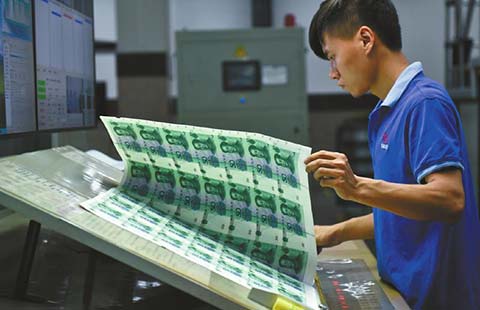
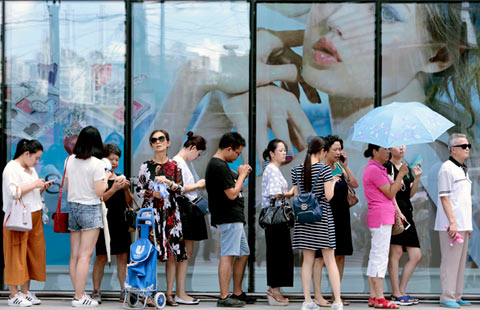
By now, every keen student of the Chinese economy must have given some serious thought to economic restructuring that places special emphasis on boosting domestic demand.
This is not a new concept. But the urge to achieve a more balanced and sustainable economic growth has assumed a new urgency at a time when overseas demand for Chinese products is severely depressed by the global economic slump because of the stuttering recovery in the United States and the nagging sovereign debt crisis in Europe.
Although China has averted a dreaded economic hard landing, its growth, impressive as it may seem, was largely driven by domestic capital formation, resulting in investments in some infrastructure projects that are widely considered wasteful. What's more, the continuous flood of investment capital, generated by the plentiful supply of cheap credit, can push up inflation and create asset bubbles in many major cities.
So far, the most obvious initiatives for economic restructuring have been taken by the private sector. Driven by market forces, many factory owners in the industrial heartlands of the Yangtze and the Pearl river delta regions have tried to shield the brunt of dwindling overseas orders by developing products for the domestic market. But the results of their efforts are too insignificant to make much of a difference in the deeply entrenched consumer pattern.
To change that, many economists and marketing experts said, it is necessary to convince Chinese consumers that they are getting value for money. As it is now, most consumers believe that they have been asked to pay too much for what they get compared with their counterparts in other markets.
For instance, many Chinese consumers have complained that some Lenovo laptops, developed and manufactured on the Chinese mainland, cost more at retail outlets in Shanghai than those in Hong Kong. Not too long ago, people in Hong Kong were shocked to read reports that many housewives in Shenzhen came over to buy vegetables, eggs and other farm produce because they cost less. The irony was that much of these produce were grown in the farms around Shenzhen.
The pricing irregularities have been attributed to the numerous fees and charges levied by the regional and local governments before the products reach the consumers. The problem is compounded by profiteering arising from an inefficient market where pricing is not always transparent.
Shopping for a headphone the other day, I found that the price varied from 2,500 yuan ($400) to 1,900 yuan at different stores within a few blocks in Shanghai. Such a wide price variation was hardly confidence inspiring.
In the past couple of years, the Shanghai municipal government has tried to address the issue by eliminating, in stages, a host of levies by various government offices, expecting vendors to pass on the resulting cost savings to the consumers. The move has made the biggest impact on prices of fresh produce and some other staple foodstuff that are sold in the wet markets around the city.
Economists and consumer rights activists said the large State-owned monopolies must also take the initiative to make their pricing more transparent. It is understandably hard for consumers to swallow the exceptionally high cost of Internet access. The basic 1 Mbps broadband service on the mainland, at around 83 yuan a month, was about 470 percent higher than Hong Kong, according to a study by Data Center of China Internet.
There may be valid reasons for the high price. But they were never fully explained to the consumers. When consumers have to worry all the time that they are not getting their money's worth, they are going to spend less. Therefore, any meaningful economic reform to boost domestic demand should start with the State-owned monopolies. They must take the initiative to better connect with consumers.


Copyright 1995 - . All rights reserved. The content (including but not limited to text, photo, multimedia information, etc) published in this site belongs to China Daily Information Co (CDIC). Without written authorization from CDIC, such content shall not be republished or used in any form. Note: Browsers with 1024*768 or higher resolution are suggested for this site.
License for publishing multimedia online 0108263 Registration Number: 130349