Comments()
  Print
Print  Mail
Mail  Large Medium Small
Zhangjiagang's government is innovating policies to transform its migrant workers into 'new citizens'. Chen Jie and Erik Nilsson report in Zhangjiagang, Jiangsu province.
Fan Huiping has seen both sides of migrant life. He joined the exodus of workers who left Jiangsu province's Zhangjiagang city in the 1980s, when it was a poor farming settlement. He now lives among the 600,000 migrants who flock to his hometown-turned-boomtown, where the average annual per capita GDP is about $23,000 - 4 times the national figure. That's why he supports the city government's New Citizens Initiative, which seeks to better balance privileges enjoyed by migrants - whom the city instead calls "new citizens" - and locals.
|
 |
|
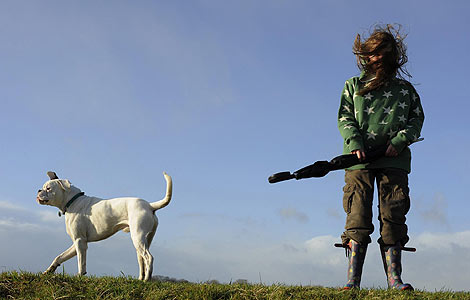
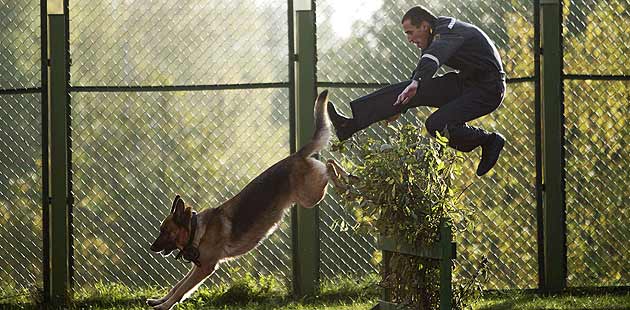
Clockwise: A tourist tries a hand at shaving wood under the instruction of a Yonglian villager. A Yonglian villager surnamed Chen weaves bamboo wares. Elderly people in Yonglian enjoy billiards. [Photos/China Daily] |
"Because I worked outside, I know the hardship," he says. "We need migrant workers. We must trust and help them."
Fan, who was born in Yongshun village, says he's also happy to see local rural and urban hukou (residency permits) equalize. In some cases, distinctions are completely erased by the city's experimental "jiating" (family) hukou.
Fan followed his brothers to Shaanxi's provincial capital Xi'an to work as a tailor for 16 years until his return in 2001. "People here couldn't afford school in the 1970s and '80s," Fan recalls. "My parents and their generation didn't believe education was important. They thought we should learn a trade, work outside and send money home."
But Fan believes his 16-year-old son needs more. "I know how important study and degrees are," Fan says.
"That's a mindset shift."
Decades ago, entire villages would work in one trade. Fan's concentrated on tailoring, while his wife's became drivers. It was virtually unheard of for a woman - especially from the countryside - to learn to drive when she started in 1987. Their household can earn about 13,000 yuan ($2,000) a month - several times more than cabbies in mega-cities.
Fan was able to swap his rural hukou for an urban one when he bought a downtown house in 2002. "But I don't sense much difference between urbanites and villagers anymore," he says.
According to tradition, his parents should have given him a home when he married in 1994. But his brothers already shared the four-room, two-story house his parents constructed. And the rural-urban integration policy forbade farmers from building.
"The rule changed later, but I had to buy an apartment," Fan says. He purchased a 102-square-meter apartment for 80,000 yuan. He later traded that for a 300,000 yuan 190-sq-m dwelling. He paid with money given by his parents and lent by his brothers, whom he later successfully sued for his share of their house.
"Even though they live in the village and I live in the city, our standards of living are about the same," Fan says. "But I earn more because I returned earlier and started driving."
He recalls there were no official cabs when he and his wife, Song Huafang, returned after starting to drive in Xi'an in 1998. "We had little money back then," Liang says. He got a better car in 2000 and traded up again in 2003, when he borrowed 400,000 yuan for the car and taxi license.
Zhangjiagang now has nearly 500 registered cabs. With the city's development and policies favorable to migrant workers, some, like Dai Weidong, have found prosperity unlikely elsewhere. Dai never imagined his family could earn 100,000 yuan a year when he arrived from Jiangsu's Lianshui in 1994 at age 24. He earned 7 yuan a day doing odd jobs. "I came because my parents were sick," he says. "Our living conditions were dismal. It was hard."
He left school to work in the fields before a friend told him there were jobs in Zhangjiagang. Dai landed a position at Zhangjiagang City Huagongjixie Factory and was made a permanent employee with a 300 yuan monthly salary within six months. "I worked hard, studied on my own at night and impressed the boss," he recalls.
Because Dai had dropped out of his third year of middle school, he worried he didn't have the necessary qualifications.
"Zhangjiagang offered a dream but I didn't know how to make money without skills," he says.
So, Dai compensated for his lack of formal education with self-study. He excelled to the point he was the only migrant worker representative from Jiangsu among 1,000 nationwide awarded at the Great Hall of the People in 2008.
Dai's wife, whom he married in 1990, also works at the factory, which has grown from a plant of 200 to a listed limited liability company with 3,000 employees and its own dock.
Copyright 1995 - 2010 . All rights reserved. The content (including but not limited to text, photo, multimedia information, etc) published in this site belongs to China Daily Information Co (CDIC). Without written authorization from CDIC, such content shall not be republished or used in any form. Note: Browsers with 1024*768 or higher resolution are suggested for this site.
License for publishing multimedia online 0108263 Registration Number: 20100000002731