No short cut on way to finding right people for job


|
 |
|
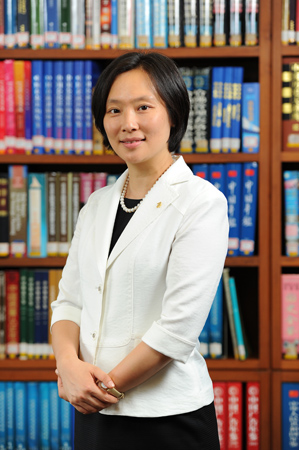
Han Jian, associate professor of management at China Europe International Business School |
Multinational corporations can no longer base their human resources policies in China just on competitive wages - as general wage levels at Chinese companies are rising above the level of many other developing economies.
Nor can Chinese companies investing abroad from North America to Africa expect to apply their practices at home to workers in their overseas operations.
Corporate leaders typically complain about lacking the right talent in a time of uncertainty and rapid change. Where can they find them? How can they keep them? They are posting ads everywhere and calling for solutions at every business forum.
But as Han Jian, associate professor of management at China Europe International Business School, would tell them, "sorry", there is not a ready answer to their questions.
The talent that they need will not come that easily or, if company leaders manage themselves poorly, they simply won't perform as expected.
Hiring just one or a few highly creative people will not help a company's performance unless its leaders know how to align them with the team and the company's strategic goals.
There are a few things that company leaders need to do simultaneously: prioritize tasks in their corporate value chain, build teams, match tasks and people, and last but not least, develop a working mindset suitable for leading innovative teams.
Only after a framework of people strategy is established can a set of initiatives begin in recruitment, training, and in staff's career planning.
"How do you know what kind of people are most suitable if you don't have a clear idea about the value of the tasks in a company's entire value chain?" Answering that question is now crucial for the many Chinese companies facing different strategic options.
Some companies may desire to phase out low-skilled operations and move up the value chain by venturing into high-skilled operations. Others may seek to branch out in related services.
In their overseas ventures, some may attempt to build factories in Southeast Asia and Africa. Others may desire to take over companies with technological strength or branding assets in North America and Western Europe.
Different approaches to talent management should be developed to suit different strategies. Sometimes, even companies with similar strategies would need to develop different people management practices, because they have different "DNA" or mixes of leadership, corporate culture, and development path.
Companies seeking innovation may not need high-caliber, innovative new blood all the time. Innovation is also a social process. Nowadays, it is more often achieved through a team effort. Rather than recruiting a renowned scientist or inventor, innovation can be achieved through good teamwork, or making improvements to the management of team processes.
Innovation requires highly creative talent as well as service-oriented supporters and operational talents to implement the ideas. Companies need to "explore the power of organization, rather than rely on a few heroes", she said.
Nor does talent management always require "new" ways of management. In cases of rapid market changes, the old command-and-control type of management may still work if a prompt reaction is needed, even though it has attracted many critics. The key is that the leaders are consistent and the rewards are fair. Building trust between managers and employees could be more useful than many of the "best practices" in fashionable management books. A trust-based employment relationship is nothing new, it simply needs time to develop and the leaders' gut instinct to deliver, Han said.
But many companies are still struggling in the dark. They have the processes to make their usual products, not the processes to organize their talent and to let them cooperate in productive ways, she said.